The right approach depends on the pest, the property and the conditions around it.
Ants & cockroaches
Identify activity, harbourage and food or moisture sources. Discuss treatment and prevention together.
Rodents
Inspect likely entry points and movement routes, then plan monitoring, control and exclusion work.
Termite concerns
Investigate suspicious material damage before specifying a treatment. The visible sign may not reveal the full extent.
Ongoing monitoring
A documented plan for business premises, with visit findings, recommendations and follow-up priorities.
Start from the species
What is it, and where from.
Treatment follows the species and the entry point, not a general spray. Find the row that looks like what you are seeing.
Insects
Ants and cockroaches — gel baiting at the harbourage, with a residual where surfaces allow; nesting sites checked rather than fogged blindly
Mosquitoes — standing water found and treated, then larvicide; fogging only where the breeding site cannot be removed
Fleas and bed bugs — two visits are normally required, because eggs survive the first treatment; we say so before quoting
Rodents and others
Rats and mice — entry points traced and sealed, then stations placed where they can be checked
Birds and bats — exclusion work rather than removal, and the nesting rules stated for you to confirm
Snakes or hornets — an emergency attendance, not a scheduled treatment; we attend and advise rather than guarantee a capture
The inspection decides which of these applies. If what you have does not match a row, the inspection still tells you what it is.
Three jobs, written up
Follow the signs, not assumptions.
Each job below is written the way our field notes are written: what was found, what decided the method, and what the customer keeps afterwards. The species and the entry point decide the treatment, never the other way round.
FLAT, THREE ROOMS / ANTS, KITCHEN CABINET
Flat, three rooms · ants behind a kitchen cabinet
One inspection / one treatment / one follow-up visit
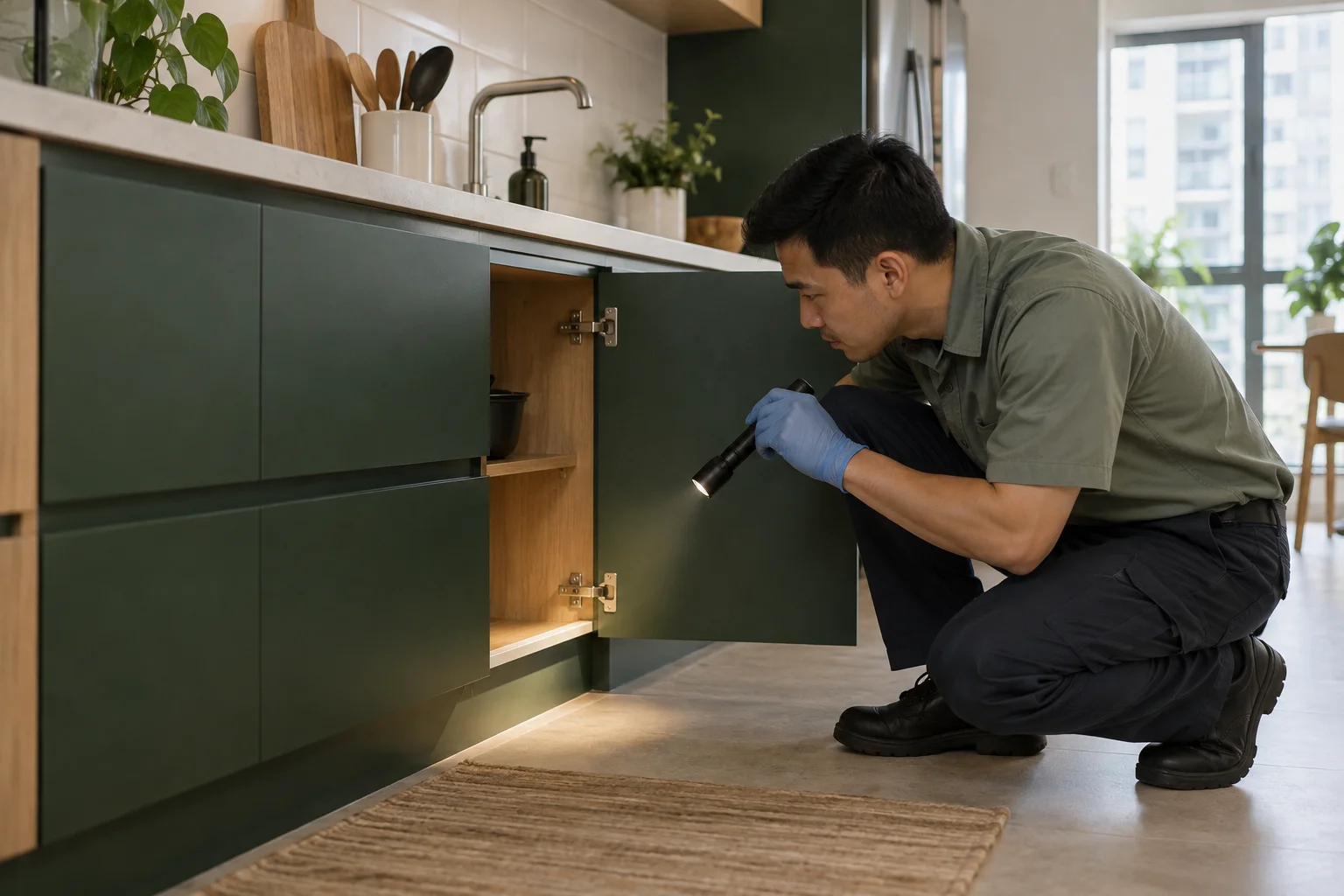
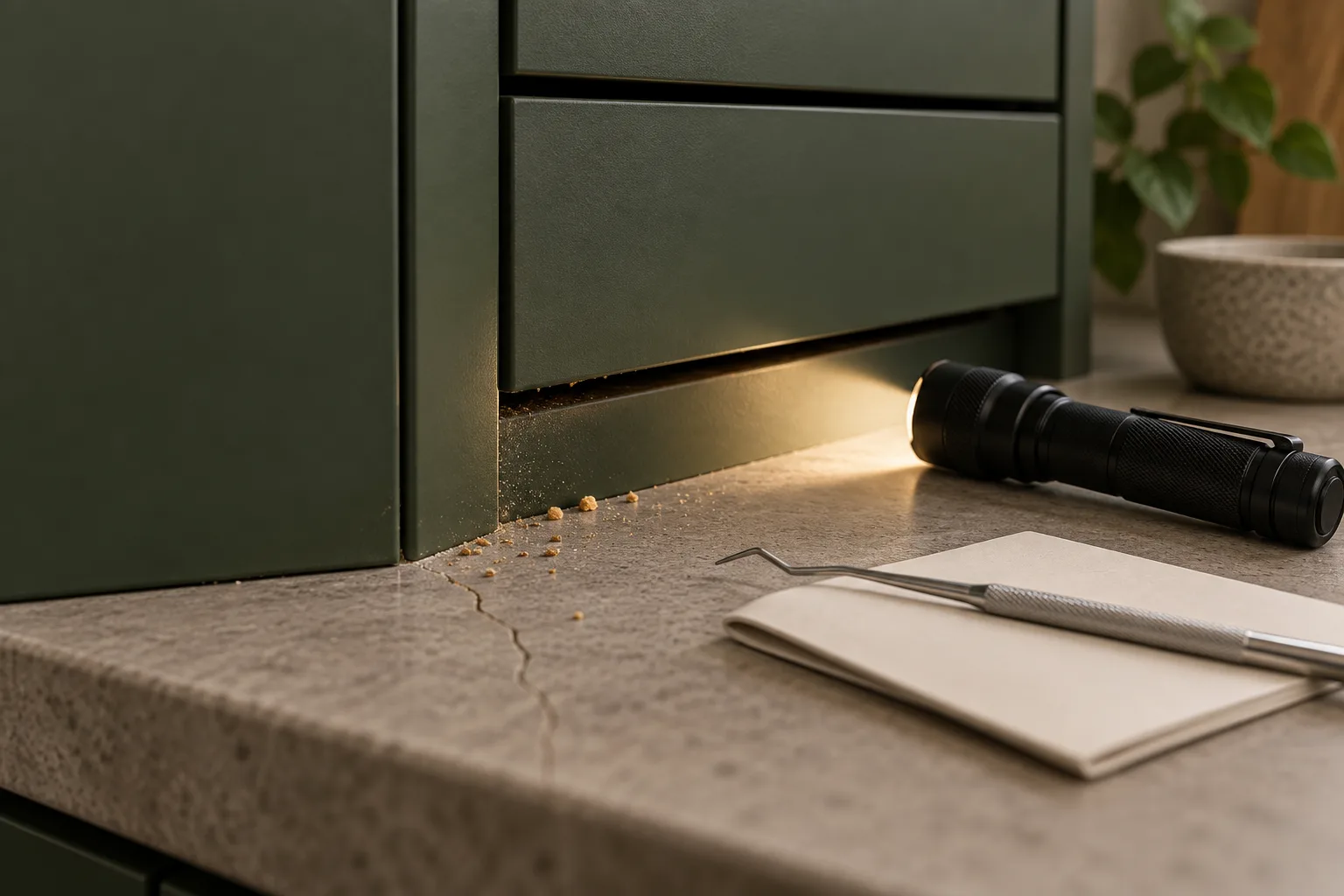
Trails reported along the sink run for about ten days, returning after a household spray.
What the visit found, and what was agreed ↗
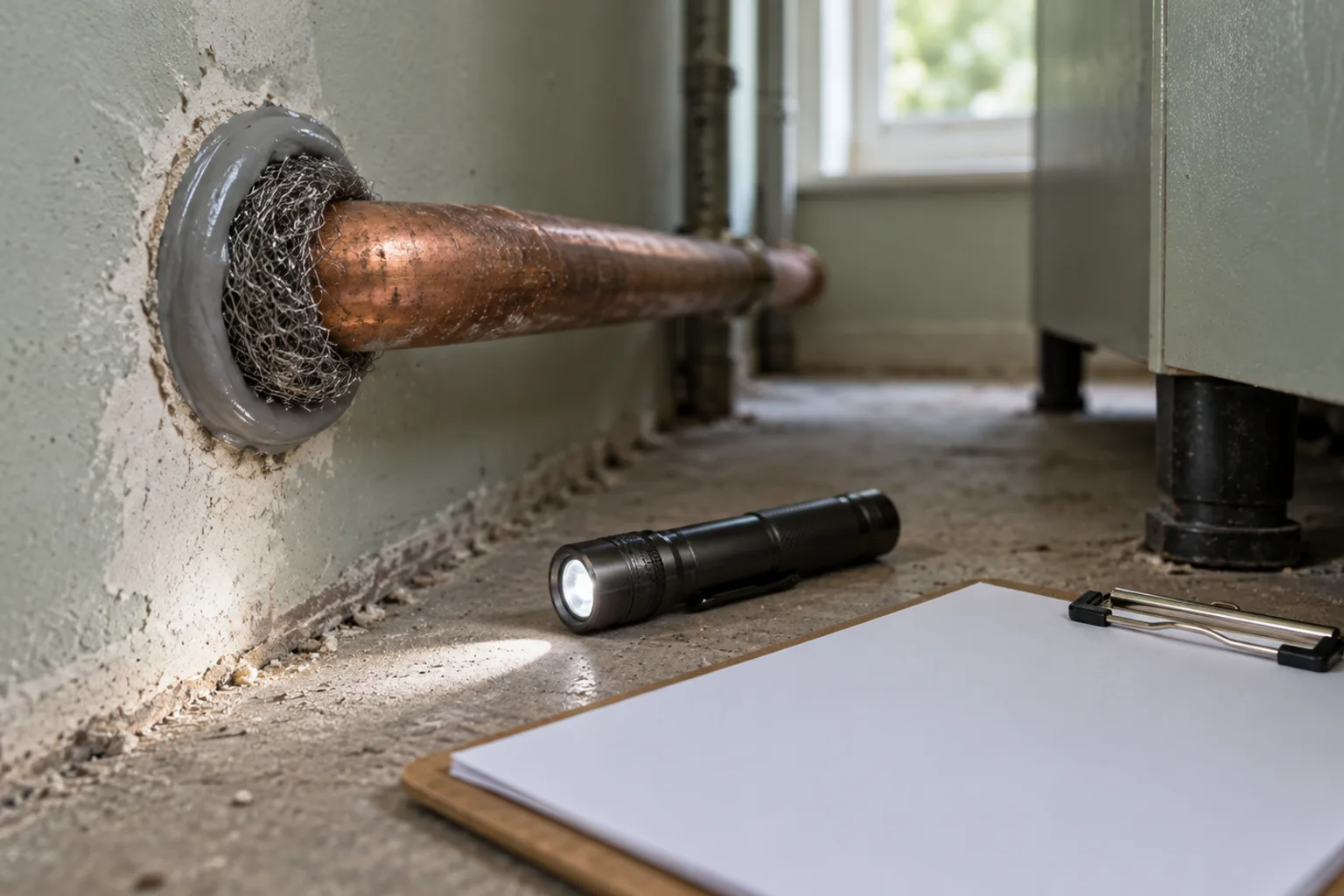
The foraging line was traced to the gap where the service pipe enters the wall, with a damp patch under the cabinet base. Gel bait was placed at the harbourage and at two points along the run, a residual applied to the skirting where the surface allowed, and the pipe gap packed with steel wool and sealed. Bait points stay undisturbed for fourteen days, and the follow-up visit is booked inside that period at no extra charge. The areas treated and the materials applied are on the sheet the customer keeps.
GROUND-FLOOR UNIT / RODENTS, SERVICE ENTRY
Ground-floor unit · rodents along the service entry
Two visits / entry sealed / three stations checked
Scratching after dark near the yard door, with droppings under the sink and along the back wall.
The entry point, and why sealing came first ↗
The route was traced to the gap around the incoming water pipe and a worn seal at the yard door. Both were sealed before any bait was placed, because trapping an entry that stays open only moves the activity along the wall. Three numbered stations were fixed along the run, and those same points are read at every later visit, which is what makes the second visit worth paying for. The store cupboard was pulled clear of the wall so the run stays checkable between visits.
FOOD PREMISES / COCKROACHES, MONTHLY CHECK
Food premises · cockroaches in a service run, monitored
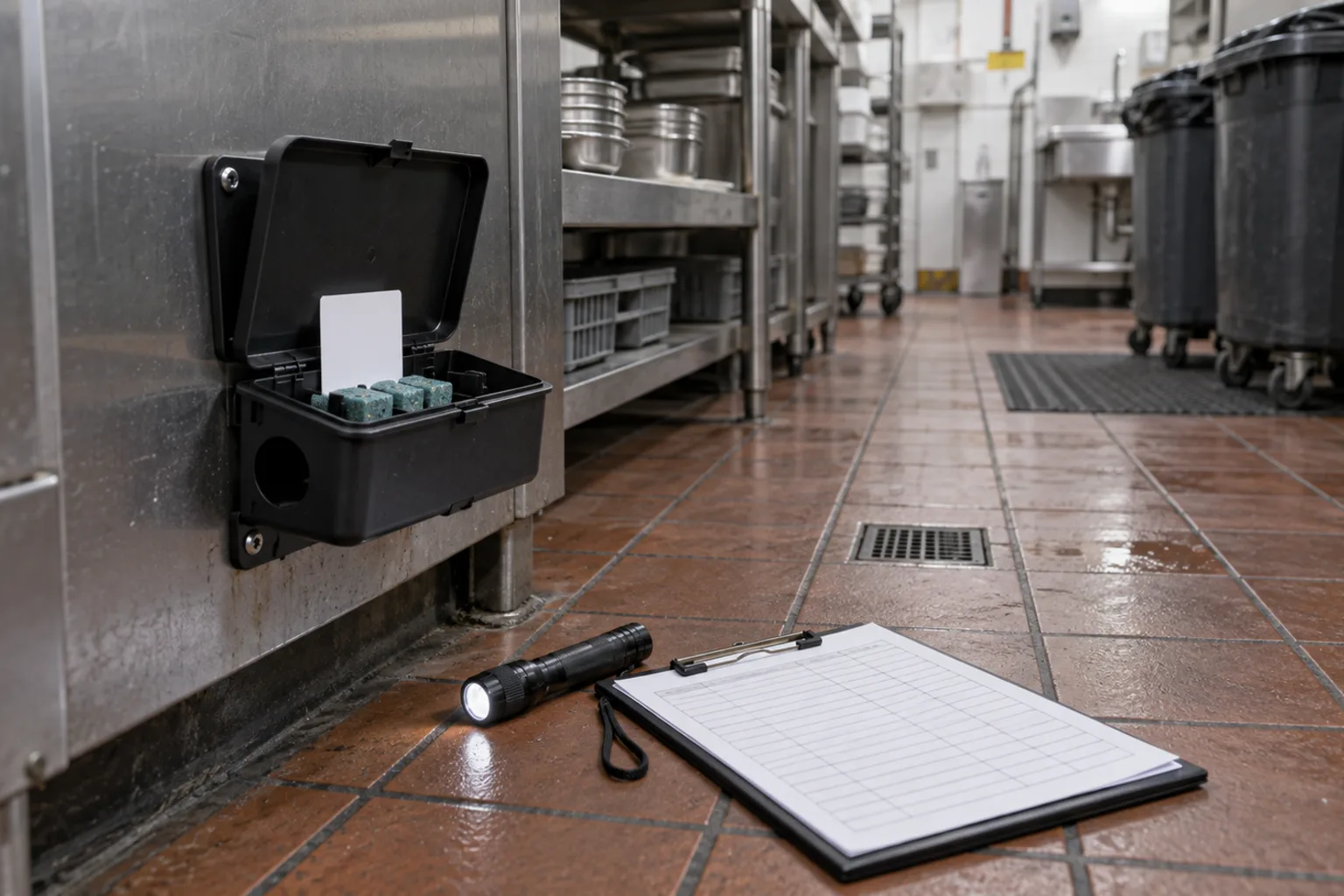
Monthly visits / numbered bait points / findings written each visit
Nymphs seen under a preparation bench during a delivery, in a kitchen that cannot close.
Why this one is a schedule rather than a single treatment ↗
Gel-bait points were placed in the service run, under the bench bases and at the bin area, each numbered and marked on a simple plan of the kitchen. Each monthly visit reads those points, records what was found by location, and lists what the site closes out, usually cleaning behind equipment or a seal that has failed. Material sheets and the areas treated are filed with the visit record, and nothing is applied while food is being handled in the same area.
Written in our own field-note order: species, entry point, method, follow-up, on one page. The figure arrives with the findings, because the finding is what decides the work.
What arrives, and what is recorded
The kit, and the proof it was used.
An inspection report is worth little if the visit itself cannot be evidenced. So the visit leaves a record.
On the visit
Torch, mirror and inspection tools for voids and cabinet runs
PPE: gloves, mask and eye protection, used according to the material
Bait, gel, dust or residual carried to the treatment the report calls for, not a universal spray
Bait stations and monitoring devices numbered before they are placed
What you keep
A treatment record naming the areas treated and the materials applied
Numbered station positions, so the next visit checks the same points
Dated photographs of the treated areas and of anything sealed
The re-treatment terms, stated with the exclusion list rather than as a promise
No treatment makes a property permanently immune, and no operator can promise that. What the record proves is what was found, what was applied and where.
What good follow-through looks like
A record. Not just a visit.
Know what was observed, what was agreed and what to watch between visits.
Activity reported near the sink after dark. Gaps and moisture sources inspected below the cabinet.
ACTION TAKEN
Gel bait placed at the harbourage; pipe gap packed and sealed. Areas and materials recorded.
FOLLOW-UP
Bait left undisturbed for fourteen days, then the same points are read again.
NEXT VISIT
Booked inside the fourteen-day period, included in the treatment figure.
Our record format: the same fields on every visit, a copy left on site, and the follow-up date on the sheet rather than in a diary.
Inspection first
Nothing is treated before it is seen.
Pest work is priced after someone has looked at the property, because the treatment follows the species, the entry points and the extent. The inspection fee below is credited against the treatment if you go ahead.
Illustrative concept pricing, not a quotation. Prices assume an ordinary residential flat with access to the affected areas; larger premises, concealed nests, ceiling or floor access and visits beyond the stated period are quoted separately. The inspection fee is credited against the treatment, and the written findings state the figure before anything is booked.
Visit
What it covers
From
Inspection & written findings
Species, entry points, extent and the treatment that follows · fee credited
S$120
Ant or cockroach treatment
Flats up to three rooms, gel and residual to agreed areas
S$180
Rodent programme
Three visits: baiting, monitoring and proofing advice
S$420
Mosquito or fogging
Outdoor areas and drains, one visit
S$220
Termite
Quoted after inspection; the method follows the colony
On inspection
One visit treats what is there; it does not stop what is outside the property. That is why every treatment here includes a follow-up visit inside the stated period.
Treatment for the species identified, in the agreed areas
A follow-up visit inside the stated period
Prevention notes for the property
Safe-handling instructions for people, pets and food areas
Quoted separately, or outside it
Structural repair or proofing: sealing gaps, mesh, altering entry points
Disposal of damaged material
Treatment behind sealed walls or above ceilings where access must be opened up
Further visits beyond the stated period
Commercial and food premises with their own requirements
Nothing here is a guarantee against reinfestation from outside the property. What is covered is the treated area, for the stated period, and a return visit inside it.
Before work starts
What we put in writing, before the first visit.
Pest work touches food areas, homes and children, so the documents come before the treatment: our registration, our cover, the materials and the person attending.
The registered company name and registration number, on the quotation and on the invoice
Public liability cover, with the insurer and the limit stated
The technician attending, named on the sheet, employed by us rather than brought in on the day
The materials to be used, with their safety data sheets, and which of them suits a food area where that applies
The re-treatment terms and the exclusions, in the same document as the price
Stated on the sheet you keep
The species identified, the entry points found and the areas treated
Materials applied and the quantity used, not a brand name alone
The follow-up date, and what the property must leave undisturbed until then
Preparation and safe-handling instructions for people, pets and food areas
Where a licence or registration applies to the work, its number quoted on the same document as the person who attended
One price, one document: the findings, the method and the exclusions arrive together, so the figure and the work cannot be read apart afterwards. We state only what we can produce — a registration number, a cover note, a material sheet and a named technician.
How a treatment runs
Five steps, in writing.
Describe it
What you have seen, where, and how long it has been happening.
Inspection
Species, entry points and extent, with photographs where they help.
Written findings & quote
What the treatment is and what it costs, before anything is applied.
Treatment
Applied in the agreed areas, with the safety instructions handed over.
Follow-up
A return visit inside the stated period, and prevention notes for the property.
“We understood where the activity was coming from and what we could change between visits.”
Inspection & follow-up · sample story
Sample story. Not a real customer review.
Before the inspection
Know what to expect.
Do I need to identify the pest first?+
No. Describe the sighting, the place and the time of day it appears. Clear photographs help us load the right equipment, but the identification is made on site and written into the findings.
What if there are children or pets at home?+
Tell us before the visit and the plan is built around them. Preparation and re-entry instructions depend on the treatment chosen, and they are handed over in writing: what to move, what to cover, how long to stay out and when the room is safe again.
Is one treatment enough?+
Usually not for fleas, bed bugs or a cockroach harbourage that keeps being fed from a service run. Those are two visits — the first treats, the second confirms — and where two are needed we say so in the findings rather than after the first has failed.
How often should a business premises be visited?+
It follows the areas you actually have: food preparation and waste usually fortnightly, roof voids and service runs monthly, perimeter and landscape quarterly unless the record shows more. Each area carries a minimum in the agreement, and the cycle moves up or down against what the records show, in writing.
What if the species is not the one we suspected?+
Then the findings say so and the method changes before anything is applied. Termite damage is the common case: the sign on the surface rarely shows how far it runs, so the method follows the inspection rather than the enquiry.
What exactly is in the written findings?+
The species identified, where the activity is coming from, the areas to be treated, the materials proposed, the follow-up date and the exclusions. It arrives before the treatment is booked, with the figure on the same page as the work.
Start a conversation
Let’s look a little closer.
Start with where you have seen activity and when it appears.