Office relocation · Singapore

Out on Friday.
Live on Monday.

A workplace move planned as a shutdown window: what is decommissioned by Friday evening, what is live-tested by Sunday afternoon, and a fixed project quote for the programme in between.

Scope my relocation
Illustrative workstation rows dismantled and crated overnight across an emptied office floor, with colour-coded crates and a blank desk map left on a desk
DOWNTIME WINDOW / OUT FRIDAY / BACK MONDAY
Single suiteOne floorWhole office or multi-siteSee what each scope covers ↓

Three project shapes

A workplace is scoped
by what has to be reconnected.

What decides the programme is not the floor area. It is the number of workstations, whether the server and the network move in the same window, and how long the building will give you its lifts.

Scope 01

Single suite

One tenanted suite, one lift, a move that fits a single window with the furniture and the workstations on the same run.

In scope Workstations, chairs and pedestals dismantled where they will not pass a door, carried and rebuilt; monitors covered and crated in foam-lined anti-static crates; every cable labelled before it is unplugged; one out-of-hours window with the goods lift booked.

Named separately The server, the rack and the comms room; new joinery or partition work; disposal of the fit-out you are leaving; any cabling that a licensed contractor must install and certify.

Scope 02

One floor

Twenty to eighty workstations, a comms room that has to come down and go up in a stated order, and a programme the building can actually accommodate.

In scope Everything in Scope 01, plus sequential filing crates colour-coded by department and mapped to the destination floor plan; a written asset list tagging every workstation, monitor and phone against the desk map; and floor walking through the first working morning.

Named separately Managed IT beyond reconnecting the equipment as it was found; cable testing and certification; furniture that has to be re-manufactured; anything your landlord will not permit inside the building.

Scope 03

Whole office or more than one address

Several floors or several addresses, phased over more than one weekend, with a destination plan per floor and a register for everything that moves.

In scope A programme phased across windows with a written stage plan; a crate, label and register system per floor and per department; secure crates and a signed chain for records that must not be read; disposal paperwork for the equipment you leave behind; snagging and floor walking through the first week.

Named separately Structural, mechanical and electrical works; the decommissioning of anything that requires a licence you hold rather than us; storage held beyond the programme, which is a monthly contract of its own.

In every scope

  • A written move plan naming the workstation count, the two dates and the window
  • One named move manager from the survey to the closeout note
  • The fixed project quotation, with every stage priced and the exclusions named
  • A confirmed lift and loading bay booking before the date is held
  • A closeout note with the actual hours against the window

The figure by shape

Illustrative concept pricing, not a quotation. Each figure is a project band for the programme described: the move itself, the crates and labelling inside the programme, and the IT decommission and recommission at the workstation count stated. It assumes the building releases its goods lift out of hours and that the destination floor is handed over empty. Storage, disposal, new furniture and any cabling are separate lines. Confirm current rates before you commit.
Project shapeIndicative project figureWhat decides it
Single suite
Up to 20 workstations
From S$2,400Workstation count and whether the server moves
One floor
21 to 80 workstations
From S$7,800The comms room and how many windows the building allows
Whole office or several floors
From 80 workstations
Quoted from the floor planThe phasing, the crate register and the disposal paperwork
IT, crates and storage
Always its own lines
From the rate card belowAsset count, crate weeks and how long anything is held

The scopes, bands and inclusions above are the ones we quote from. They show how a relocation is divided and priced, and every line of them comes back on your written quotation.

The programme, and what each stage hands over

Staged by week,
executed in one window.

A relocation is approved on a programme and delivered in a window. Both are written down before the first crate is delivered, because the labelling follows the plan and the plan follows the survey.

  1. Survey and move plan · week 6 to 4 before the date

    Output: the floor walked, the workstation count taken from the desks rather than from a headcount, the lift and loading access tested, and both dates written down. Held by the named move manager.

  2. Fixed project quotation · week 5 to 4

    Output: the plan priced stage by stage, with the scope, the exclusions and the two windows named. It is fixed for the plan described, and re-issued at the same rates if the plan changes.

  3. Crates, labels and the destination plan · week 3 to 1

    Output: crates delivered and labelled by department and numbered in sequence, an instruction on every floor, and a destination plan saying which crate belongs to which desk. Records stay in order, so they are packed in sequence rather than by volume.

  4. IT audit and the desk map · week 2

    Output: every workstation, monitor, docking station and phone listed and mapped to the destination plan, the server and comms equipment listed separately, and the order it will be shut down and brought up agreed in writing.

  5. The window · Friday evening, decommission

    Output: workstations unplugged and tagged against the desk map, monitors covered and crated, crates sealed by department, the comms room shut down in the stated order, and the old floor photographed before anything leaves it.

  6. Friday night to Saturday · carriage

    Output: the load moved through the booked goods lift in waves and placed against the destination plan, with the corridor and door protection lifted only once the last crate is in.

  7. The window · Sunday, recommission and live test

    Output: desks re-cabled to the desk map, the network brought up in the agreed order, every workstation powered and logged in, and a snagging list for the ones that do not come up.

  8. Monday and the first week · floor walking

    Output: a team on site through the first working morning, the snagging list worked through while your staff are at their desks, and a closeout note with the actual hours against the window.

The window, not a hope. Each row is the shutdown the shape usually needs, counted from the last person leaving the floor to the last workstation being confirmed. The building releasing its goods lift is the single most common reason a window cannot be held, so the lift and the loading bay are booked in writing before the crates are delivered.
Project shapeDecommissionRecommission and live test
Single suite
One lift, one run
Friday 18:00 to 21:00Sunday 10:00 to 13:00
One floor
Two waves through the goods lift
Friday 18:00 to 23:00Sunday 12:00 to 16:00
Whole office
Staged per floor, per weekend
Friday 18:00, floor by floorSunday 16:00, floor by floor
Equipment that cannot be offline
A server, a comms room, a trading desk
Moved in a second, negotiated windowSame window, in the order agreed with the owner

What has to be signed, and when

  • The move plan and the fixed quotation signed before crates are delivered, because the labelling follows the plan
  • The lift and the loading bay booked with the building, in writing, before the date is confirmed to your staff
  • The destination floor plan frozen at week 2; a desk changed after that is worked through on the Monday
  • The asset list agreed with whoever owns the IT, including what is not ours to unplug
  • The access list for the weekend given to building security by the Wednesday before

A window is a plan, not a promise of no risk. An equipment failure on the Sunday goes on the snagging list, is worked through, and is reported to you the same day rather than on the Monday morning.

What the project contains

Six blocks of work,
one window.

Each of these is a different trade with a different failure mode. Naming them separately is what makes a fixed figure possible instead of an estimate with a shrug.

Carry

Workstations and furniture

Desks, chairs, pedestals and storage units dismantled where they will not pass a door or a lift, carried, reassembled and placed against the destination plan.

See what is included ↗
IT decommission

IT decommission and recommission

Monitors covered, equipment crated in foam-lined anti-static crates that travel with it, every cable labelled at both ends, the server and comms room shut down and brought up in the stated order, and each desk re-cabled and logged in before the window closes.

Scope the IT work ↗
Crates and labels

Crate hire and sequential filing

Filing crates hired by the week, labelled by department and numbered in sequence, mapped to the destination floor plan so a crate arrives at the desk that owns it.

See the crate rates ↗
Out of hours

Out-of-hours access

Evening, overnight and weekend working with the goods lift booked, the loading bay reserved, corridor and door protection laid, and the building’s own permit conditions worked to.

Check a building ↗
Before and after

The programme and documents

A staged programme with week markers and a named move manager, plus the paperwork a facilities manager is asked for: the move plan, the asset list, the crate register, the access list and the closeout note.

See the programme ↗
On the day

Recommission and floor walking

A team on site through the first working morning, working the snagging list while your staff are at their desks rather than after they have given up on the printer.

Book the first week ↗

Adjacent work, priced separately

  • Storage between two offices, held by the month on its own terms rather than inside the project
  • Disposal of the furniture and equipment you are leaving, with the waste electrical and electronic equipment paperwork
  • Secure destruction of records you are not carrying, with a signed certificate of destruction
  • New furniture delivered and assembled on the same programme, so the floor is not half-dressed
  • Additional monitors, docking stations and phones beyond the asset list agreed at week 2
  • Cleaning of either floor, which is a different trade and is not part of this project

Each of these is quoted as its own line rather than folded into the project figure, so the fixed price stays the price of the move and nothing else.

The fixed project quote

What fixes the figure,
and what moves it.

The quotation is fixed for the programme and the window described in it. What can still move it is named here rather than found on an invoice after the weekend.

Illustrative concept pricing, not a quotation. The basis column states what each line is argued from. A line marked variable is quoted and approved before the work continues, at the rates already in your quotation, so the fixed figure stays fixed for the plan you signed. Confirm current rates before you commit.
Project elementFixed or variableBasis
The move itself
Carriage, crew and hours
FixedThe workstation count and the plan signed at week 4
Crates, labels and the destination plan
Inside the programme
FixedThe crate register, at the weekly crate rate
IT decommission and recommission
At the asset count
FixedThe asset list agreed at week 2
Out-of-hours access and building conditions
Lifts, bays, protection
FixedThe windows named in the plan and the permits it needs
Equipment found on the day and not on the list
Always possible in a live office
VariableQuoted before it is moved, never after
Joiners and departures between week 2 and the date
The asset list moves
VariableA re-issued quotation at the same rates, in writing
Illustrative concept pricing, not a quotation. Crate rates are per crate per week from the delivery week to the collection week, and they apply to crates hired inside a project. Delivery and collection inside the programme are included; crates held past it are billed by the week at the same rate until they are collected. Confirm current rates before you commit.
Hire itemRateTerm
Filing crate
Records, files, archive boxes
S$2.50 to S$4.50 per crate, per weekDelivered at week 3, collected after the move
IT crate
Foam-lined, anti-static
S$4.50 per crate, per weekMonitors, docking stations and small equipment
Monitor cover
Per unit
S$1.50 per unit, per weekPadded cover, returned with the crates
Label set and destination plan
Department colours, sequential numbers
Included with the crate hireIssued at week 3, with a plan per floor
Crate delivery and collection
Inside the programme
IncludedOne delivery before the date, one collection after
Crates held past the programme
After the collection date
The same weekly rateBilled by the week until they are collected

For scale rather than for anchoring: our own opening figures work out at about S$120 per workstation on a suite up to twenty, and about S$98 each by the time a floor reaches eighty, with the IT reconnection included, before crates and before any out-of-hours loading. Below twenty workstations the figure per desk climbs, because the survey, the plan and the lift windows do not shrink with the count.

The only quotation issued is the written one: raised against your floor plan, with its validity period, its assumptions and its exclusions named on it. Those are our starting rates, not an offer.

Three weekends, as they were planned

One window,
counted in workstations.

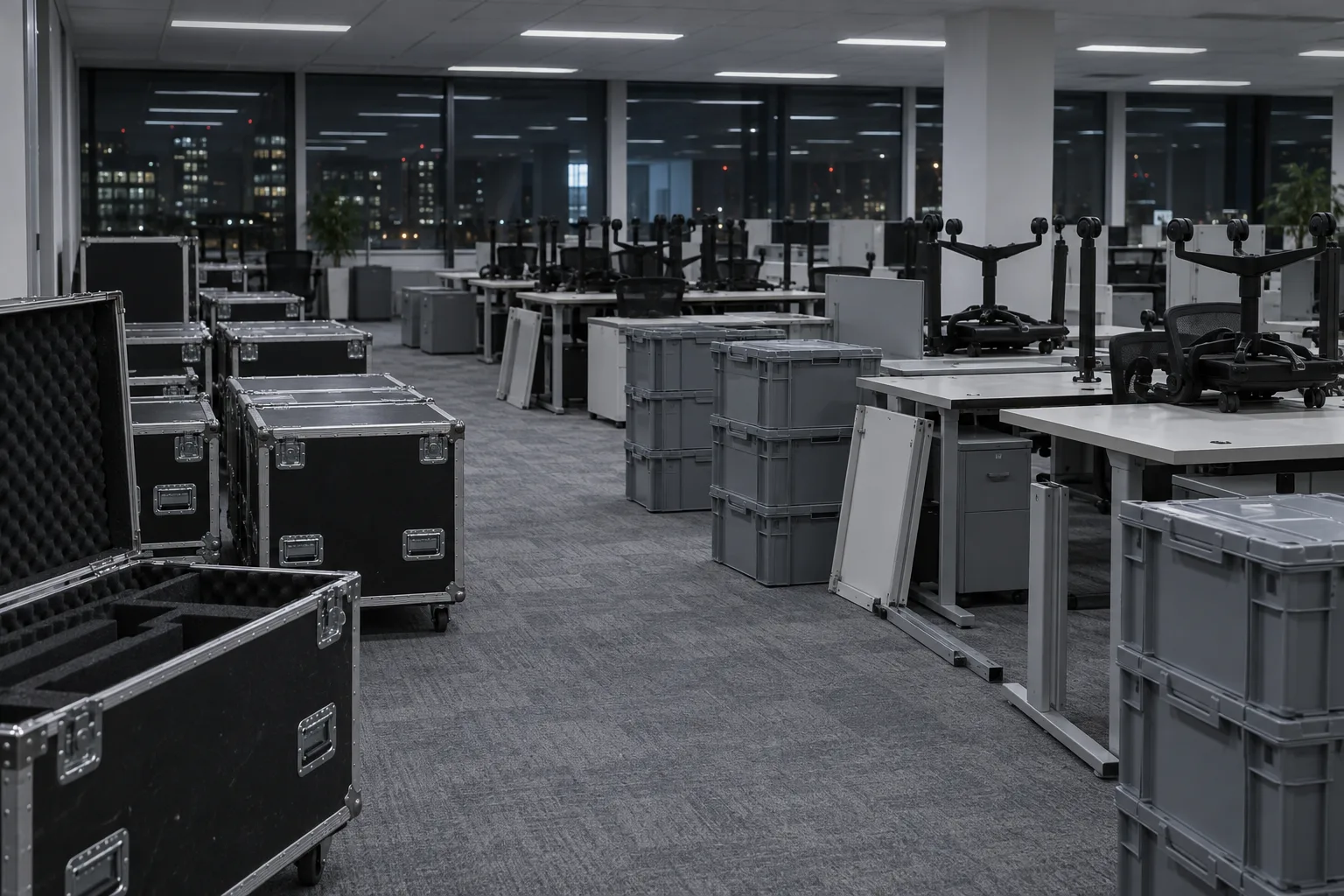
Illustrative foam-lined cases and grey crates in rows beside dismantled desks on an emptied office floor at night

One floor · 62 workstations · decommission Friday 18:00, live test Sunday 16:00

A floor with the comms room in the same window

Two meeting rooms and one comms room on a single floor, moved inside one weekend with the goods lift booked for the Saturday. The Monday log-in was the acceptance test, and the two desks that failed it were on the snag list before anybody asked about them.

The weekend, hour by hour

62 workstations, 240 filing crates and 14 foam-lined IT crates. Friday evening: every workstation unplugged and tagged against the desk map, monitors covered and crated, records into sequential crates by department, the comms room brought down in the order the plan states, and the old floor photographed before anything leaves it. Saturday: the load moves through the booked goods lift in two waves, crates are placed against the destination floor plan, and the server equipment is reinstalled in its rack and left powered down. Sunday: desks are re-cabled to the map, the network comes up in the agreed order, every workstation is powered and logged in, and the ones that do not come up go on the snag list worked through the same afternoon. The window closes when the last workstation on the map is confirmed, not when the trucks are empty.

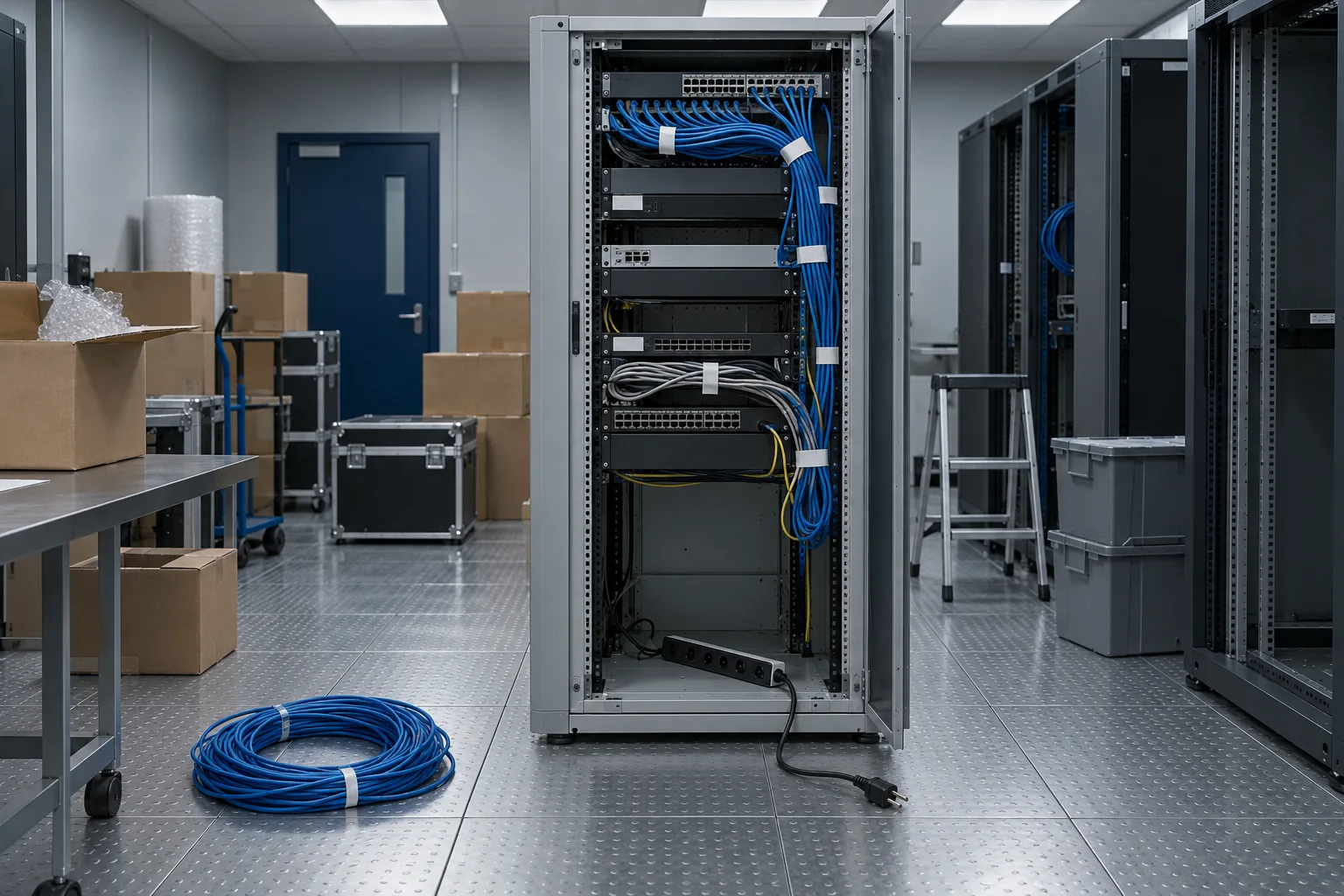
Illustrative grey comms rack with coiled tape-labelled patch cables and a rolled network cable on a raised floor mid-decommission

Two floors · 118 workstations · phased by floor inside one weekend

Two floors phased inside one weekend

Floor 9 out on the Friday evening and live by Saturday lunchtime, floor 10 out on the Saturday and live by Sunday afternoon. The comms room moved with floor 9, so the network was down for eleven hours rather than for two days.

Why the phasing is the price

Two floors move as two programmes under one quotation: two crate deliveries, two lift bookings, two decommission windows and one recommission team following the first wave. Phasing is what makes a weekend possible when the building releases its lift for one day only, and it is priced as the second programme it is rather than absorbed into a single-floor rate. Cabling that has to be certified stays with the contractor who holds that contract; our line is the teardown, the carry and the reconnection to the desk map.

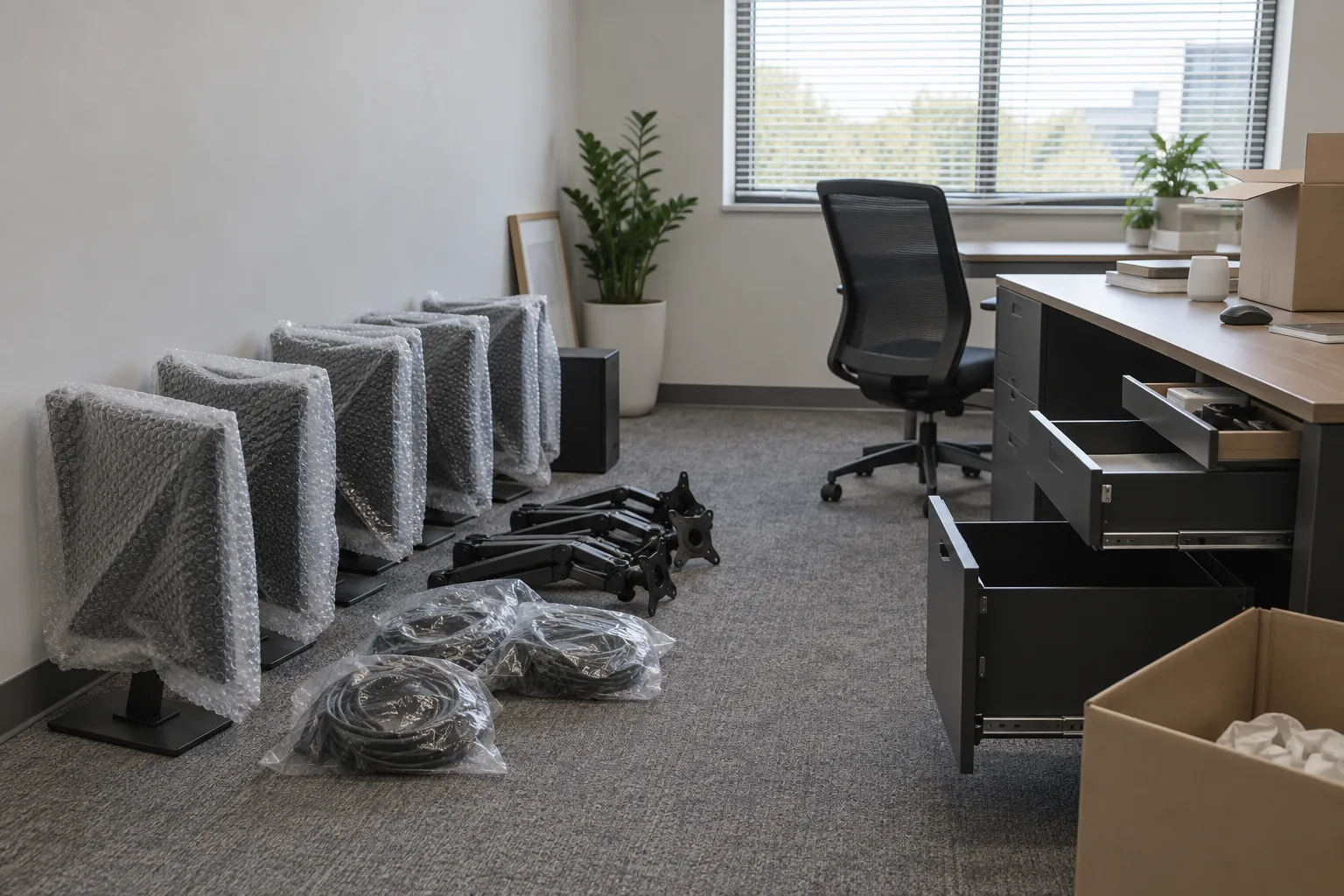
Illustrative bubble-wrapped monitors standing in a row on the floor of a small office suite being packed

Single suite · 14 desks · one goods lift, no shutdown window

A suite that could not close

Fourteen desks over two evenings with the team working from home in between. No shutdown window was available, so the programme was split: pedestals and storage on the Tuesday night, desks, monitors and the printer on the Thursday, everything live again by Friday morning.

What a split programme costs

Two shorter windows at the out-of-hours rate instead of one long one, so a single suite is priced from the evenings it takes rather than from the desks it holds. Crates are hired by the week and go back the week after the move, and the crate register is what tells you on the Friday morning whether anything is still on the old floor. Where a suite runs to 20 desks or fewer we will usually still say the split programme is the cheaper answer.

Three programmes on the same basis: the workstation count, the crate weeks and the window. Check where the hours go rather than the headline. The counts are the shape of the job; the rates are ours.

Scope a window like this

Who you are appointing

One named manager,
and the papers to audit.

A relocation is bought by a facilities manager and delivered by a crew. Both are named before the quotation is issued.

The move manager on the plan

The person who signs the plan runs the weekend and holds the crate register, the asset list and the access list. If that person changes, you are told in writing and the replacement is introduced before the date, not at 18:00 on the Friday.

The manager who signs your plan is named on it, with the buildings they have run here and the languages the crew works in. That name is the person on site at the decommission, not a coordinator you meet on the night.

Who unplugs the equipment

Either your IT team or ours, named in the plan before the date. What we do not do is claim a managed IT service: we cover, crate, label, carry, reinstall in the agreed order, reconnect each desk to the desk map and hand the log-in test to whoever owns the network.

If a patch panel has to change, or new cabling has to be certified, that is named as a separate line and stays with the contractor who holds that contract. Saying so before the weekend is worth more than a claim afterwards.

Our public liability and professional indemnity certificates go out with the quotation, with the limits printed on them. Beyond the company number that appears on your invoice we claim no licence, certification or registration.

What arrives before the Friday

The written plan with both windows on it, the crate register, the desk map and the asset list, the method statement and the risk assessment for the weekend, the certificate schedule, and the lift and loading bay booking confirmations. All of it with you by the Wednesday before, which leaves two working days for your building to answer.

We print no review score and no badge of our own, because a rating is a licensed third-party widget and a policy is something you can hold somebody to.

The crate register, the desk map and the asset list are countersigned at week 2 and frozen there. Joiners and departures after that date are re-quoted in writing at the rates already in your quotation.

Who owns each end of the weekend

We contract the move.
You are never the middleman.

The objection that ends a relocation quotation is an unnamed hand-off on the Sunday. This is the split, stated before the quotation rather than after the weekend.

We own

  • The move plan, the destination plan and the crate register
  • The crew, the carriage and the hours inside the window
  • The crate and label system, from delivery to collection
  • Corridor, door and floor protection, and lifting it once the last crate is in
  • The lift and loading bay booking, confirmed with the building in writing
  • The snagging list, the floor walking and the closeout note

You own

  • Approval, and the internal date that decides whether the window still exists
  • The destination floor plan and which department sits where
  • The asset list, agreed with whoever owns the IT, including what must not be unplugged
  • The building’s permission to work out of hours, and its own permit conditions
  • The network, the accounts and the log-ins the Monday test uses
  • Anything requiring a licence or a contract you hold rather than we do

IT decommission and recommission, as its own block

  • Monitors, docking stations and phones wrapped and packed in foam-lined, anti-static crates that travel with the equipment
  • Every cable labelled at both ends before it is unplugged, so nothing is reconnected by guesswork on the Sunday
  • The server, the comms room and the network brought down in a stated order and brought up in the same order, agreed with whoever owns it
  • Every workstation, monitor and phone tagged against the desk map, so a desk is a number rather than a memory
  • Each desk re-cabled and powered, and each one logged in as the acceptance test before the window closes
  • What we do not claim: patch-panel changes, new cabling, cable certification or a managed network. Those are named as separate lines and stay with the contractor who holds that contract
Week 6 to 4 · Survey and move plan

The floor is walked, the workstation count is taken from the desks rather than from a headcount, the lift and loading access is tested with the building, and both dates go into writing. Output: the move plan, held by the named manager.

Book a survey
Week 5 to 4 · Fixed quotation and programme

The plan is priced stage by stage, with the scope, the exclusions, the two windows and the hours named. It is fixed for the plan described, and re-issued at the same rates if the plan changes rather than adjusted after the weekend.

See the programme
Week 3 to 1 · Crates, labels and the destination plan

Crates arrive labelled by department and numbered in sequence, with an instruction posted on every floor and a destination plan that says which crate belongs to which desk. Records that must stay in order are packed in sequence, not by volume.

Ask for crate rates
Week 2 · IT audit and the desk map

Every workstation, monitor, docking station and phone is listed and mapped to the destination plan, the server and comms equipment is listed separately, and the order it will be shut down and brought back up is agreed in writing with whoever owns it.

Scope the IT work
The window · Friday evening, out of hours

Workstations unplugged and tagged, monitors covered and crated, crates sealed by department, the comms room shut down in the stated order, and the old floor photographed before anything leaves it. The goods lift is booked, the loading bay reserved, and the corridor and door protection laid before the first crate moves.

Talk through the Friday
The window · Saturday carriage

The load moves through the booked lift in waves and is placed against the destination plan, floor by floor, with the protection lifted only once the last crate is inside. Nothing is dismantled that the plan does not name, and nothing is left in a corridor overnight.

Talk through the Saturday
Sunday and Monday · Recommission, test and floor walking

Desks are re-cabled to the desk map, the network comes up in the agreed order, and every workstation is powered and logged in as the acceptance test. A team stays on site through the first working morning, working the snagging list while your staff are at their desks.

Book the first week
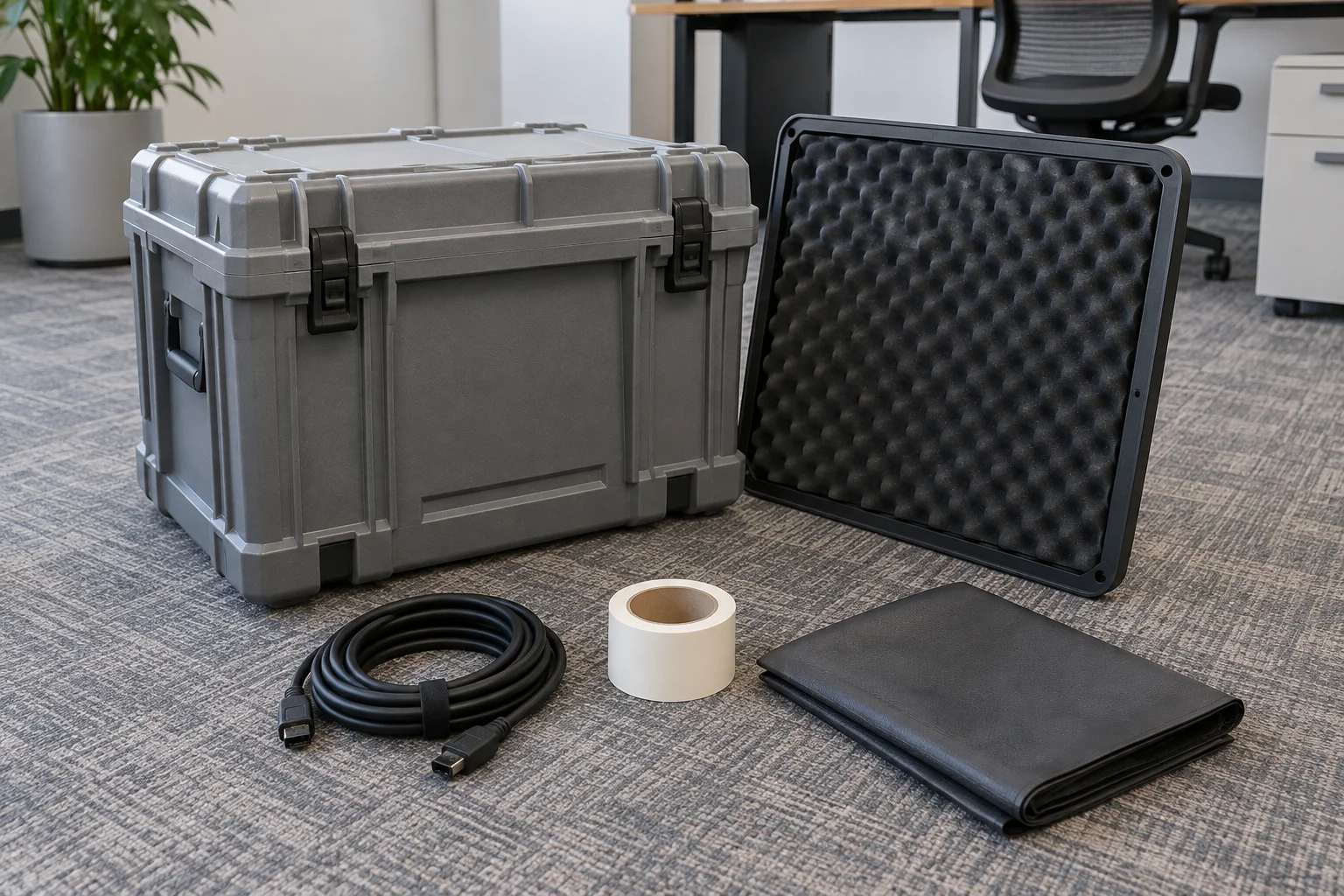
A transit crate and a foam-lined screen cover beside a coiled cable on an office floor
LABELLED AT BOTH ENDS / ONE DESK, ONE CRATE

A facilities manager’s view

“They held the window. The Monday log-in was the test, every desk on the map passed it, and the two that did not were already on the snag list before we asked.”

Single-floor relocation · sample story

Sample story. Not a real customer review.

The questions a facilities manager asks

Before the
window is booked.

Can you really have us working again on Monday?

The window is what is quoted, not a working day. For a single floor that means decommission from Friday 18:00, carriage through the booked goods lift, recommission on the Sunday, and every workstation logged in as the acceptance test by Sunday 16:00. It is held only if the building releases its lifts, the destination floor is handed over empty and the asset list is frozen at week 2. Where one of those three is not true, we say so at the survey rather than on the Friday.

What if the building will not release the lifts at the weekend?

Then the window is longer or the building changes its mind. Lifts, the loading bay, corridor protection and any out-of-hours permit are the building’s to give, and we ask for them in writing at the survey. If the goods lift is shared with other tenants, the booking is confirmed before the date is given to your staff. A window quoted without a confirmed lift booking is a wish.

What documentation will our building manager ask for?

A method statement and a risk assessment for the weekend, public liability and professional indemnity certificates with the limits on them, the lift and loading bay booking confirmations, the corridor and door protection method, an access list for security, and the disposal paperwork for anything leaving as waste electrical and electronic equipment. The obligation to get the building’s sign-off stays with you as the tenant; ours is to hand over the documents it asks for, in your name, before the Friday.

Who holds the risk if equipment does not come back up?

Equipment is disconnected, carried and reconnected as it was found, and the log-in test is the acceptance test. An item that does not come back up is recorded on the snagging list the same day and reported to you, and the cause is worked out between us, your IT team and whoever supplied the equipment. Where the failure is in the reconnection we did, it is ours and it is not an invoice. What we cannot take on is a failure in a network or a service we do not own.

What happens to the equipment we are leaving behind?

It stays your property until a disposal is instructed in writing. Disposal is a separate priced line: the items are listed, collected on the same programme, and the waste electrical and electronic equipment paperwork is issued with the list of what went and where. Anything you want destroyed rather than resold is handled separately, with a signed certificate of destruction.

Is the figure fixed, or does it grow over the weekend?

The quotation is fixed for the plan and the window described in it: the carriage at the workstation count signed at week 4, the crates at the register, the IT work at the asset list agreed at week 2, and the out-of-hours windows named in the plan. Two things can move it, and both are quoted before the work continues: equipment found on the day that is not on the list, and joiners or departures between week 2 and the date. Nothing else is added after the fact.

Do you move the server and the network yourselves?

We decommission, carry and reinstall the equipment that is listed, in the order agreed with whoever owns it, and we reconnect each desk to the desk map. We do not provide a managed IT service and we do not claim one: patch-panel changes, new cabling, certification and anything that has to be done inside a live network stay with the contractor who holds that contract. That line is named separately in the quotation rather than hidden in the figure.

Do you clean the floor we are leaving?

No. Cleaning is a different trade with its own standard, and we do not sell it. We lift our protection and leave the floor as we found it, minus the furniture and the crates. If the landlord requires a clean before handover, that is a separate booking, and it is best sequenced after we have taken the last load out rather than before it.

Start with the floor

Tell us the floor plan,
and the Monday you need.

Give us the workstation count, the building, whether the comms room moves, and the date you have to be working again. The survey and the window follow from that.

Concept only. Nothing is sent or booked, and no crew is dispatched until you send the message yourself.

Preview your message
Send this enquiry on WhatsApp

Project shapes · The window · The fixed quote

Opens WhatsApp with this enquiry ready to send. Nothing is sent or booked until you press send there.
Scope my relocation