Storage & packing · Singapore

Held by the month.
Counted by the load.

Long-term storage for a home or a business: monthly tiers by load size, the access terms, the retrieval lead time, the liability limit and the packing price per box, all written down before anything is collected.

Price my storage
Monthly
Billed per load size
Access
By appointment
Retrieval
Three working days

Monthly tiers

Illustrative concept pricing, not a quotation. Figures are per month for the load size shown, billed monthly in advance. Collection, return delivery and every access visit are charged separately from the schedule below. Confirm current rates and the term before you commit.
Half loadS$168
Full loadS$285
Twelve months or more20% off
Collection and returnPer load, once
Access visitS$25
Packing, per boxfrom S$8
Illustrative wrapped furniture and plain numbered cartons stacked on pallets inside a dry warehouse store, with a clear aisle and a platform trolley
STORED BY MONTH / RACKED / LISTED / RETRIEVABLE
Half or full loadBilled by the monthRetrieval in three daysSee how a box is found again ↓

What the store is for

Six reasons a load sits,
one way it is priced.

Pick the reason closest to yours. Every one of them is billed by the month on the same tiers, and every one of them carries the same access terms and the same retrieval lead time.

A load, not a room count

A half load is up to two trolley loads of boxed and wrapped goods; a full load is a whole household. The tier is measured at collection, so the figure you are quoted is the figure for what actually arrives rather than for what was described.

Months, not weeks

We price by the month because that is the unit a store is paid in: the space, the rent, the building and the pest cycle are the same whether the load is touched or not. Anything shorter than a month is priced as a month.

Before anything is wrapped

What we take,
and what we
refuse.

A store is only as good as its intake. Every load is counted, condition-noted and photographed at collection, and the note goes onto the inventory you keep a copy of.

Counted in, on paper

Every load is counted by item and by box at collection, while the van is still at the door. A count that is not written down is not a count, and eight weeks later it cannot be reconstructed from memory.

Condition noted and photographed

Existing damage, missing parts and anything already fragile is noted per item and photographed. That note is what separates a store problem from a problem that arrived with the load.

Wrapped for the term, not for the trip

Furniture wrapped in breathable covers, mattresses bagged, glass corner-protected, metal given a film against the damp. A store is damp in a way a truck is not, so wrapping for a move is not wrapping for a year.

Climate, pests and the building

Nothing sits directly on a concrete floor, the store is kept dry and air-moved, and the pest cycle runs on a schedule with a written record per visit. Our intake note carries those three on one line per visit: the clearance under the load, the air movement in the bay, and the pest treatment with its date. It reaches you with the inventory at intake.

What we will not store

Perishables and plants, live animals, fuel, gas and flammables, ammunition, anything unlawful, and cash, jewellery or documents you may have to produce on demand. A contaminated or infested load is declined at the door with the reason written on the intake note.

What we do not value for you

A store is not an auction house and we do not appraise anything. The declared value is yours to set, and the liability limit is written against it on the agreement. The limit is printed on the agreement you sign, before you sign it.

Why a box can be found again

Marked, listed,
and retrievable.

The question behind every storage contract is what happens when you need one thing back out of it. That is answered by a number, a list and a lead time rather than by a promise.

Box numbering and the area map

Every box gets a number and every number sits on an area map of the store. That is what makes a retrieval a job rather than a search, and it is why a box marked miscellaneous is a box nobody can fetch to order.

The inventory document

The item list, the box list and the photographs are issued at collection as one document, and updated whenever anything is added, retrieved or returned. You keep a copy and the store keeps the same one, so the two cannot drift apart.

Access, by appointment

Access is by appointment with two working days’ notice. You may take items away on the day, and the inventory is updated in front of you before you leave rather than back at the office.

Retrieval lead time

A single box or a named item is brought out within three working days. A part-load release takes five working days, and a full return is quoted on the load and the delivery band. Anything needed sooner is priced as an urgent retrieval at a stated rate rather than promised and missed.

What a retrieval costs

Retrievals are priced per visit plus the handling of whatever comes out. Nothing is added for the boxes you look at and put back, because that is the visit you have already paid for.

What the inventory will not do

It will not turn a box of assorted contents into a searchable box, and it is not a valuation. If an item has to be produced by name in six months, name it on the list when it goes in rather than describing it when it is needed.

The three priced stages

Two load days,
and the months in between.

1 · Collection and transport

Priced once, on the load, on the day the goods leave your address. It covers the wrapping, the trolley work, the transport and the placing of the load in the store, and it does not recur.

2 · Storage handling, by the month

The monthly tier is the figure that recurs. It covers the space, the rent, the pest cycle, the inventory and the handling of anything retrieved inside the lead time.

3 · Return delivery

Priced once, on the load, on the day you want it back, at the band for the address it goes to. A part return is priced on what comes out rather than on what stayed behind.

Compare the total, not the month

The monthly number is one line of four. A lower month with a higher collection and a higher return can be the more expensive arrangement, and a unit you drive to yourself adds a van, your own time and your own lifting to a figure that never appeared on the quote.

Where we hold, and the delivery bands

The store is inland, and return delivery is priced in bands by district rather than by kilometres travelled: the same load costs less into a district our vans already run through. The band for your address is written on the quotation before the load is collected, so the return price is known on the day you sign.

Access, notice and the term

Billed monthly in advance on a rolling agreement with a stated notice period to end it, and no exit fee. Two working days’ notice for an access visit. Ending the agreement does not shorten the retrieval lead time: a full return still needs its five working days.

Three loads, as they were held

What the month
actually costs.

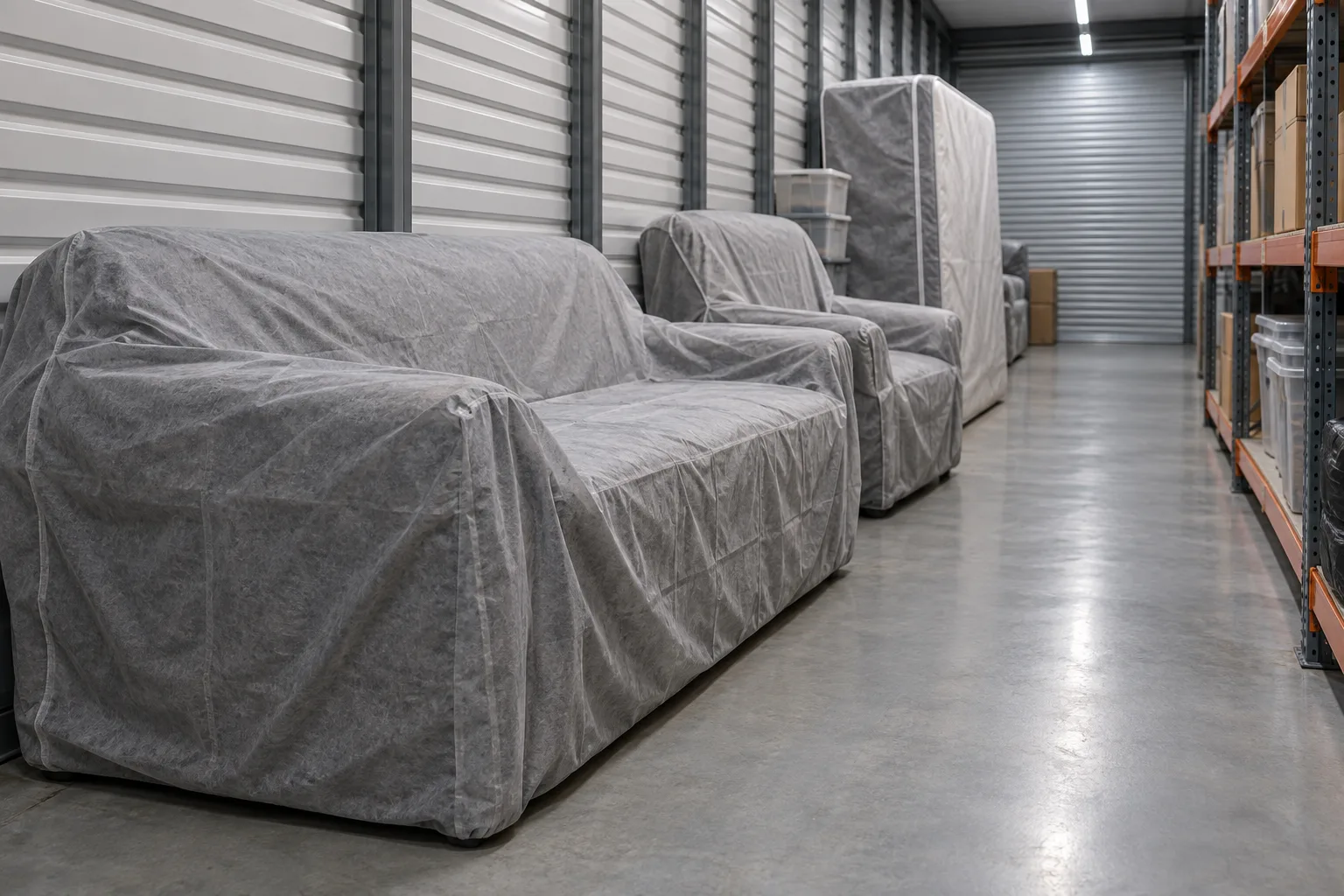
Illustrative wrapped sofa and armchairs under breathable covers in a dry storage aisle beside a mattress bag

Full load · twelve months · two access visits, one retrieval

A household held for a year

A three-bedroom flat put into store while a lease was settled, collected once and returned once, with the monthly tier unchanged from month one to month twelve.

The year, line by line

Collection and transport S$180, charged once. Twelve months at the full-load tier, S$285 a month, S$3,420. Two access visits at S$25 each. One retrieval of six boxes and a bicycle at S$60. Return delivery on the city band at S$180, charged once. The year is S$3,890 against a monthly figure of S$285, which is the comparison worth making before anybody signs a term on the headline month.

Illustrative hanging wardrobe carton of clothes on a flat trolley in a storage bay between stacked cartons

Half load · four months · weekly access through a renovation

Out through the works, and back in after

Three rooms stripped for a renovation, with the furniture held for four months and wanted back section by section as each room was finished. Access was the busy line on this one, not the space.

Where the money went

Half load at S$168 a month for four months, S$672. Collection at S$120 and return at S$120, charged once each on the load. Sixteen access visits inside the term at S$25 a visit, S$400, which is more than the storage itself and the reason we ask how often you will come before we quote the month. Wardrobe cartons at S$26 each so that the hanging clothes never went back into a carton on the way home.

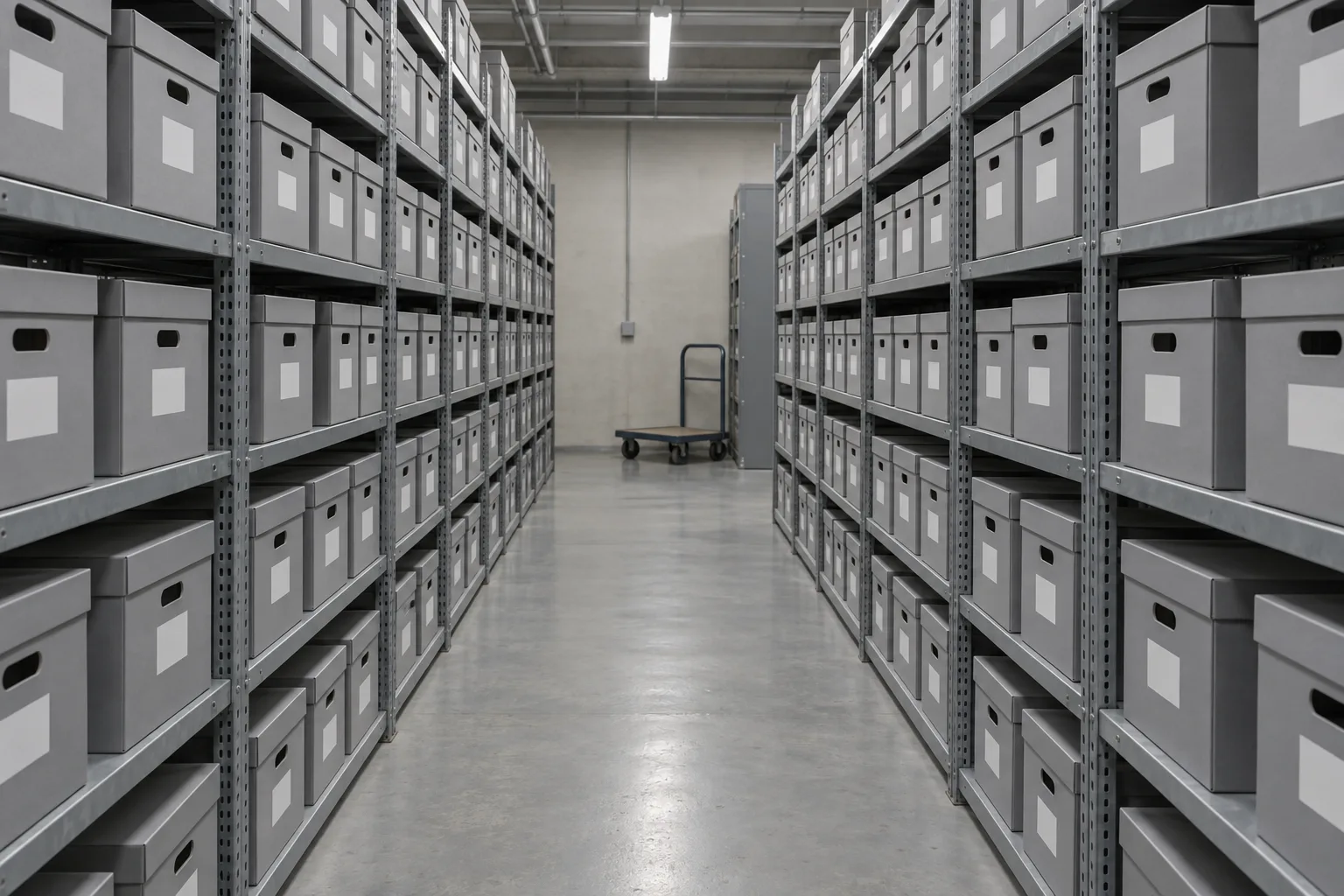
Illustrative rows of grey archive crates on steel shelving in a business archive aisle with a flat trolley parked at the end

Business archive · 240 crates · quarterly retrieval

An office downsize, kept retrievable

An accounting practice moving to half the floor area, with eleven years of files that had to stay retrievable by client name rather than stay in the office. Numbered crates, listed by client, fetched to order.

The archive, per quarter

240 crates at S$0.60 a crate a month, S$144 a month and S$1,728 across the year. Collection and placing at S$220, charged once. One quarterly retrieval of four named crates at S$60 each, S$240 across the year. Every crate is numbered on an area map and listed by client on the inventory, so a request names a client and a date and the crate is picked to that list rather than searched for.

Three loads on the same basis: the tier, the term and the access you actually use. The monthly figure is one line of four in every one of them. The loads are the shape of the job; the rates are ours.

Price a load like this

Collected, counted, mapped, held.

  1. Collection day

    Wrapped at your address, loaded onto the trolley with the count taken as it goes on, and the intake note started while the van is still at the door.

  2. Intake and the inventory

    Every item and every box numbered, condition-noted and photographed, and the completed inventory issued to you on the same document the store works from.

  3. The month

    The tier you were measured into, billed in advance, with the floor clearance, the air movement and the pest cycle recorded per visit rather than described at the end.

  4. Retrieval and return

    A named box out in three working days, a part load in five, and a full return quoted on the load and the band for the address.

The price basis, published

Four things move
the monthly figure.

They are named above the tiers, because they decide your number before a single box is counted. An operator who will not name them is quoting a figure they can move later.

1 · The size of the load

Half load or full load is the tier, and the tier is decided at collection from the measured load rather than from a description over the phone. A tier that changes because the load was larger than described is re-priced from the month it changes, in writing.

2 · The months you commit to

The monthly figure is set against a committed term. A term of twelve months or more is a lower month than a rolling one, and the term, the notice and the exit sit on one page of the agreement rather than in a schedule nobody reads.

3 · Access and retrievals

Storage that is never touched is the cheapest storage. Each access visit, each retrieval and each return is priced work, so say how often you expect to come and the figure stops being a guess on both sides.

4 · The value you declare

A declared value is what the liability limit is set against. Declare it at intake rather than after a loss, and the limit is written on the agreement before you sign. Replacement value and second-hand value are different numbers, and the agreement uses one of them.

The monthly tiers, by load size

Illustrative concept pricing, not a quotation. Figures are per month for the load size shown, in a shared secure store, billed monthly in advance on a rolling agreement. Collection, return delivery, access visits and retrievals are charged separately from the schedule above and the table below. The tier is measured at collection. Confirm current rates and the term that applies before you commit.
TierPer month
Half load
Up to two trolley loads
Boxed and wrapped goods
S$168
Full load
A whole household
Furniture, boxed goods, appliances
S$285
Twelve months or more
Committed term
Either tier above
20% off the month
A trolley load added later
After intake
Anything added mid-term
S$40 per month
Business archive
Crates only, listed by client
100 crates minimum
S$0.60 per crate per month

Six months, as a total rather than a month

Illustrative concept pricing, not a quotation. One full load from a three-bedroom flat, collected once, held for six months at the full-load tier, with two access visits and one retrieval of six boxes, then returned. The monthly figure is one line of four, which is exactly why it is the most misleading number on a storage page. Confirm current rates before you commit.
LineSix months, one full load
Collection and transport
Once, on the load
S$180
Storage handling
S$285 per month
S$1,710
Two access visits
S$25 per visit
S$50
One retrieval of six boxes
Per retrieval
S$60
Return delivery, city band
Once, on the load
S$180
Total, six months
Collection, storage, access, return
S$2,180
The monthly figure on its own
S$285 per month
S$1,710, not the cost

Held by us, or a unit you rent

Held by us

One collection and one return, and you do not drive anywhere. The load is wrapped, counted, mapped and retrievable by name, and somebody else does the lifting. This is the column that charges more per month and less of your own time.

It suits a load you will need a few times rather than weekly, a household with no van, and anything that has to come back into a home rather than onto a driveway.

The unit you rent

Cheaper on the headline month, and you are the handling. You drive, you lift, and you own the damp and the damage once it is inside, and a retrieval is an evening rather than a request.

It suits a load you will be in and out of constantly, a business storing its own stock that it needs daily, and anyone who already has the van, the help and the evenings.

Packing, sold by the box

Illustrative concept pricing, not a quotation. Packing is an add-on, done at your address before the load is collected rather than after it arrives. Everything we pack is numbered and listed on the inventory as it is packed, and the materials for a box sit inside the box price. Boxes are loaned and remain ours. Confirm current rates before you commit.
PackingRate
Medium box
Books, kitchen, small items
Box, tape and packing paper
from S$8 per box
Large box
Bedding, clothing, soft goods
Box, tape and packing paper
from S$11 per box
Wardrobe carton
Hanging clothes
A hanging carton you keep for the term
from S$26 per box
Fragile wrap
Per item
Bubble wrap and corner protection
from S$6 per item
Packing labour
Two packers, at your address
Boxing, labelling and listing
S$75 per hour
Loan boxes
Reused for the term
Refunded when the boxes come back
S$3 deposit each

Inside the month, and charged on top

Inside the monthly tier

  • The space, the rent and the building
  • The dry, air-moved store and the scheduled pest cycle
  • The condition and pest records, kept per visit
  • The inventory document and every update to it
  • Handling of anything retrieved inside the lead time
  • Access control on the store, and the appointment itself

Charged on top of the month

  • Collection and transport, on the day the load leaves you
  • Return delivery, on the day it comes back
  • Every access visit, at the stated rate
  • Every retrieval outside the lead time, priced as urgent
  • Packing, materials and anything packed by us
  • Cleaning of anything in the load, which is a different trade and is not sold here
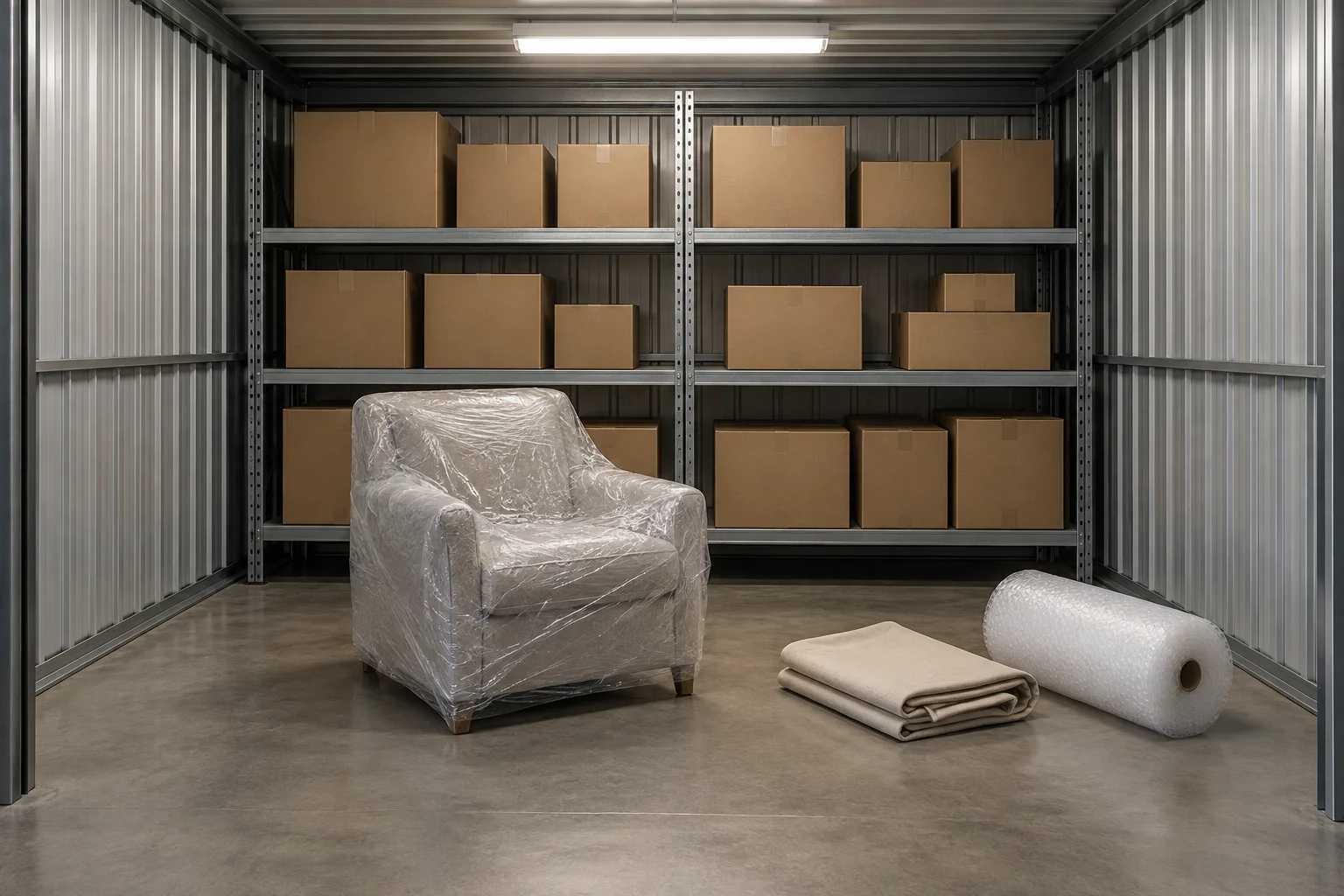
A sealed carton beside a roll of bubble wrap and a folded corner protector on a concrete floor
NUMBERED AND LISTED / THE BOX ON THE MAP

A household’s view

“The monthly figure was the same in month twelve as in month one, and when I asked for one box out of the middle of the load it came out in three days.”

Full load held for eleven months · sample story

Sample story. Not a real customer review.

Before you sign a term

The questions a
storage buyer asks.

What does the month actually include?

The space, the rent, the building and its access control, the dry and air-moved storage, the scheduled pest cycle with its records, the inventory document and its updates, and the handling of anything retrieved inside the lead time. What it does not include is on the same page: collection, return delivery, every access visit, every retrieval outside the lead time, and packing. Those are the four lines a monthly figure hides on a cheaper page.

How do I get something back, and how fast?

A single box or a named item within three working days. A part-load release in five working days. A full load quoted on the size of the return and the delivery band for the address, usually within the same week. Anything you need sooner is priced as an urgent retrieval at a stated rate rather than promised and missed. Access is by appointment with two working days’ notice, and you can take items away on the day.

What are the access terms?

By appointment, two working days ahead, priced per visit at the rate in the price basis. You may take items out on the day, and the inventory is updated in front of you. If you want to come weekly, say so at intake: it is priced rather than refused, and it is better known at intake than discovered in month three.

What is the liability limit, and what is it set against?

The limit is written on the agreement against the value you declare at intake, and the declared value is yours to set rather than something we appraise. The limit is stated on the agreement in replacement value, with its exclusions on the same page rather than in a schedule, and the declared value is the number it is set against. We will not quote a policy number we do not hold: what you get is the limit on the document you sign, before the load is collected.

What happens if I stop paying, or never come back?

The month is billed in advance, and one missed month does not start a countdown. A missed month gets a written reminder and a stated grace period, during which access is frozen but nothing moves and nothing is sold. The disposal terms are on the agreement: the notice we send, the final date the load is held to, and what happens to the contents after it, including your right to nominate somebody else to collect the load and settle the balance. Nothing is sold on day one, and nothing is disposed of without the notice the agreement describes.

Why not just rent a self-storage unit myself?

Often you should. A unit is cheaper on the headline month, and you are the handling: you drive, you lift, and you own the damp and the damage once the load is inside. We charge more per month and less of your own time, and we can bring one named box out of the middle of a load in three working days. If you will be in and out of the load every week and you have a van, the unit is the better answer, and we say so rather than pretending otherwise.

Do you pack, and what does it cost?

Packing is an add-on rather than a service blur: priced per box, per item of fragile wrap, and per hour of two packers at your address, with the materials for a box inside the box price. Everything we pack is numbered and listed on the inventory as it is packed, so a box we packed can be found again. Boxes are loaned and remain ours, and the deposit comes back when they do.

What will you not store?

Perishables and plants, live animals, fuel, gas and flammables, ammunition, anything unlawful, and cash, jewellery or documents you may have to produce on demand. A contaminated or infested load is declined at the door, with the reason written on the intake note rather than left to a phone call. If something you want to keep falls outside that list, say so at the enquiry and the answer comes before a van is sent.

Will you clean the things you store?

No. Cleaning is a different trade with its own standard, and we do not sell it. We wrap, carry, count and hold. Loose dust is brushed off before wrapping so that it does not travel, and that is where it stops. If furniture has to be cleaned or restored before it goes back into a home, that is a separate booking with the right trade, and it is best sequenced after the return rather than before it.
Start with the load

Tell us what is going in,
and how long for.

Give us the size of the load, the months you expect, and how often you will need to come. The tier, the retrieval lead time and the access terms follow from that rather than the other way round.

Concept only. Nothing is sent or booked.

Liability limit
The limit sits on the agreement against the value you declare at intake, in replacement value, with its exclusions named on the same page. We state the limit on the document you sign rather than quoting cover we cannot show.
Access terms
Access is by appointment with two working days’ notice, charged per visit at the published rate, and you may take items away on the day. The inventory is updated in front of you before you leave.
Retrieval lead time
One box or a named item in three working days. A part-load release in five. A full return quoted on the load and the band for the address it goes to.
Notice and disposal
The notice period to end the term is on the agreement, there is no exit fee, and nothing is disposed of without the written reminder and the final date the load is held to.
Preview your message
Send this enquiry on WhatsApp

Opens WhatsApp with this enquiry ready to send. Nothing is sent or booked until you press send there.

The monthly tiers · Retrieval and the inventory · The three stages

Price my storage