A recovery is quoted from the failure type before you ship anything, the original media is imaged and never worked on, and if no files come back you pay nothing except the fees we list in writing.
This is our policy, in a category where most pages write “confidential” and stop. Every line of it is ours to put in writing before you courier anything.
Named technicians, logged access
The case is worked by the technicians named on your intake sheet, and access to the case folder is logged. Nobody else in the building opens it.
A file list, not a browse
We work from the directory structure and hand you a list of folders and filenames for approval. We do not open documents, view photographs or read messages to “check” that a recovery worked.
An NDA, if you need one
Business clients can send their own agreement or use ours, signed before intake. Where your clients’ data sits on the media, we work to the confidentiality terms you set in that agreement, and we will say if we cannot meet one.
We do not bypass encryption or account security
If the media is encrypted and you cannot supply the key, we cannot get past it, and we say so rather than quote for a job we cannot finish. We do not break into accounts.
No copy kept after return
Files go back on media you take away, and the working image is destroyed once you confirm the return, with a dated destruction note if you ask for one.
Documents we do not claim to hold
We publish no certification, award or accreditation we cannot produce on request. Anything we do hold is produced as the certificate behind it, not as a badge on a page.
We do not take tape libraries, phones with a broken secure enclave, or media we cannot satisfy ourselves is yours.
Donors, and where the drive is opened
A donor is a part, not your data.
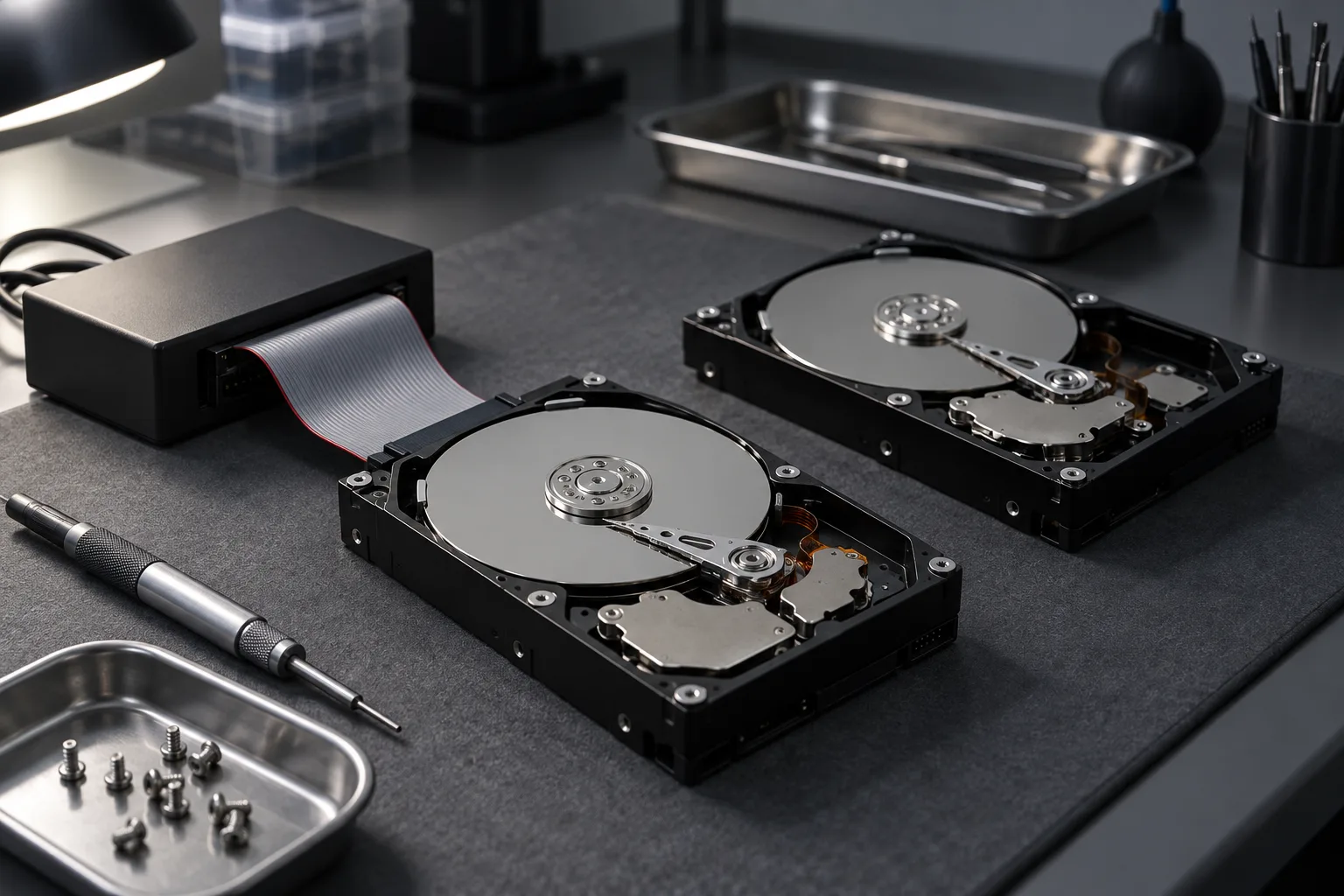
Some mechanical jobs need a second unit of the same model to supply heads or a board. This is what that costs, and what happens to it.
Donors are bought, not borrowed
The donor is sourced for the model and the work happens on your platters. Nothing on the donor is read, and the donor is not returned because it does not survive the job.
The deposit stands whatever the outcome
A donor deposit of S$80–250 is set before the attempt and is spent buying the part. It is one of the written exceptions to the no-data-no-fee rule, and it is quoted first rather than found on the invoice.
The bench the drive is opened on
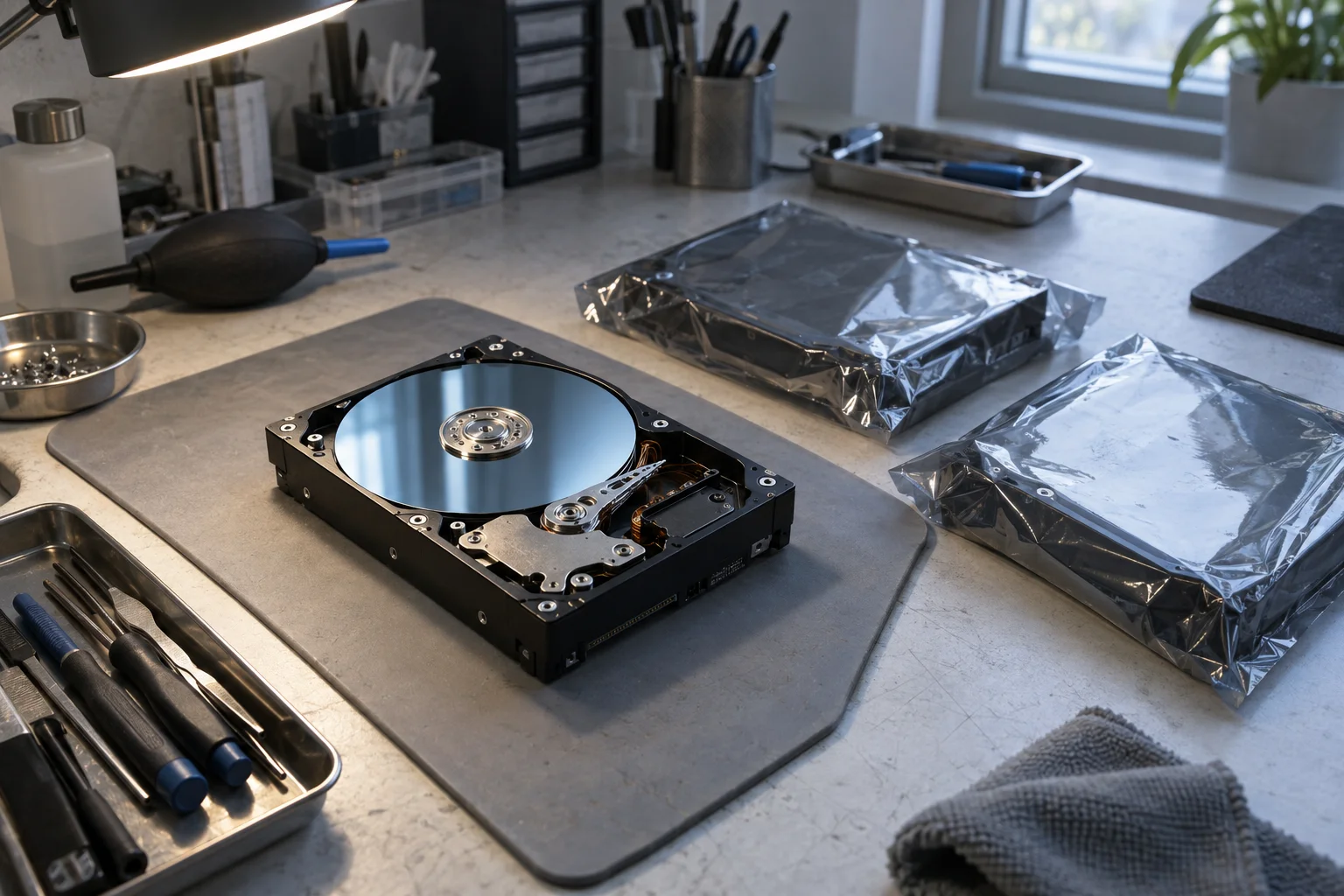
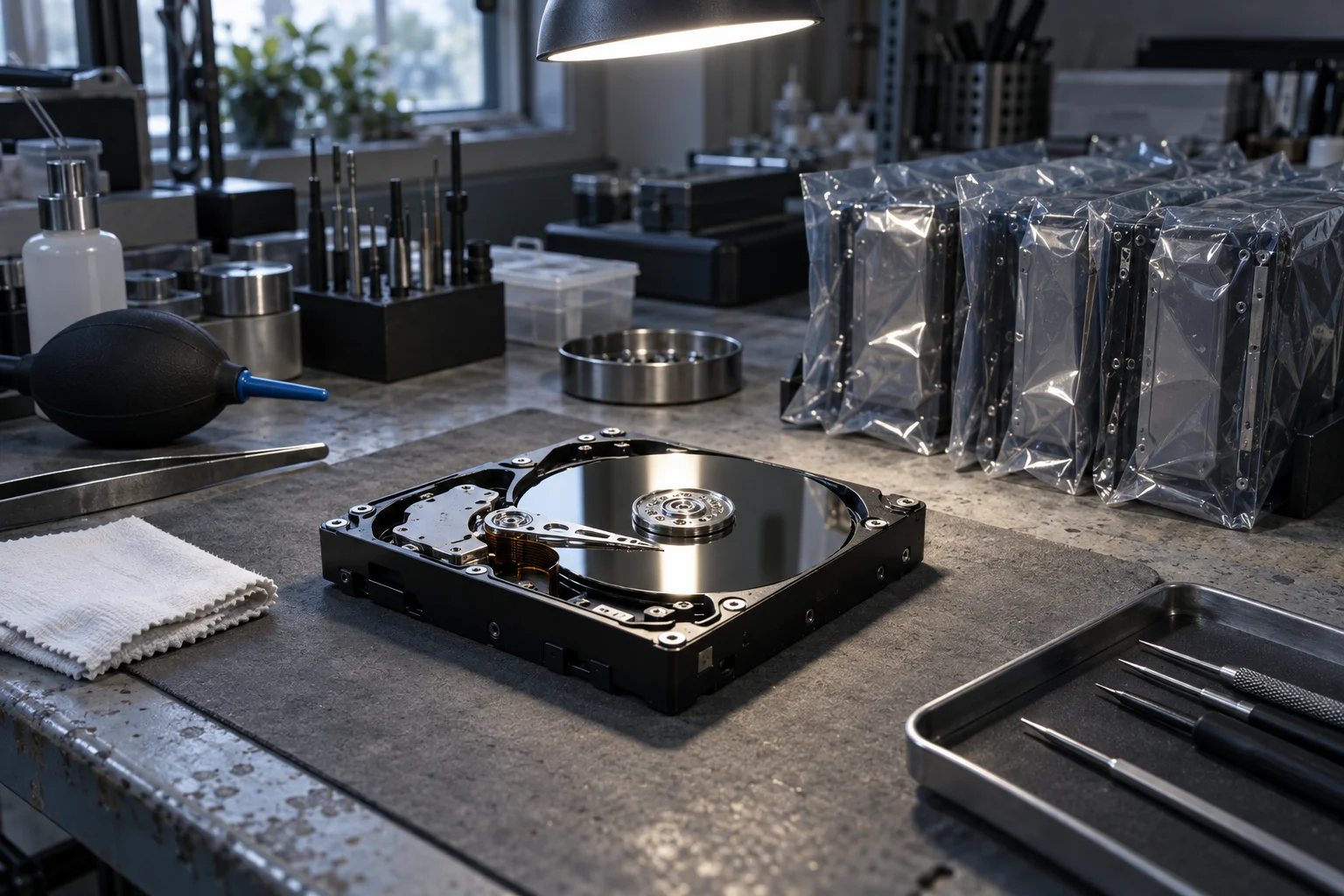
Mechanical work happens on our own bench at our premises, not at a third party. The classification of that bench is on your quote in writing: a drive opened on an ordinary bench is usually a drive that is lost.
Work we do not do here
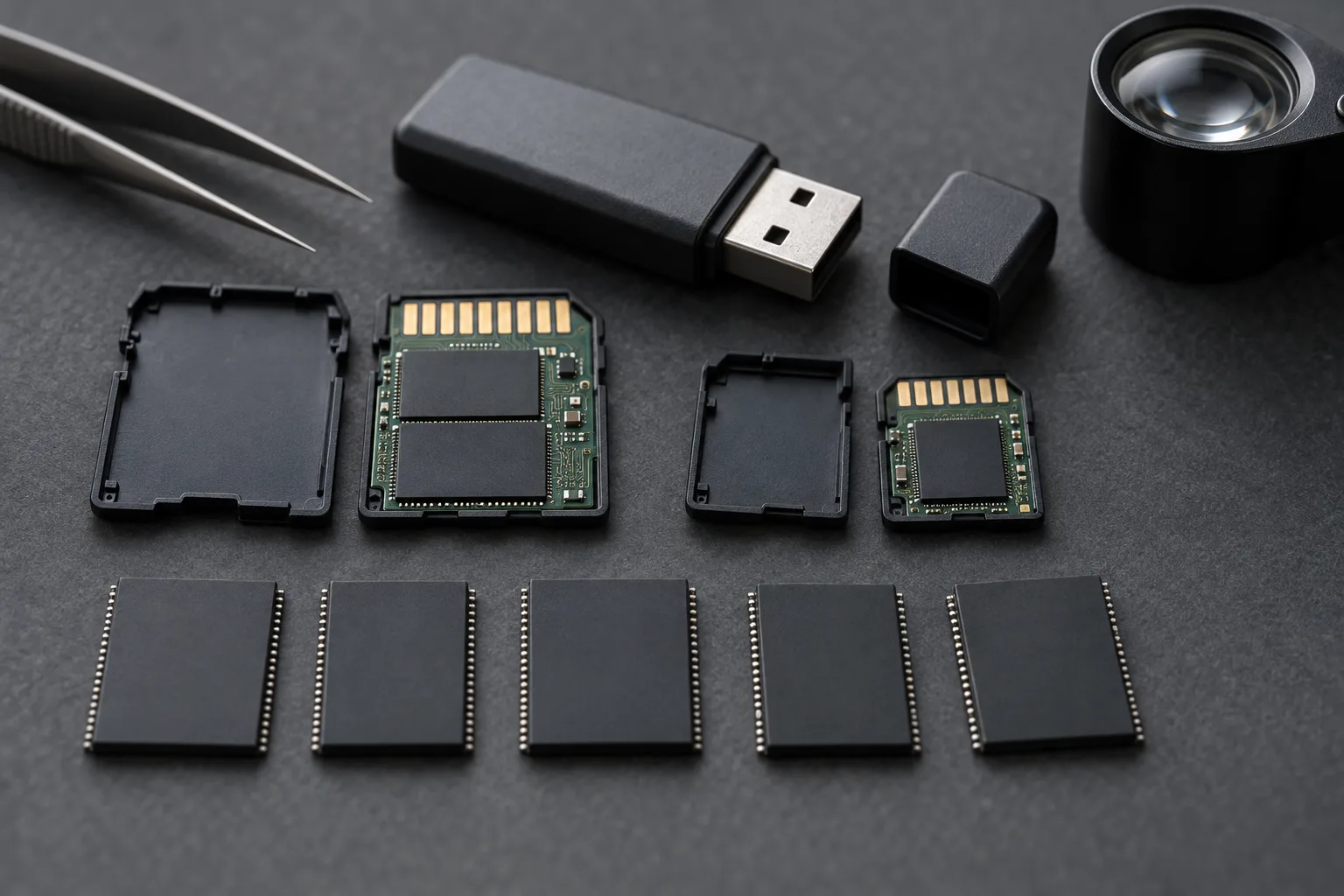
Chip-off NAND work and some phone boards go to a partner lab. Where that applies, the partner is named on the quote with its price band, and it works under our custody terms rather than its own.
Jobs we decline
Scored platters, shattered glass media and drives already opened elsewhere are assessed before anything is attempted. We quote the assessment, then tell you whether the odds justify the attempt.
Before you ship anything
Quoted from the failure, not from the capacity.
A two-terabyte drive with a broken head is not the job of a drive with a deleted folder. The band is set by what failed, and the figure is fixed after assessment.
Illustrative concept pricing, not a quotation. Bands assume one device, one failure, media received in the condition described, files returned on new media of up to 2 TB, and the standard queue. Figures move with the platter or drive count, a second failure found on opening, a donor part, priority handling, and larger return media. Confirm current rates with the lab.
Failure
Lead time
Band
Logical Deleted, formatted, raw partition · It powers up and mounts, or asks to be formatted. Files are missing rather than the device being dead.
2–4 working days
S$250–600
Firmware Not detected, wrong capacity · Seen by the system at the wrong size, spins up but will not read, or drops out when accessed.
4–7 working days
S$600–1,400
Mechanical Heads, motor, platters · Clicking, beeping, spinning down, or silence. Opened on our own bench.
5–10 working days
S$900–2,200
SSD & NVMe Controller or NAND · The drive disappears, or reports zero capacity after a power event.
5–10 working days
S$700–2,000
Flash media Card, USB, phone · Not recognised, corrupt, or files gone after a failed transfer. Phone storage is quoted per model.
3–6 working days
S$180–600
RAID, NAS & server Priced per drive count · An array that is offline, degraded, or rebuilt wrongly after a disk was swapped.
7–14 working days
From S$1,500
The rule: if no files come back, you are not charged for the recovery work. The written exceptions are the only amounts that still stand when nothing is recovered.
Priority handling, where you bought it: S$300, which moves the case to the front of the bench queue. It is not refundable.
A donor deposit of S$80–250 where a donor unit had to be bought.
An open-cover fee of S$100 where the drive arrives already opened by someone else, or damaged past a readable state. We say so before we start.
Return media and courier cost, and assessment labour of S$100 on media that turns out to hold nothing recoverable, or that is encrypted past the key.
That is the whole list. What a failed attempt costs you is the sum of the items that applied to your case, and for a standard job that has not been opened elsewhere it is the courier. Priority handling changes the queue, not the work, the band or the odds, and it cannot make a donor part arrive sooner.
The assessment itself is free and it is written. You get the finding, the band, the odds and the lead time before you approve anything, and if you decline, the media goes back to you.
After the files come back
What we stand behind, and what nobody can.
Two different things get called a warranty in this trade: the work we did, and the result you hoped for. Only one of them can be promised.
Thirty days on the returned files
If a file on the list we gave you will not open, tell us within 30 days and we re-run the extraction from the working image at no charge, while we still hold it. That is the limit of what we offer.
No promise about how much comes back
No lab can promise a result, and a percentage quoted before the media is opened is a sales figure. You get a band — likely, uncertain or unlikely — with the reason for it, and you decide whether the attempt is worth the money.
Not covered
Media held past the agreed collection window, damage after handover, and any attempt made on the media by someone else after we return it.
The working image is destroyed deliberately
We hold it for the 30 days above, longer only where you ask in writing. After that it is destroyed and the destruction is dated.
Ownership is checked, not assumed
We do not work on media we believe is not yours. Something that shows the device or the account is yours is enough; for a company case, an email from the company will do.
Three cases from the bench
What the work costs, and what it does not.
BENCH / MECHANICAL CASE
Mechanical recovery · a clicking 2 TB drive
Scope: one desktop drive, failed after a fall · S$900–2,200 band plus donor deposit · 5–10 working days
One 2 TB desktop drive, mechanically failed after a fall, brought to the counter rather than couriered. Assessed and quoted at the mechanical band with a donor deposit, a five to ten day lead time and an uncertain band, because the platters had to be seen before a figure could be fixed.
What that case actually bought ↗
Logged intake; a bench head swap using a donor of the same model and firmware; the platters imaged twice, to two destinations; a file list of 41 folders handed over for approval; the files returned on a drive the client kept. The fees that stood were the donor deposit and the return media.
IMAGING FIRST / DONOR SPARES
Head swap on our own bench · donor sourced for the model
Donor deposit S$80–250 spent on the part · the donor is not returned · platters imaged to two destinations first
A mechanical job that needs heads from a second unit of the same model and firmware: the donor is bought for the work, nothing on it is read, and the deposit stands whatever the outcome.
Where the file-list check sits ↗
The list is produced from the image, not from the drive. You read it, say what matters and what can be dropped, and we extract only that. Nothing is charged before you have seen the list, and nothing is charged if the list is empty.
FLASH & PHONE STORAGE / CHIP-OFF
Flash and phone storage · chip-off NAND
Card, USB, phone · S$180–600 band · 3–6 working days · partner lab named on the quote
Memory cards, USB media and phone storage where the controller has gone: chip-off NAND work goes to a partner lab, named with its price band on the quote and working under our custody terms.
What the client was told before approving ↗
That a mechanical case is the weaker of the two odds on our own table, that the donor deposit is spent even if the attempt fails, and that a second failure under the heads would end the job with the original returned as it arrived.
Each case above is written the way the intake sheet is written: what arrived, what was done to it, which fees stood and which did not. The finding that came with it is the same document the client read before approving.
Intake, diagnose, approve, hand over.
Intake
The fault, the device’s condition and the passcode, logged on a job sheet.
Diagnose
Fault confirmed and priced. The fee is credited if you go ahead.
Approve
No work starts without your agreement on the figure, in writing.
Hand over
Working device, the old part, the warranty terms and your data left alone.
Custody, stage by stage
Who holds the media, and when.
A custody statement is not a confidentiality promise. It is a record of where your media physically is at each step. This is ours, written out before you courier anything to us.
01Intake, sealed and logged+
Handed in at the counter or received by courier: photographed as received, sealed in anti-static packing and logged against a case number with the model, the serial and the condition it arrived in.
The original is copied first wherever it can be read at all, and the work is done on the copy. The original is not the working medium, and what you get back is your files, not a working device.
You get the finding in writing with a band — likely, uncertain or unlikely — the reason for it, the price band and the lead time. No attempt starts before you accept that, in writing.
A list of folders and filenames is handed to you before payment. You accept it, we extract it, and the invoice follows the list you accepted. If the list is empty the no-data rule applies, and its exceptions are the only amounts that stand.
Five things we put in writing before an attempt: where the media is opened and what that bench is classified as; who inside the lab can see the files; whether the original is imaged before any work; what is charged if nothing comes back, item by item; and whether the fee is fixed before or after the attempt. Your written finding carries all five.
Lead times run from intake, not from your enquiry. A mechanical case can stop on the bench if a donor of the right model and firmware cannot be sourced, and you are told that before the attempt rather than after it.
A client’s view
“They sent me the list of folders they could see before they charged me anything, and the invoice was for the band they had quoted to begin with.”
Mechanical recovery, single drive · sample story
Sample story. Not a real customer review.
The practical questions
Before you send a drive anywhere.
Should I keep trying to read it myself?+
No. Every further write to a failing drive reduces what can be recovered, and running recovery software on a drive with a mechanical fault can finish it. Power it down, keep it out of the fridge and out of a bag with magnets, and bring it in. If the drive turns out to hold nothing recoverable or is encrypted past the key, assessment labour of S$100 applies, and we tell you that before you approve anything.
What does the assessment cost, and what do I get?+
Nothing, and it is written: the finding, the failure type, the price band, the lead time and a band for the odds. Nothing chargeable starts until you accept it in writing, and if you decline, the media goes back to you with the finding.
Do you send the work to another lab?+
Mechanical hard drive work is done on our own bench. Chip-off NAND and some phone boards go to a partner lab, and where that applies the partner is named on the quote with its price band, and the media stays under our custody terms. The scope is the same however the case arrives: mechanical drive work in-house, and anything outside that named on the quote rather than discovered later.
Will your technicians look at my files?+
No. A recovery works from the directory structure, and what you get to approve is a list of names. Access to the case folder is logged, businesses can put us under an NDA before intake, and we hold no copy after the return is confirmed.
What if the data is encrypted?+
Then you need the key or the account. We do not bypass encryption, secure enclaves or account security, and we will not quote for a job we cannot finish. Where a drive is encrypted and the key is lost, the honest answer is that the data is gone.
What is put in writing before an attempt?+
Five things, in writing: where the drive is opened and what that bench is classified as; who can see the files; whether the original is imaged before any attempt; what is charged if nothing comes back, item by item; and whether the fee is fixed before or after the attempt. They are on the finding that comes back to you before you approve anything.
Start with the failure
Describe what the drive does.
Bring the media to the counter, or ask for the intake sheet and courier it. Do not open it, do not run recovery software on it, and do not keep powering it on to check whether it has changed.
Where it goes: intake is at our bench premises, with couriered media received by appointment and business cases booked so a named technician takes the handover. Lab visits are by appointment only, because the bench is a controlled space. Ask for the intake sheet and the courier address, and keep the tracking number.