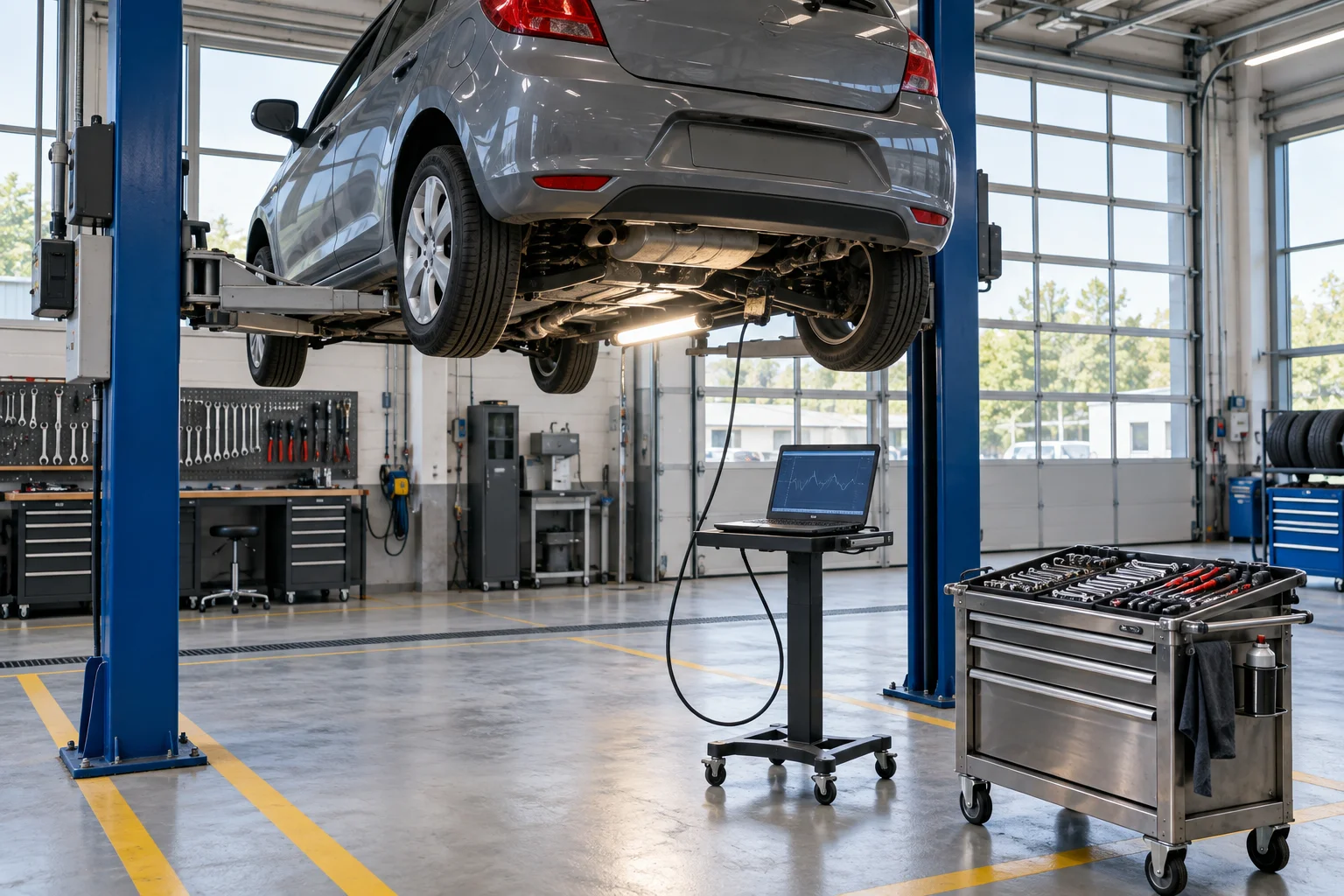
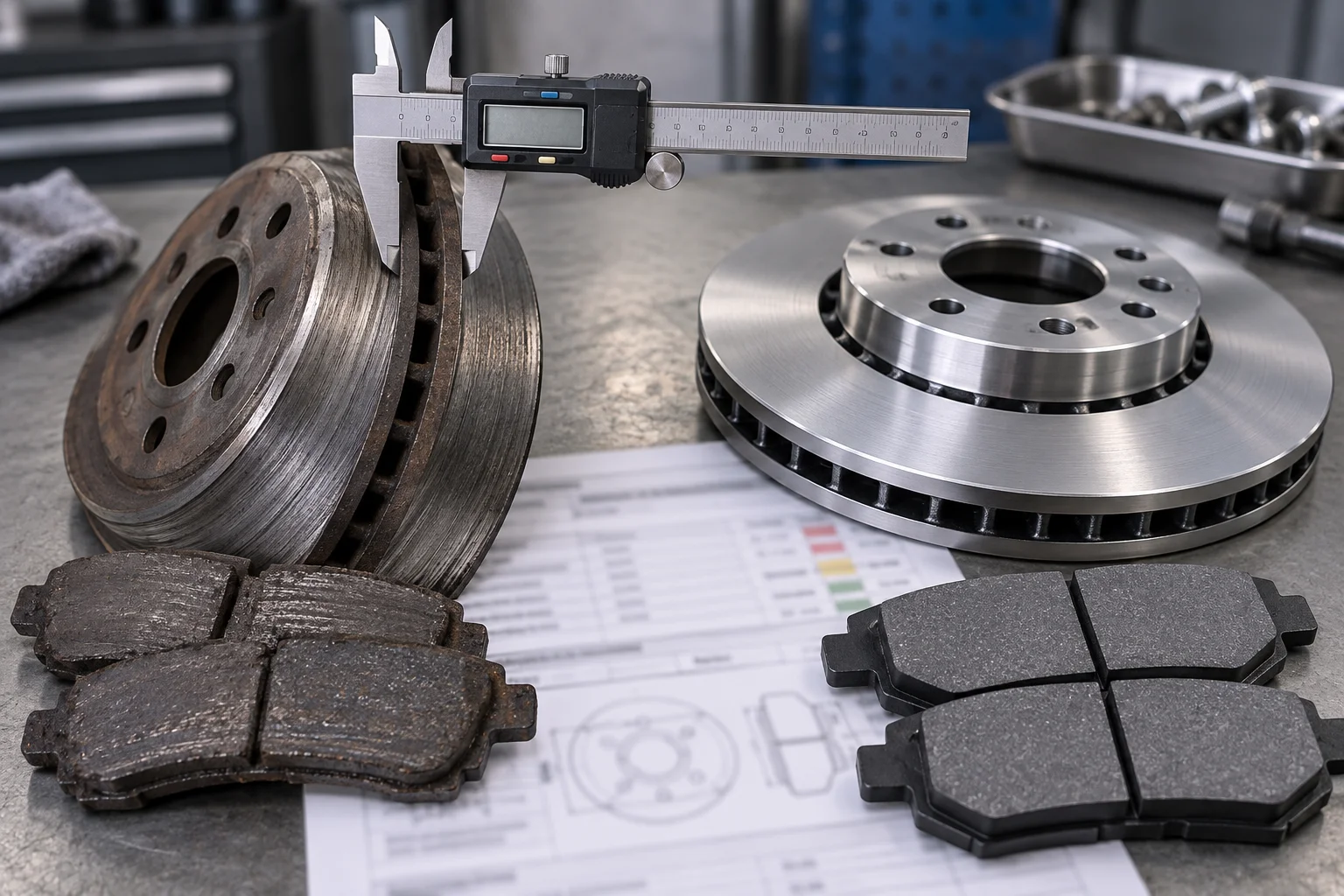
We diagnose before we quote, credit the diagnostic fee against the repair, and write down which grade of parts goes on your car before any of them are ordered.
Most of the cost of a repair is deciding what the fault actually is. So the diagnosis is a priced job on its own, and it is credited back when you let us do the work.
Diagnostics
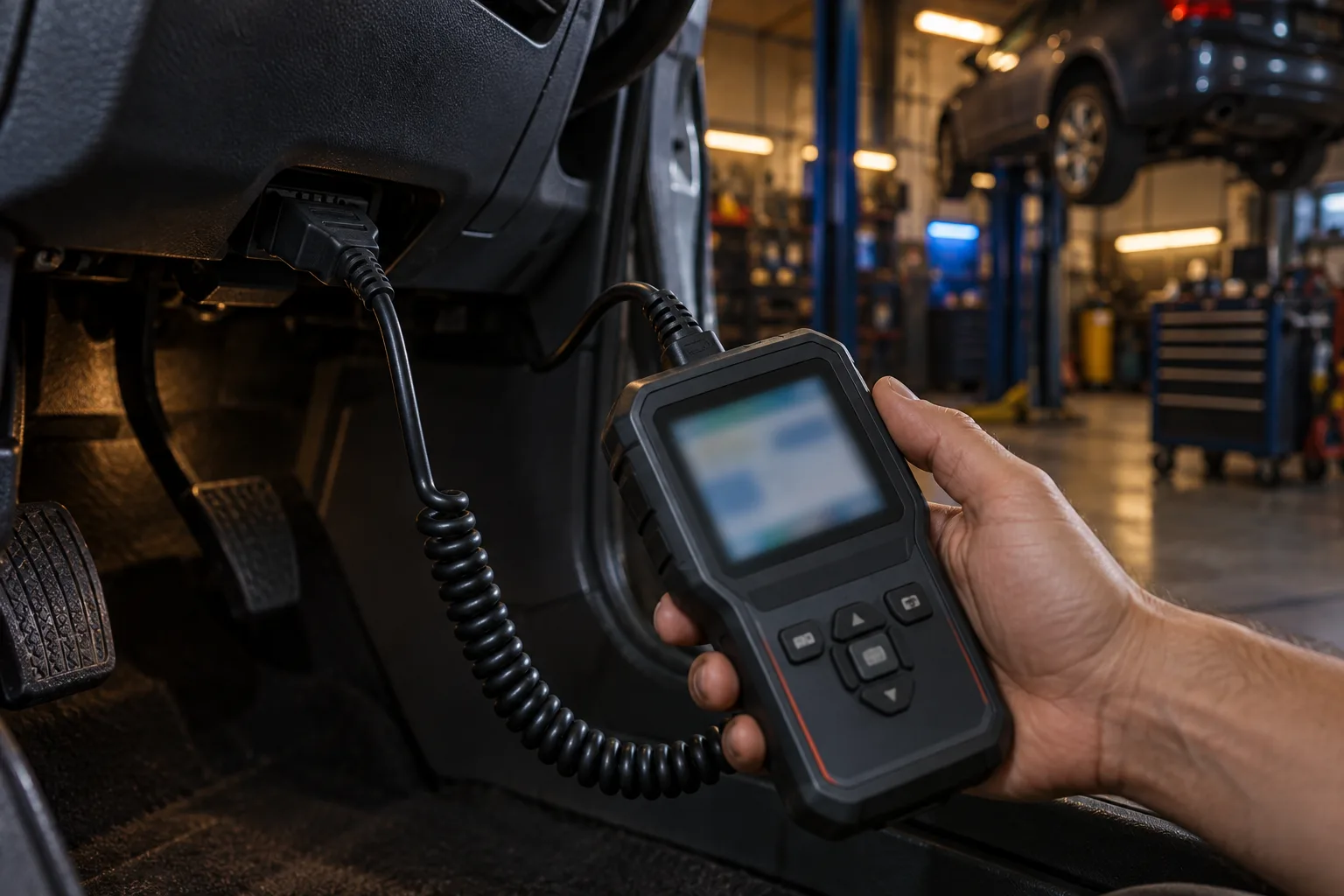
Fault codes read and interpreted, live data checked, and the fault traced to a component rather than to a symptom.
Servicing
Oil, filters, fluids, belts and inspection items on the manufacturer's schedule, with the service record stamped.
Mechanical repair
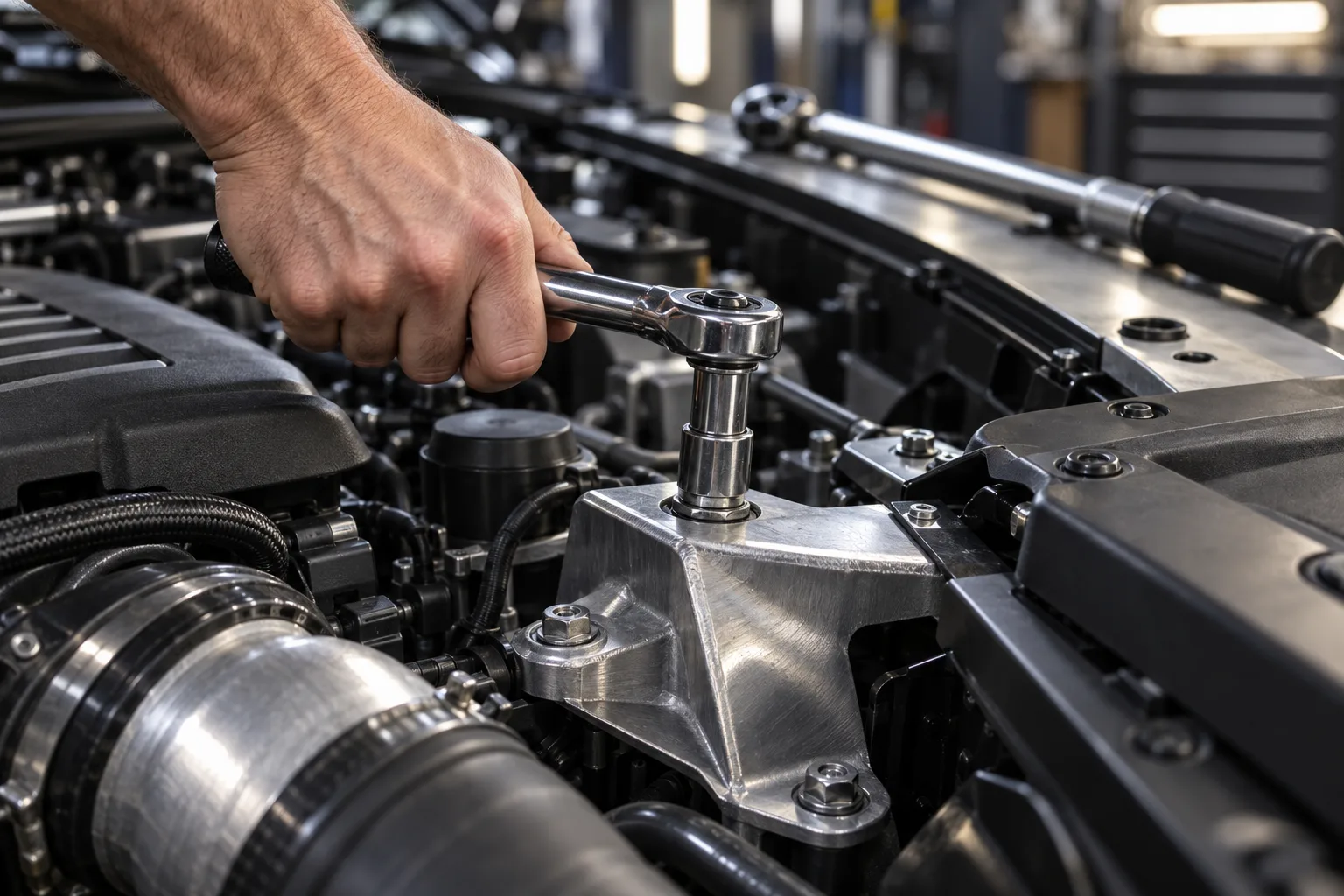
Brakes, suspension, steering, drive belts, mounts and cooling — priced per operation, parts listed separately.
Electrical & aircon
Battery and charging faults, sensors, comfort systems and aircon leak testing and regas.
Three jobs
Where the diagnosis changes the quote.
Misfire traced to a coil · 1.6 hatchback
Diagnosis and repair · 1.0 hour on the car · one coil at OEM-equivalent
The car arrived with a rough idle and a warning light. The reading pointed at a single ignition coil, and the same live data showed a sensor drifting towards its limit — so the quote named both, one as work required now and one as work to watch.
How it was evidenced ↗
The diagnostic fee was charged on the day and credited against the repair when the work was approved. Parts were quoted by grade: the coil at OEM-equivalent, the sensor left as a quote-only item until it fails. The old coil was kept and returned with the invoice, so the work can be checked by anyone who reads it.
Brakes and suspension · seven-seat MPV
Scheduled service plus work found on the lift · 4.5 hours · front pads and one rear shock
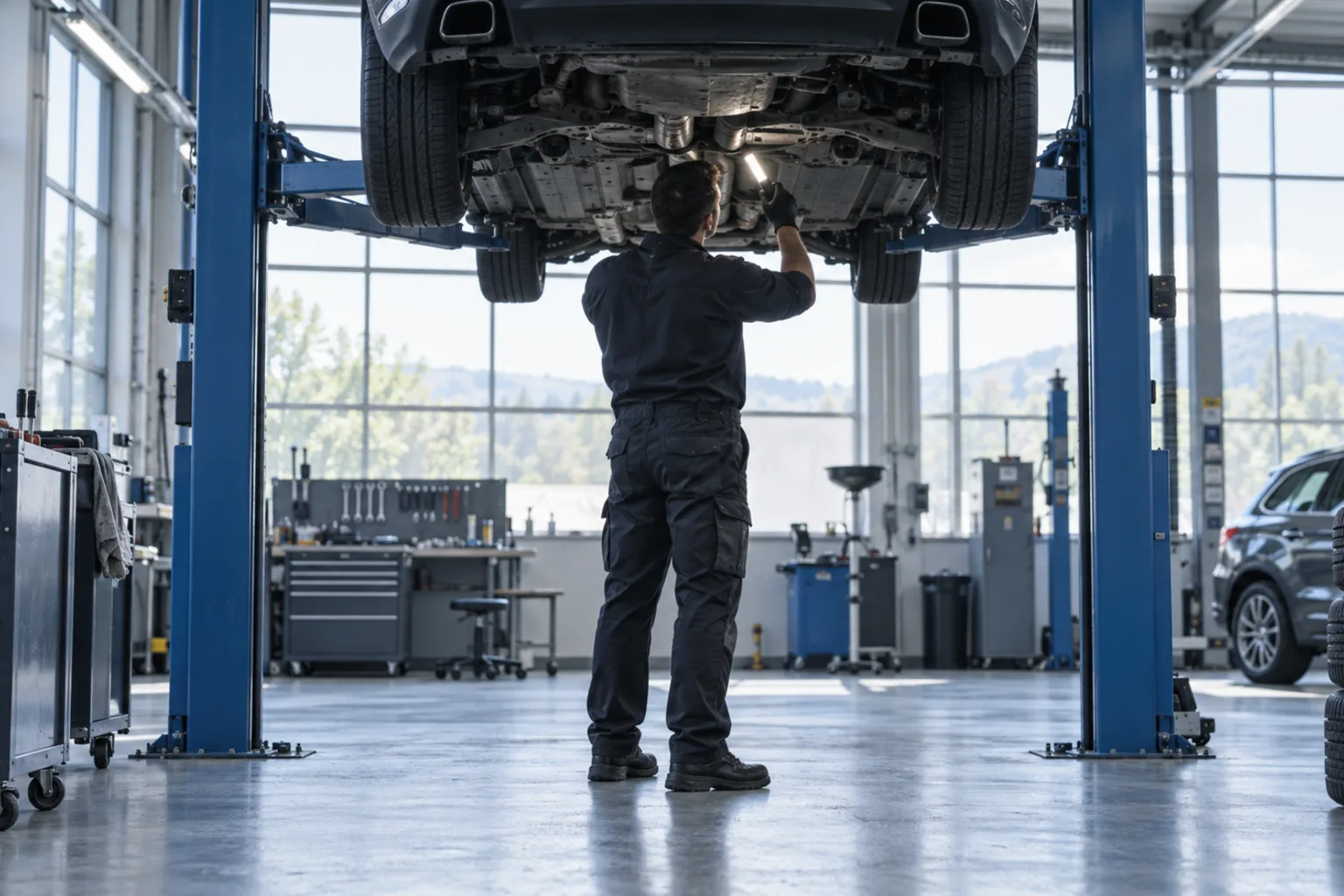
A service that turned into a larger job once the car was in the air: pads below the wear limit at the front, and a leaking shock absorber at the rear.
What changed, and when ↗
The service was completed exactly as quoted. The additional work was photographed and quoted before it started, and nothing was replaced without written approval — including the items the technician would have chosen to change. The invoice is itemised by operation and part, with the warranty term for each line printed on the same page.
Oil weep traced to a cam cover gasket · 2.0 turbo
Diagnosis and repair · 3.2 hours · gasket and top-end clean
The complaint was a smell after a long drive, not a visible leak. The car was cleaned underneath first, then run and re-checked, because a fresh leak is easier to find than an old one.
Where the hours went ↗
An hour to find and prove the source, two hours to replace the gasket and clear the accumulated oil from the top end, and twenty minutes to road test and re-check for weeping. The finding named the gasket, the evidence for it, and the rear crank seal that was dry but worth watching at the next service.
Each job is shown the way the invoice shows it: what was measured, what was quoted, what was approved, and what was fitted. That is the difference between a diagnosis and a guess, and it is the reason the written finding is yours to keep whatever you decide next.
From booking to keys back
Six steps, each with a document.
The part that protects you is the paper: a diagnosis you paid for, a quote you approved, and an invoice that matches it.
BEFORE AND AFTER THE JOB / what was measured, what was fitted
1 · Booking
You describe the symptoms and the car's history. Output: a booking slot and the diagnostic fee stated up front.
2 · Diagnosis
The car is read on the lift and with the diagnostic tool. Output: a written finding naming the fault, the evidence and anything else worth watching.
3 · Quotation
Priced from the finding, per operation. Output: a quote separating labour from parts, stating the grade of each part, and labelling anything that cannot be priced until it is opened up.
4 · Your approval
Nothing is ordered or fitted until you agree. Output: a written approval listing each item you accepted — and each one you declined, recorded as declined.
5 · Repair
Work carried out to the approved list. Output: photographs of anything found during the job, with a revised quote before that extra work starts.
6 · Handover
The car is road-tested and the invoice reconciled against the approval. Output: itemised invoice, warranty terms per line, and the parts that were replaced returned to you on request.
Before anything is quoted
Read it first. Then repair it.
The order is the promise. A fault is found and written down before a part is priced, and the fee you pay for finding it comes off the repair if you let us do the work.
The order
Read. Fault codes, live data, a road test where the symptom allows one, and the car on the lift for anything mechanical.
Write. A finding that names the fault, the evidence for it, and anything else worth watching — sent to you before a price is discussed.
Quote. Labour per operation, parts by grade, and anything that cannot be priced until it is opened up labelled as exactly that.
Repair. Only the items you approved, with the parts replaced kept and returned, and the invoice reconciled against the approval line by line.
Road test. Before handover, and again inside the warranty period if the same symptom comes back.
What the fee is, and when it comes off
S$90 flat for a diagnosis on a car that can be driven into the bay, credited in full against the repair when you approve the work.
S$95 an hour for a fault that has to be chased — intermittent, load-dependent or electrical. Billed in tenths of an hour and credited on the same terms.
If you decline the repair, the diagnostic fee is the whole bill. Nothing is ordered, and the written finding is yours to take elsewhere.
If the fault does not show, the fee stays as charged and you get the finding with what was tested and what was ruled out. No parts are billed on a guess.
Booking takes about three minutes: what the car does, when it does it, how urgent it is, and a number to ring when the finding is written.
A repair that cannot be priced until an assembly is opened is still quoted before it starts: a range, the reason for the range, and a photograph of what was found.
Labour, by operation
What the work costs, before the parts.
Parts are priced by grade on the quote, so the number below is labour only — the part of the bill that does not depend on which brand of component you choose.
Illustrative concept pricing, not a quotation. Figures are labour-only starting prices for the operations listed, on a compact car in normal condition. They exclude parts, fluids and consumables, any additional work found once the assembly is opened, wheel alignment after suspension work, and aircon gas unless stated. Parts are quoted separately by grade. Confirm current rates with the workshop.
Operation
Usually includes
From
Diagnostic Credited against the repair if you proceed
Fault codes, live data, road test and a written finding
S$90
Scheduled service
Oil and filter, fluid checks, belt and brake inspection, service record stamped
S$150
Brake pads, one axle
Strip, clean, fit and adjust, with the wear measurement recorded before and after
S$180
Suspension unit, one corner
Strip and refit, with alignment recommended and quoted separately
S$260
Aircon leak test & regas
Pressure test, leak trace, vacuum and recharge to the stated weight
S$140
If the job cannot be priced until it is opened — a gearbox, a timing chain, a body electrical fault — we say so on the quote and give a range with the reason, rather than a number that will not survive the first hour.
Routine operations are priced as operations rather than by the hour. The hourly rate applies where a fault has to be traced, and it comes off the repair the same way the flat diagnostic fee does.
Written scope
What the quote does not cover.
A repair quote is honest when it says what it excludes. Both lists are agreed before the car goes on the lift.
The diagnosis, credited against the repair when the work is approved
Labour for each approved operation, at the stated rate
Parts at the grade quoted, listed as separate lines
Fluids and consumables named in the quote, not added at the counter
Disposal of the parts replaced, and the old parts returned on request
A road test before handover and the warranty terms printed on the invoice
Outside it, unless it is stated
Work found once an assembly is opened — quoted and approved before it starts, never fitted first
Parts supplied by you: we fit them, but only the labour carries our warranty
Wheel alignment after suspension or steering work
Bodywork, paint or glass, which are separate trades
A courtesy car, storage beyond the agreed collection window, or a diagnostic re-run on an unchanged fault
Insurance claim paperwork, valuations or reports for a third party
If we cannot find the fault, we say that too: you get the written finding, the diagnostic fee stays as charged, and we do not bill you for the parts that were not needed.
Parts and warranty
Which part was fitted, and what covers it.
Two owners can pay the same bill and own very different repairs. The difference is written here before the work starts.
OEM
The component the manufacturer fits, bought through the authorised channel. The highest cost, and the only grade that keeps a manufacturer's own part warranty intact.
OEM-equivalent
An independent brand that meets the same specification, named on the quote. The usual choice for a car out of warranty, and the grade we quote by default.
Reconditioned
An original unit rebuilt to specification, with the rebuilder named. Suits expensive assemblies where the casing is sound.
Warranty per line
Each part carries its supplier's term, and the labour we performed carries ours. Wear items — pads, discs, wipers, bulbs, filters — are excluded, because they are consumed by use rather than failing.
Claim
A claim is made in writing with the invoice and the reported symptoms. The administrative charge for processing a claim is stated on the invoice, not discovered later, and a part supplied by you is excluded from part cover while our labour on it remains covered.
Client perspective
“They showed me the worn pads in a photograph and the price before touching anything. The invoice matched the quote to the line.”
Brakes and suspension · sample story
Sample story. Not a real customer review.
Before you book
Questions owners actually ask.
Why is diagnosis not free?+
Because it is work: a technician reads the car, tests under load and writes up a finding. We charge for it and credit the fee against the repair when you approve the work, so a customer who proceeds pays for the repair rather than for two separate jobs. A free inspection is usually a look, not a diagnosis.
Will a service here affect my manufacturer's warranty?+
It should not, and we keep it that way: servicing is done to the manufacturer's schedule and the record is stamped for the car. Inside the warranty period we quote OEM parts by default, because that is the grade the manufacturer's part warranty is written around. If you ask us to work outside the schedule, we say what it may affect before we start — the service record stays yours either way.
What if you cannot find the fault?+
Then you get the written finding, including what was tested and what was ruled out, and you are not billed for parts that were not needed. Some faults are intermittent and need the car again while the symptom is present; we tell you that rather than replacing parts on the chance they are the cause.
Should I choose OEM or the equivalent brand?+
Inside the manufacturer's warranty period, OEM is usually the safe answer because it keeps the part warranty intact. Out of warranty, a named OEM-equivalent brand with the same specification is normally the better value, and the quote names the brand so you can check it. What we will not do is fit an unnamed part and describe it as equivalent.
Can I supply my own parts?+
Yes. The labour we perform is still covered, but the part itself is not — the supplier's warranty is between you and them, and if the part fails the car returns and the labour is charged again. We say that before the job, not after.
How long will you keep the car?+
The expected duration is given with the quote and confirmed once parts arrive. Work that needs an ordered part waits for it rather than starting and stopping, and if it cannot be finished the same day we tell you before you leave it, not by message at closing time.
Will you fit a part I declined earlier?+
A declined item is recorded as declined on the approval, so it is not quietly added later. If it fails weeks after, it is a new job and a new quote — which is also why we photograph it at the time and leave the condition on your record.
Start with the symptoms
Tell us what the car does.
Describe when it happens, how long it has been doing it, and any work done recently. The diagnosis starts from your description, so detail saves time.