First steps
40 minutes, maximum 10 dancers, one adult stays in the room. Aim: a child who can join a group, follow a sequence and stop when the music stops.
Dance studio · Styles, ages and the term
Classes are grouped by age and level, the term dates and the showcase date are published before you pay, and a trial class costs the same for everyone in the room.
Book a trial class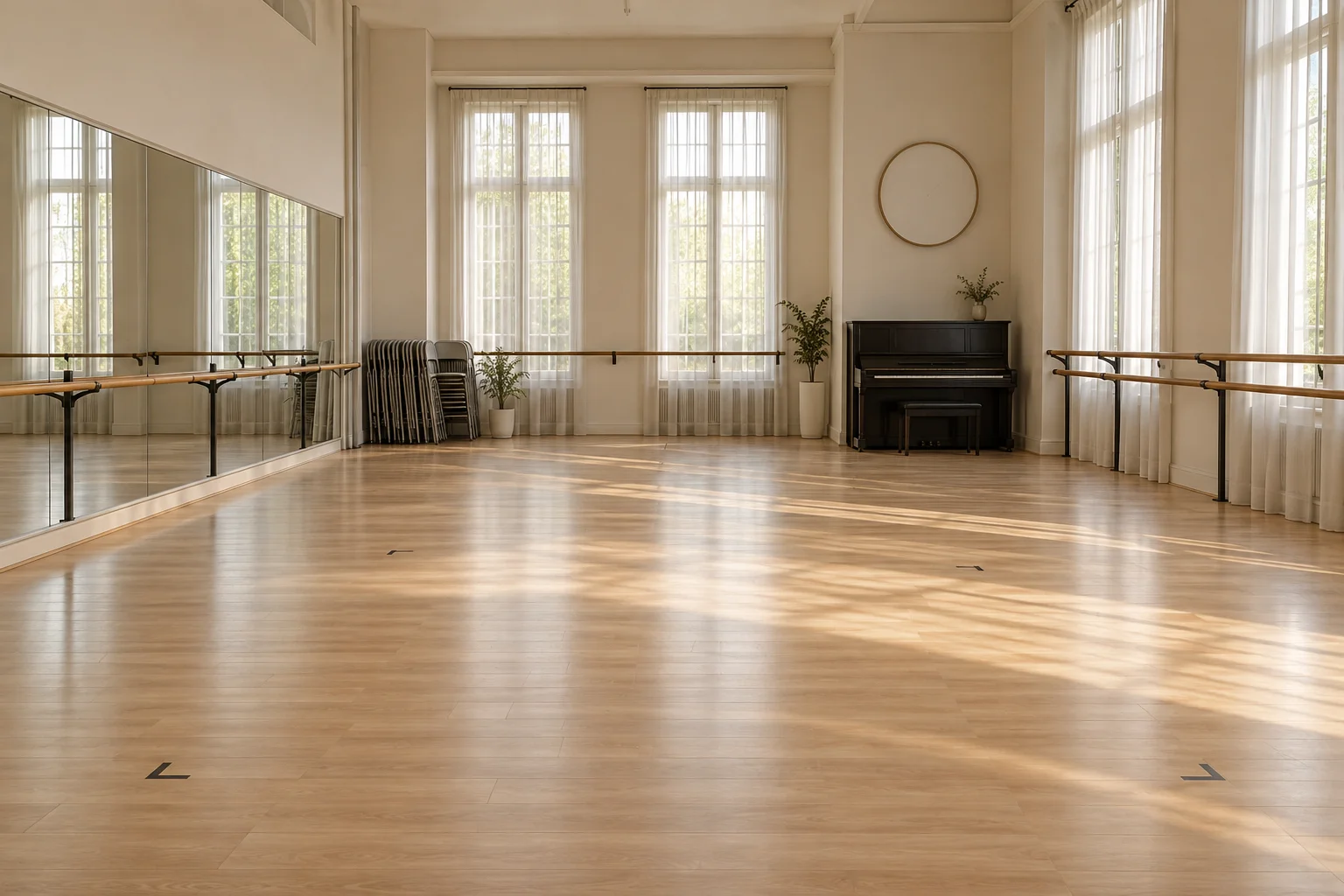
Two ladders, one studio
Children and adults use different ladders, because they are buying different things: a child moves up through the studio’s own syllabus, while most adults want one weekly class that suits the level they are actually at. Levels are described in words rather than numbers, and the first class settles which one is right.
| Ladder | Level | What it is | Class length |
|---|---|---|---|
| Children | First steps | Creative movement with an adult in the room. No technique drills, and no obligation to perform. | 40 minutes |
| Children | Recreational | First technique class in one style, and the first few counts of a piece for the showcase. | 1 hour |
| Children | Foundation | Two styles or two classes a week, with conditioning and a set piece. | 1 hour each |
| Children | Teen | Technique plus choreography, with the option of a graded examination class. | 90 minutes |
| Adults | Beginner intake | A six-week block that repeats through the year, following the same material in the same order. | 1 hour |
| Adults | Mixed level | Open class for anyone past a first intake. The week’s content is posted before the class. | 90 minutes |
There is no audition and no entrance test. A child moves up when the teacher asks the parent to move up, not when a calendar says so, and an adult can repeat the beginner intake as many times as they like.
Classes by age
The age bands are administrative. The class inside each one has its own length, its own cap and its own stated aim, and those three things are what decide whether it suits your child.
40 minutes, maximum 10 dancers, one adult stays in the room. Aim: a child who can join a group, follow a sequence and stop when the music stops.
1 hour, maximum 14, no previous class needed. Aim: clean basic technique in one style, and a short piece they have performed for the parents in the room.
1 hour per class, maximum 16. Aim: strength and turn-out basics, and learning choreography from counts instead of copying the person in front.
90 minutes, maximum 18. Aim: a piece performed at the end of term, with the option of a graded examination class for those who want a syllabus.
1 hour, maximum 20, sold as a six-week block. Aim: enough vocabulary to join the mixed-level class and keep up with the warm-up.
Styles, the week, and the term
A weekly class is the unit of sale, and a booster is a second, shorter class attached to the same term. The timetable names the studio for every slot, so the first day starts at the right door.
Hip hop, contemporary, ballet foundations and jazz, grouped by the ladder above. One style a week unless you add a second class.
Ask about kids classes ↗WeeklyThe beginner intake and the mixed-level class, weekday evenings. The same teacher takes the intake through all six weeks.
Ask about adult classes ↗Per hourOne-to-one work on an examination piece, a competition solo, or for an adult who would rather start without an audience.
Ask about coaching ↗| Class | Day and time | Studio | Level |
|---|---|---|---|
| First steps | Saturday, 9.00am | Studio 2 · ground floor, buggy space by the door | 3–5, with an adult |
| Recreational, hip hop | Wednesday, 5.00pm | Studio 1 · mirrored, sprung floor | 6–8, no experience |
| Foundation, contemporary | Thursday, 6.00pm | Studio 1 · mirrored, sprung floor | 9–12 |
| Teen choreography | Friday, 6.30pm | Studio 3 · no mirrors, used for filming the piece | 13–17 |
| Adults, beginner intake | Monday, 7.30pm | Studio 2 | 18+, six-week block |
| Adults, mixed level | Tuesday, 8.00pm | Studio 1 | 18+, past a first intake |
| Booster | What it adds | Length |
|---|---|---|
| Technique booster | Turn-out, balance and jumps at a slower pace than choreography allows | 30 minutes |
| Tap booster | A second style with its own shoes and its own rhythm work | 30 minutes |
| Acro booster | Floorwork, balances and controlled falls. No partner lifts and no aerial work at any level. | 45 minutes |
Illustrative calendar: Term 1 runs 5 January to 27 March with the showcase on 28 March, Term 2 runs 13 April to 4 July with the showcase on 5 July, Term 3 runs 20 July to 10 October, and Term 4 runs 19 October to 30 January with the year-end showcase on 31 January. The dates are published before enrolment and the showcase date sits on the same sheet, because the two decisions are one decision.
Every class above the pre-school band takes part in the showcase, and it is part of the term rather than an extra: rehearsals happen inside the lesson. A dancer who does not want to perform still takes the term and sits the showcase out. Pre-school performs in the room during their own class, with parents watching.
Joining after week three is possible where a place is free, and the fee is charged from the week you start rather than for the whole term. There is no separate recital fee — the showcase is inside the term fee, and the only addition is the costume, which is a line in the fee table below.
What happens in the room
The honest answer to “is dance safe” depends on the style, the floor and the level. These are our rules, and they are the same for every teacher on the timetable.
No lifts, no weight-bearing on another dancer, and no aerial work at any age. Partnered choreography starts in the teen class, on the sprung floor, with the teacher counting and spotting every repetition.
Every class starts with a warm-up and finishes with a cool-down. A dancer who arrives late misses the warm-up and joins the technical work only when the teacher says the body is ready for it.
Bare feet or dance shoes on the sprung floor, no street shoes, and no socks on the marley. No jewellery, no watches, hair tied back. Tap and ballet shoes are the only gear a child has to own, and fitting happens after the trial rather than before it.
First aid on site, an incident note for every injury, and a written copy of that note for the parent. A dancer returning from a fracture, a sprain or surgery brings written clearance from their doctor before rejoining jumps and turns.
One teacher to 16 dancers, with an assistant in every class below age 9 and in every class over 12. Nobody is alone with a single child, a parent may watch any class from the side, and Studio 3 is only used for filming with two adults present.
Who teaches
The timetable names the teacher for each slot before the term starts, and the name does not change mid-term. Ask what is behind it: where they trained, how long they have taught, and whether their first-aid training is current. A live page would list each teacher’s training and first-aid date here.
Illustrative concept policy. The studio shown is fictional.If a teacher cannot take a class, the substitute is named to parents before the class and takes the same material. A class that cannot be covered is cancelled, and that week is credited against the next term rather than absorbed.
Illustrative concept policy.Every class below age 9 runs with an assistant in the room, the studio door stays unlocked while a class is on, and discipline is handled by the teacher and reported to the parent the same day. Filming a piece is done with two adults present or not at all.
Illustrative concept policy.What it costs
The entry denomination is one class. A term is twelve weekly classes with the place held, a block is eight classes you choose from the timetable, and a single class at the door is the most expensive way to buy the same hour — which is worth saying rather than hiding.
| What you are buying | Basis | From |
|---|---|---|
| Trial class credited against the first term if you enrol | One class, paid on the day | S$20 |
| Pre-school, 3–5 | Per term of twelve weeks | S$300 |
| Children 6–12, one class | Per term of twelve weeks | S$360 |
| Teen and adult classes | Per term of twelve weeks | S$420 |
| Single class, any band | Drop-in, where a place is free | S$38 |
| Eight-class block | Any eight classes from the timetable | S$280 |
| Booster class | Per term, booked with the weekly class | S$180 |
| Private coaching | Per hour, in a studio | S$120 |
| Showcase costume | One-off, per dancer, per showcase | S$70 |
| Denomination | Valid for | If you miss a week |
|---|---|---|
| Trial class | The one class you booked | Moved once at no charge with a day’s notice |
| Single class | The class you booked | Not refundable, and movable to another slot with a day’s notice |
| Eight-class block | Three months from the first class, and not extended | Banked, so eight classes stay eight classes |
| Term fee | The twelve weeks of that term | No refund and no carry-over; a make-up class is offered only where a slot exists in the same term |
| Booster | The term the weekly class runs in | Not sold alone and not carried into the next term |
Credits stay with the dancer they were bought for and are not transferable to a sibling or a friend. A term runs to its end: there is no refund for the weeks left, and the one exception is a written medical reason, where the remaining weeks are credited against the following term. Nothing is charged for a term you have not enrolled in.
One term, one child
A nine-year-old joins in week two with no class behind them. The first three weeks are the warm-up, the feet and the first eight counts. By the showcase they dance in the back line and know the piece without watching anyone else. At that age progress is measured in what a dancer can repeat alone, not in how the piece looks from the audience.
Illustrative brief: a nine-year-old in the foundation band, one class a week for twelve weeks, no booster. Weeks 1–3 on basics, weeks 4–8 learning the piece in sections, weeks 9–12 cleaning and staging it. This is a teaching scenario, not a record of any dancer.
The other one
An adult joins the beginner intake, misses week four for work, and repeats one intake before moving into the mixed-level class. That path is normal, and it is the reason the intake repeats all year: a missed week does not end the route. Adults are the easiest group to lose, and the honest answer to “am I too late” is no — the intake is built for exactly this.
Illustrative brief: an adult beginner, one six-week intake with a week missed, a repeated intake, then the mixed-level class. This is a scenario, not a record of any dancer.
One class in the right age group, with no kit to buy.
Monthly, with plain notice terms for stopping.
When the coach says you are ready — and you can decline.
Competition, a higher grade, or training for its own sake.
Start with a trial
The trial class is S$20 and it is a real class rather than a demonstration: the dancer joins the band they would enrol in, does the whole class, and pays the same as anybody else in the room. Nothing is signed and no card is taken, so if it is wrong for you the S$20 is the entire cost.
Send the age, any styles tried before and the days that work. Output: one named class, with its day, its studio and its band.
Ask which class fitsS$20, paid on the day, in the class you would actually enrol in. Output: a date and a place, with nothing to sign.
Book the trial classThe dancer does the full class and a parent may watch. Output: the teacher’s view of which level fits, told to the parent on the day rather than emailed a week later.
A term, an eight-class block or single classes. Output: the term dates, the showcase date and the costume line on one sheet before you pay.
A place is held for the term you chose. Output: the timetable, the room rules and the terms for stopping, all on one page.
Weekly classes on the same day, ending in the showcase. Output: a written note at the end of term saying what the dancer can now do and which band comes next.
A parent’s view
“Nobody asked us to commit to a term before the trial. We paid the S$20, our daughter did the class, and the teacher told us on the day which band she belonged in.”
Kids class, first term · sample story
Sample story. Not a real customer review.Before the first class
No. The trial is one class at S$20 with nothing signed, and after it you can buy a term, an eight-class block, or single classes at the door. The term is the cheapest way to buy a class and it is the only route into the showcase, because a piece needs twelve weeks of the same dancers in it.
The term fee does not change and it does not carry over: a missed week is a missed week. What we do instead is offer a make-up class in the same term when a slot has space, and post the term’s material so a missed week can be caught up before the next lesson. If your weeks are unpredictable, the eight-class block is the denomination to buy, because those eight classes are banked for three months.
Every class above the pre-school band takes part in the end-of-term showcase, and rehearsals happen inside the lesson rather than in extra sessions. A dancer who does not want to perform can still take the whole term and sit the showcase out; the teacher will say which piece they would have been in and what they will do instead on the night. Pre-school performs in their own class with the parents watching.
The beginner intake, which repeats through the year and follows the same material in the same order, so joining mid-year costs you nothing in sequence. Most adults repeat one intake before joining the mixed-level class, and that is the normal path rather than a slow one.
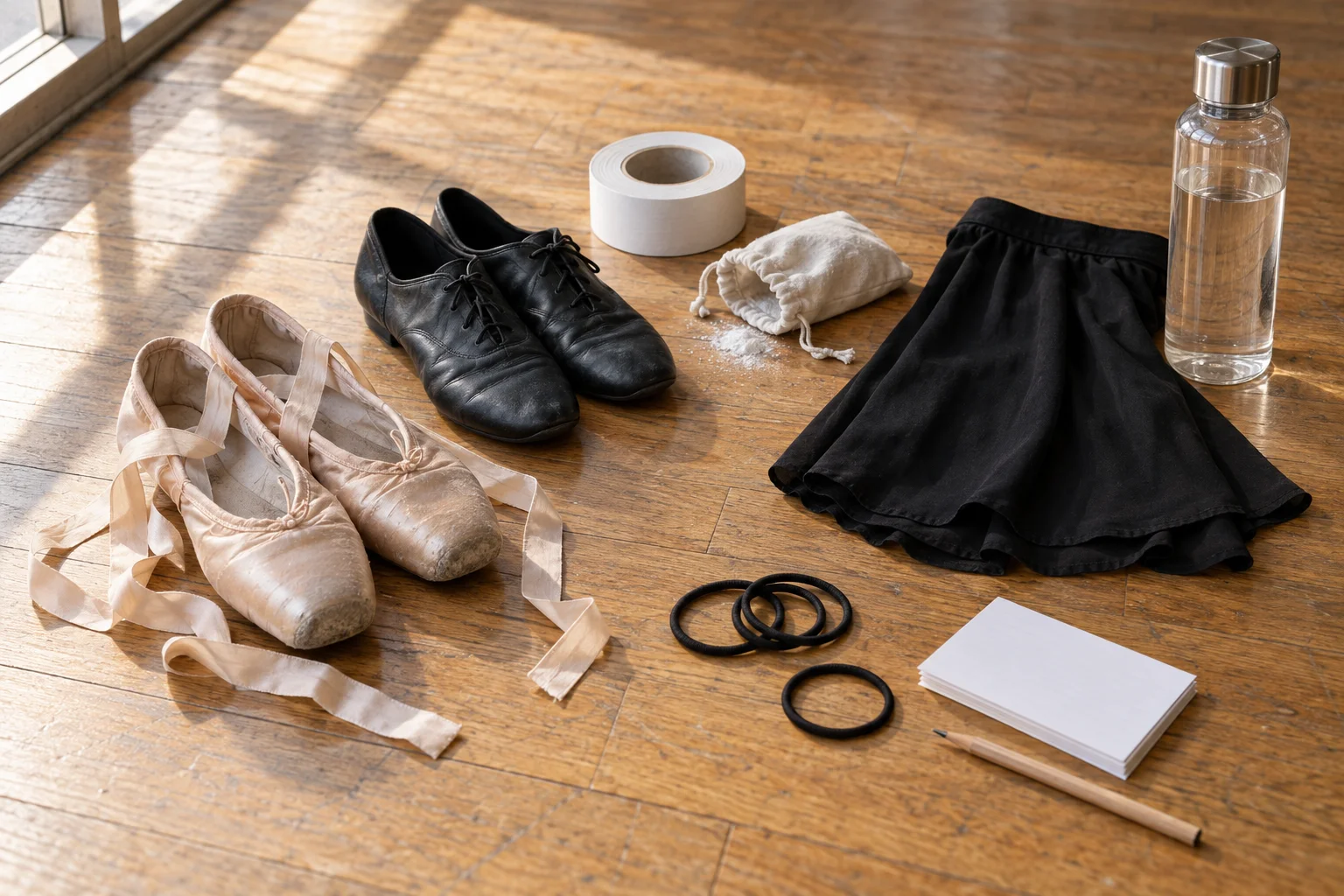
Loose clothing, a water bottle and hair tied back. No shoes, no leotard and no costume are needed for the trial, and shoe fitting happens after enrolment — so a child who stops after one class has bought nothing.
Ask, and you should expect three straight answers: where the teacher trained, how long they have taught, and whether their first-aid training is current. A studio that cannot name who takes a class, or say what that person is trained in, is the one to ask harder questions of before you pay.
Start with a date
The age, the styles tried before and the days that work are enough to place a dancer in the right class. Studio hire runs beside the classes: Studio 1 and Studio 2 are hired by the hour at weekends and on weekday mornings, with the room, the floor and the sound named in the confirmation, and the hirer carries their own insurance for their group. Regular dancers can top up class credits at the desk, which is the path for someone who wants to choose a slot week by week instead of holding a term place.
Concept only. Nothing is sent or booked.
The week and the term · Class and term prices · Ask a question