Tuesday 4.15–5.15pm · 60 minutes · S$380 a term
First marks
Paint, clay and paper with an assistant in the room. Maximum eight children and two adults.
Art classes · Ages 4 to 16
Ten-week terms, small classes, materials included, and a term outline you can read before you pay. No portfolio needed to start.
Book a trial class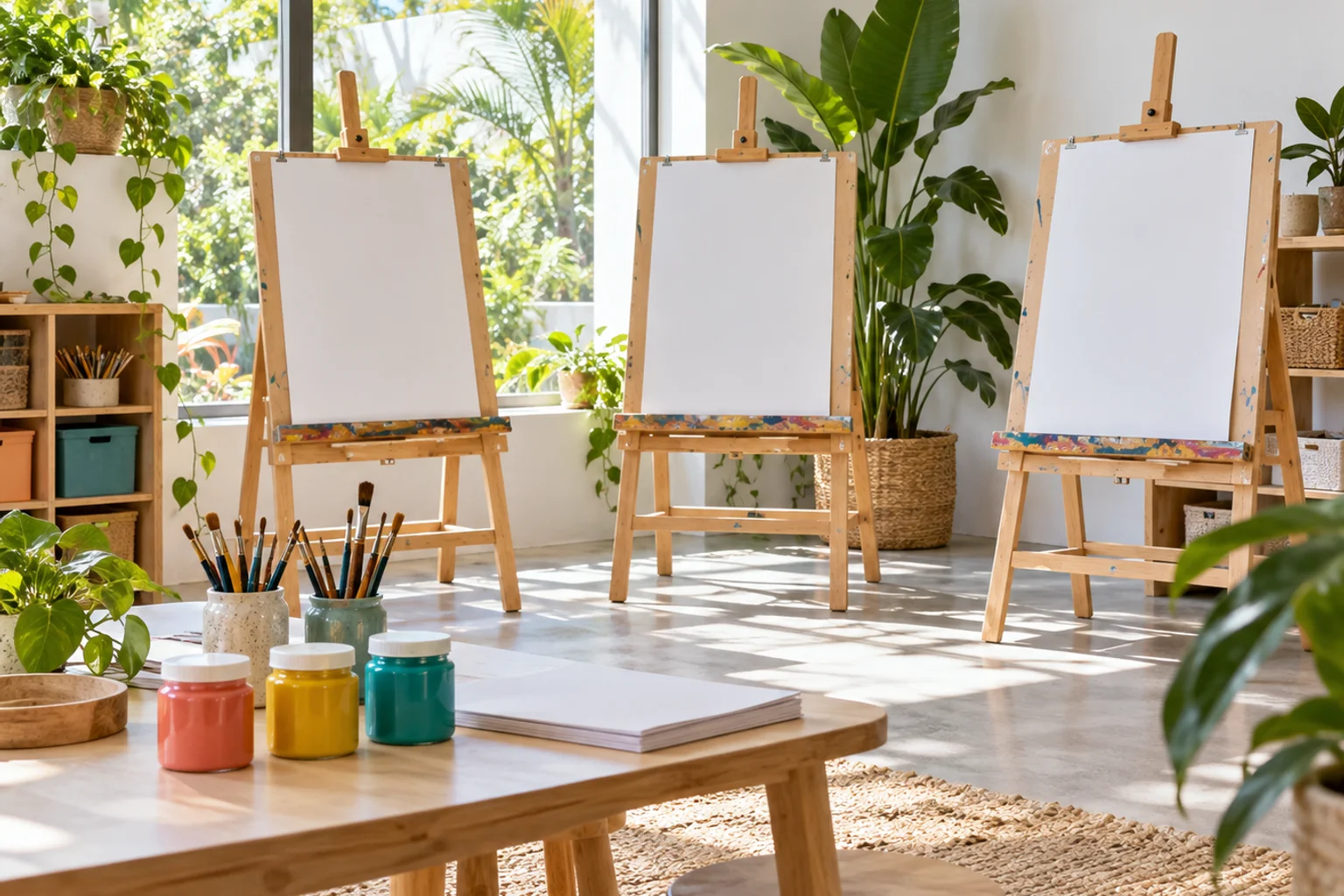
Age groups
Children work at very different speeds. Classes are grouped by age and kept small, so the teacher can actually get round the room.
Tuesday 4.15–5.15pm · 60 minutes · S$380 a term
Paint, clay and paper with an assistant in the room. Maximum eight children and two adults.
Wednesday 4.30–5.30pm · 60 minutes · S$380 a term
Drawing from observation, colour mixing, simple printmaking and building a piece over several weeks.
Thursday 5.00–6.15pm · 75 minutes · S$460 a term
Perspective, tonal work, watercolour and acrylic, with more time on one finished work each term.
Saturday 10.00–11.30am · 90 minutes · S$620 a term
Longer projects, sketchbook habits, and preparation for art in secondary school or a portfolio.
Every class runs once a week for the ten teaching weeks of the term at the slot above, and the studio show is inside the final week. Class size is capped at eight for the youngest group and ten above it, and a full class opens a waitlist rather than adding a ninth child. Age is a guide: the teacher settles the group after the trial class.
The term
A term has a shape: ten teaching weeks at the dates below, and the studio show inside the last of them rather than on a separate evening. The shape is the same for every age group — only the technique changes.
Drawing from observation and choosing a subject. Nothing is marked or graded.
One technique taught properly: colour mixing, layering, printmaking or clay.
The child works on their own piece, with the teacher coming round rather than demonstrating at the front.
Completing, mounting and signing the work. What comes home is the finished piece, not a folder of scraps.
A small exhibition in the studio for families, and a written note on what your child worked on.
Example term structure only. Confirm current term dates, holiday closures and available places with the studio before enrolling.
Missed weeks: a class missed for any reason is made up in another class at the same age group with space, as many times as the family needs while the child is enrolled in that term. Make-ups are booked with the studio and do not roll into the next term as credit, and a class we cancel is made up or credited to the following term.
Three ways to join
One hour a week for a full term at your child’s age group, materials included, ending in the studio show.
Join a weekly class ↗3 daysShort themed workshops in the school holidays, useful for trying the studio before committing to a term.
Book a workshop ↗By termFor older students who need a body of work: sustained projects, sketchbook development and an honest review of what is ready.
Discuss a portfolio ↗Who teaches, and who is in the room
Our teachers make their own work and are trained to teach children, which is a different skill. The teacher for each age group is named on the studio board and on your child’s class sheet before the first class, with the medium they work in and the groups they take.
The studio board at the door carries the teacher for every class of the day, and who covers when one of them is away.We do not photograph or film children for our website or social media without written consent from a parent or guardian, and consent can be withdrawn at any time. Class notes go to you, not online.
Consent is asked for on its own line of the enrolment form, so declining it changes nothing about your child’s place or the fee.Before you commit
Materials are included, so the figure you see is the figure you pay. Every fee below is per student for one ten-week term at the slot stated, and the studio show is inside it.
| Option | Basis | From |
|---|---|---|
| Weekly class, ages 4–12 | Per term, 60 minutes a week | S$380 |
| Weekly class, ages 10–12 | Per term, 75 minutes a week | S$460 |
| Studio practice, ages 13–16 | Per term, 90 minutes a week | S$620 |
| Holiday workshop | Three days | S$260 |
| Second class, same child | Per term, second slot | S$340 |
| Trial class | Once | S$40 |
One term, one child
From first sketches to a finished piece: examples of the work a term can support. The studio show is included in the weekly class.
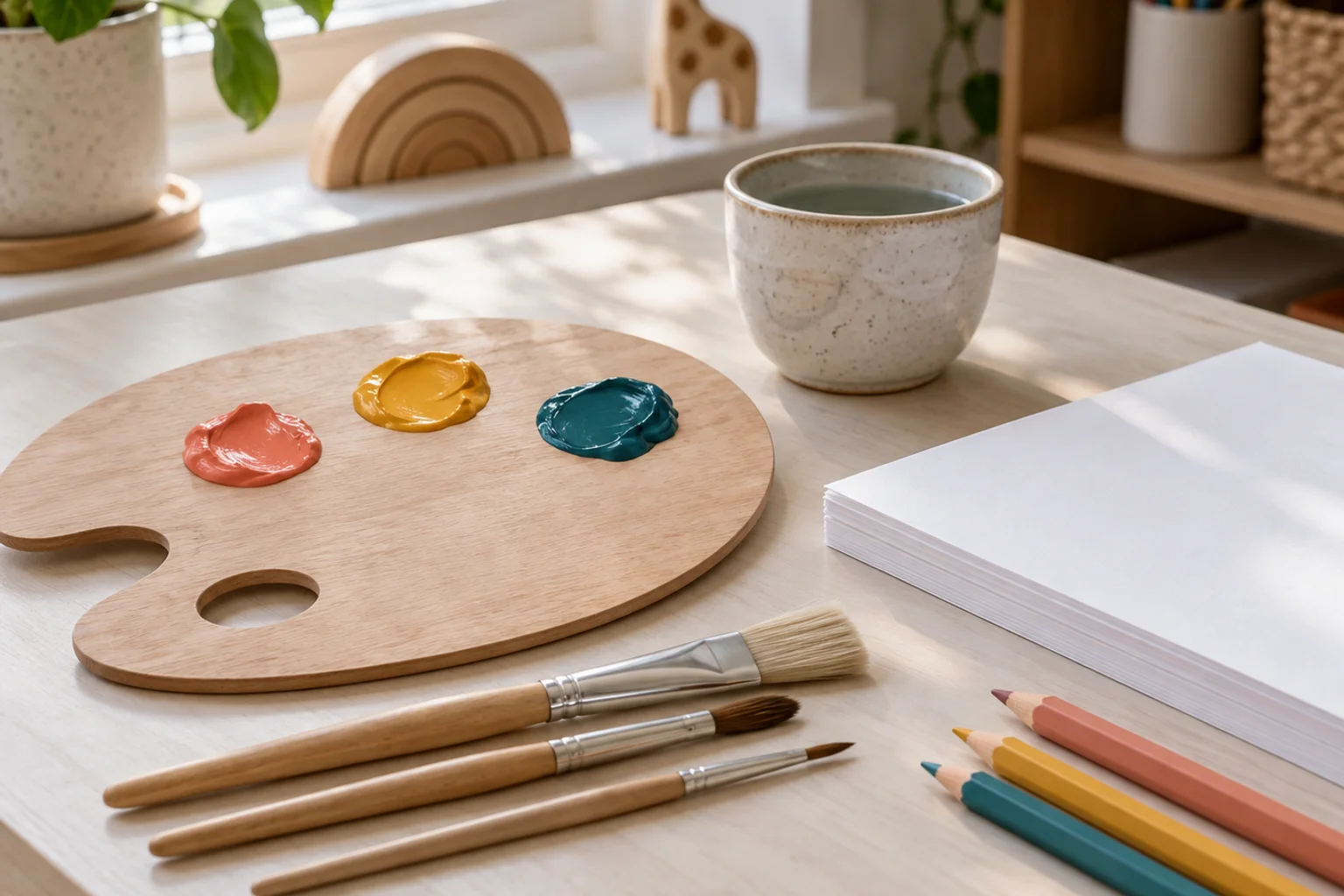
S$380 a term · 60 minutes a week · materials included
Ten weeks at your child’s age group with the same teacher, ending in the studio show in the final week rather than on a separate evening.
A nine-year-old who stops drawing when a picture goes wrong. Weeks 1–2 are observational sketches in charcoal, which can be reworked; week 3 introduces layering so mistakes become part of the work. By week 9 there is one finished piece on the wall, and the note that goes home says what was worked on.
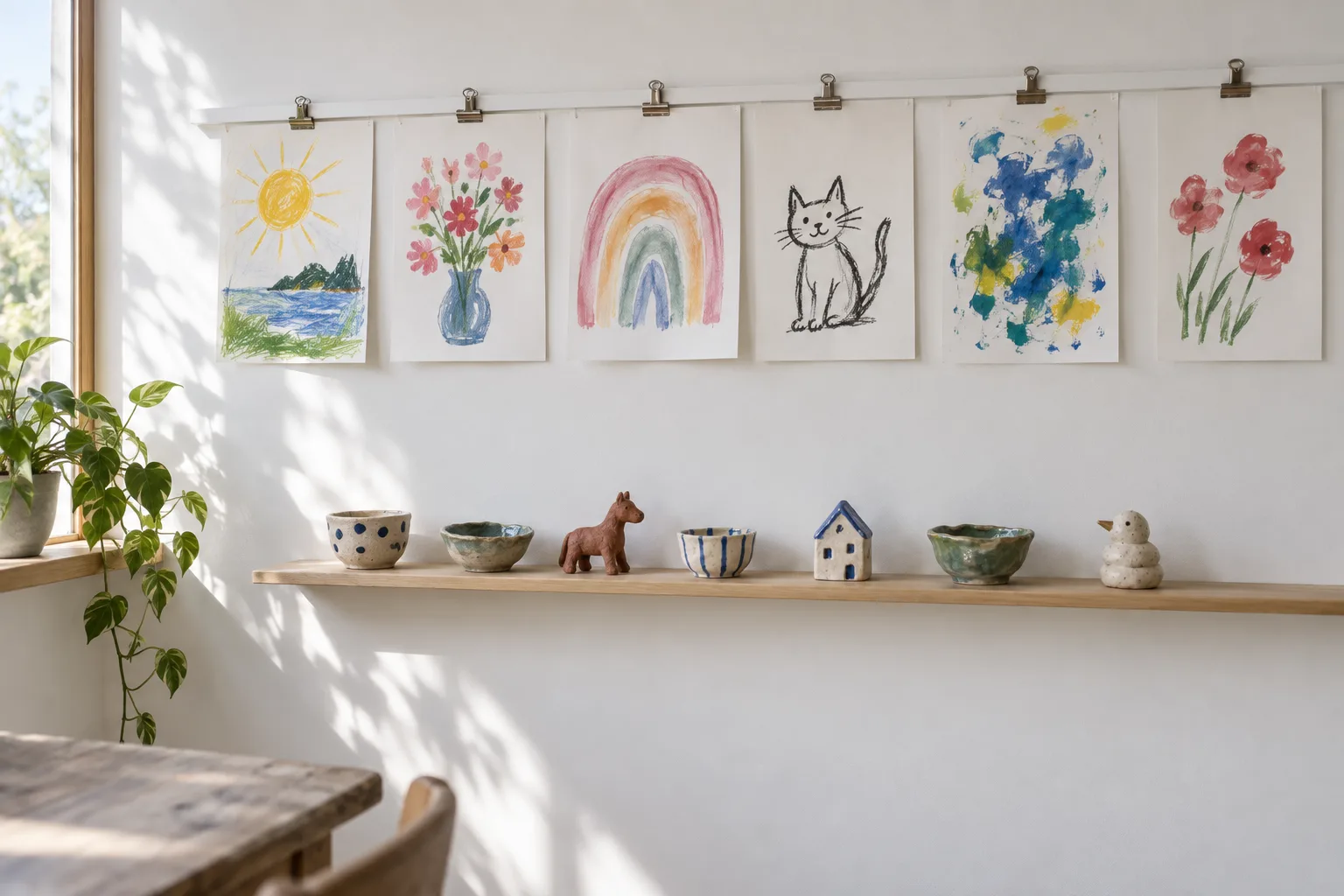
Included in the term fee · families invited
Every child’s finished piece is mounted on the studio rail and the family is invited into the room it was made in, at the class time of that week.
The finished piece, mounted and signed, and a written note on what your child worked on and what comes next. Nothing is marked and nothing is graded: the note is about the work rather than about the child.
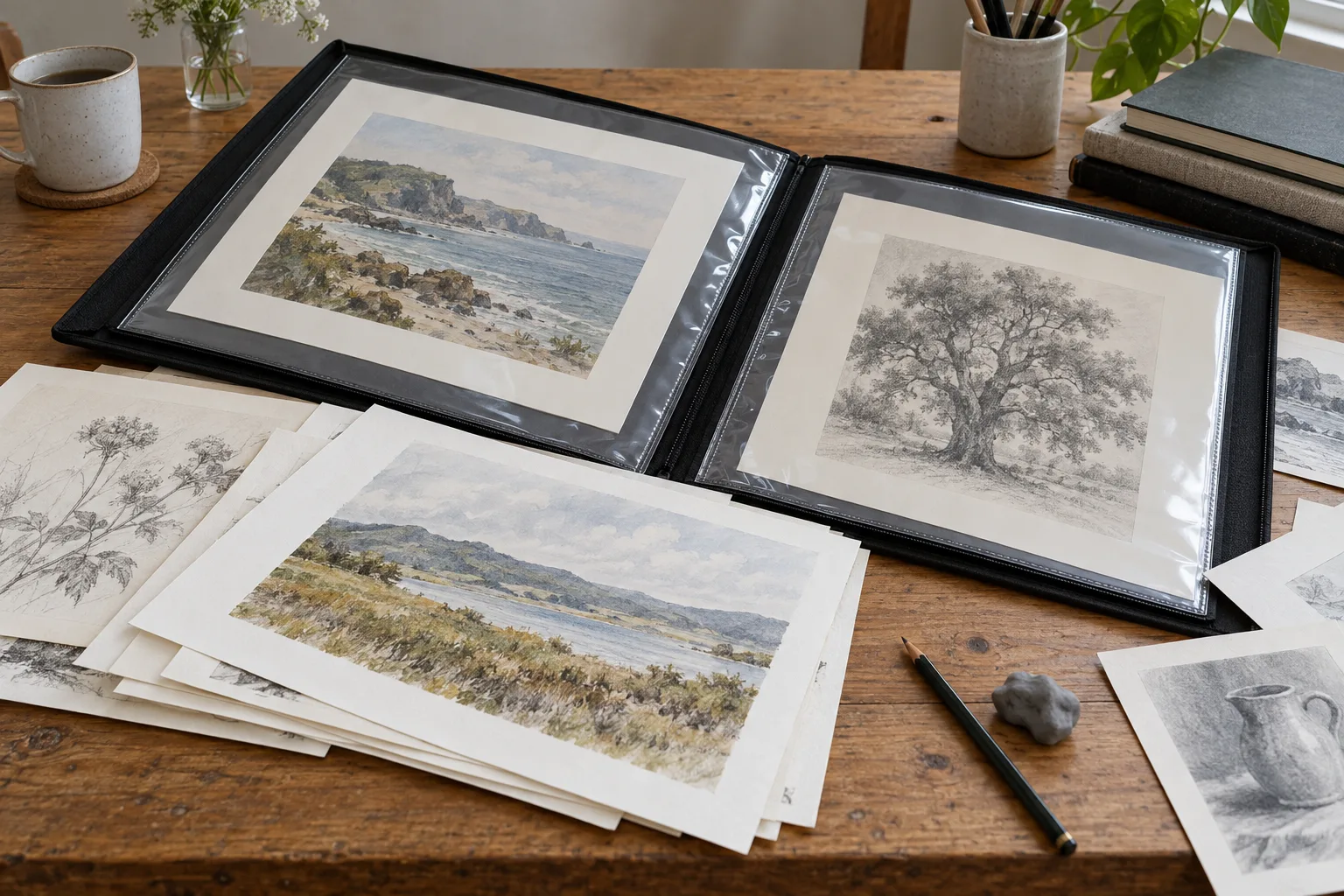
S$620 a term · 90 minutes a week · older students
Sustained projects and sketchbook development for a student who needs a body of work, with an honest review of what is ready and what is not.
Say what the portfolio is for and when it is due, and the first review answers whether the time left is enough. Where it is not, that is said at the first review rather than in the final month, and the term is run as a teaching term instead.
One class at your child’s age group, materials provided.
The right age band and a class with space in it — not the first available slot.
Ten weeks with the same teacher and the same group.
The finished work, a short note on what was covered, and whether to continue.
A clearer starting point
Pick the closest description. It starts the right conversation instead of a general enquiry.
The trial class is the cheapest way to find out whether your child settles in a studio at all. No prior skill is expected or assessed.
Book a trial classBring a few things they have made. The teacher will suggest the age band and whether a weekly class or a longer project suits better.
Discuss a longer projectSay what the portfolio is for and when it is due. Ask honestly whether the time left is enough — sometimes the answer is no, and it is better said early.
Ask about portfolio workA parent’s view
“What came home was one finished picture and a note saying what she had worked on. That was more use than a folder of half-done things.”
Weekly class, ages 7–9 · sample story
Sample story. Not a real customer review.The practical questions
Eight at most in the youngest group and ten above it, with a second adult in the room for the 4–6 class. A full class opens a waitlist rather than adding a ninth child, and the class list goes up on the studio board in the first week.
No, and we do not assess them to get in. The classes are grouped by age, and the term works whether a child draws every day or has never been shown how to mix a colour.
Not without written consent from a parent or guardian, and consent can be withdrawn at any time. The policy is in writing with the enrolment pack and it goes out before the first class rather than after it.
A class missed for any reason is made up in another class at the same age group with space, as many times as the family needs while the child is enrolled in that term. A change of age group inside the term is possible where there is space, and the withdrawal terms are on the enrolment sheet: after week three the term is payable as invoiced, because the teacher and the room are already committed.
Start a conversation
Your child’s age and what they like making are enough to begin.
Concept only. Nothing is sent or booked.