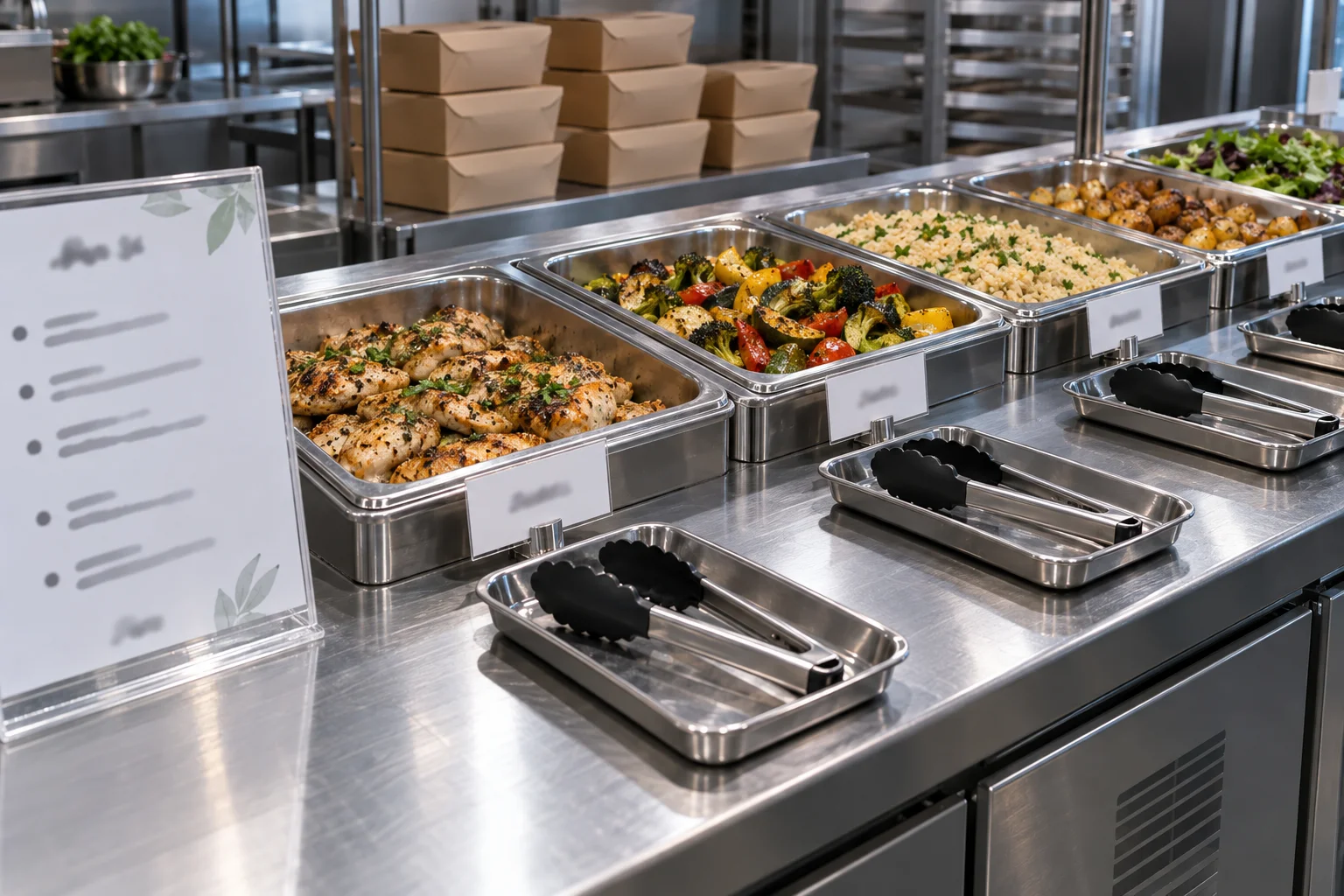
Catering for mixed guest lists, where the compliance question comes first: what a certificate has to show, what the menu can and cannot promise across halal, kosher, Jain and allergen requirements, and how the serving line is run.
Different rules at one table. Written down before the day.
What we cook and deliver
Named formats. Not a vague buffet.
Each format is priced and staffed as its own deliverable, from thirty guests to a thousand. Choose the format from the guest count and the venue, then write the menu around the requirements.
FULL SERVICE.
Buffet with crew
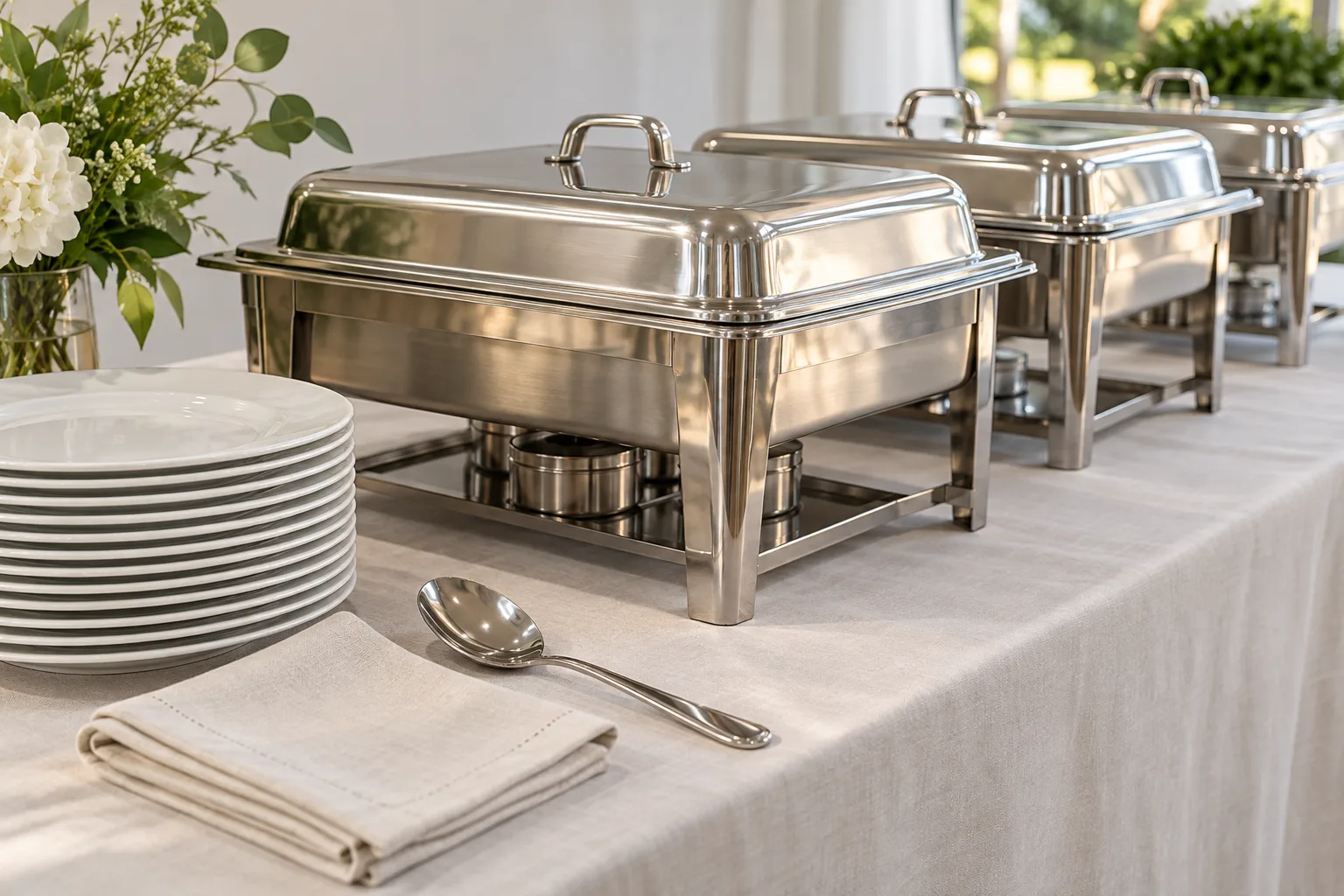
From thirty guests, with the crew, the chafing dishes and the crockery in the price.
A labelled requirement section at the head of the line
One utensil per dish, and never shared across trays
Every format carries the same requirement rules and the same labelling. What changes is who serves it, how it is held, and what the venue allows.
Three mixed tables. What was bought for each.
CONCEPT EVENTS
INTERFAITH DINNER · 180 GUESTS · BALLROOM THAT COULD NOT BE SEGREGATED
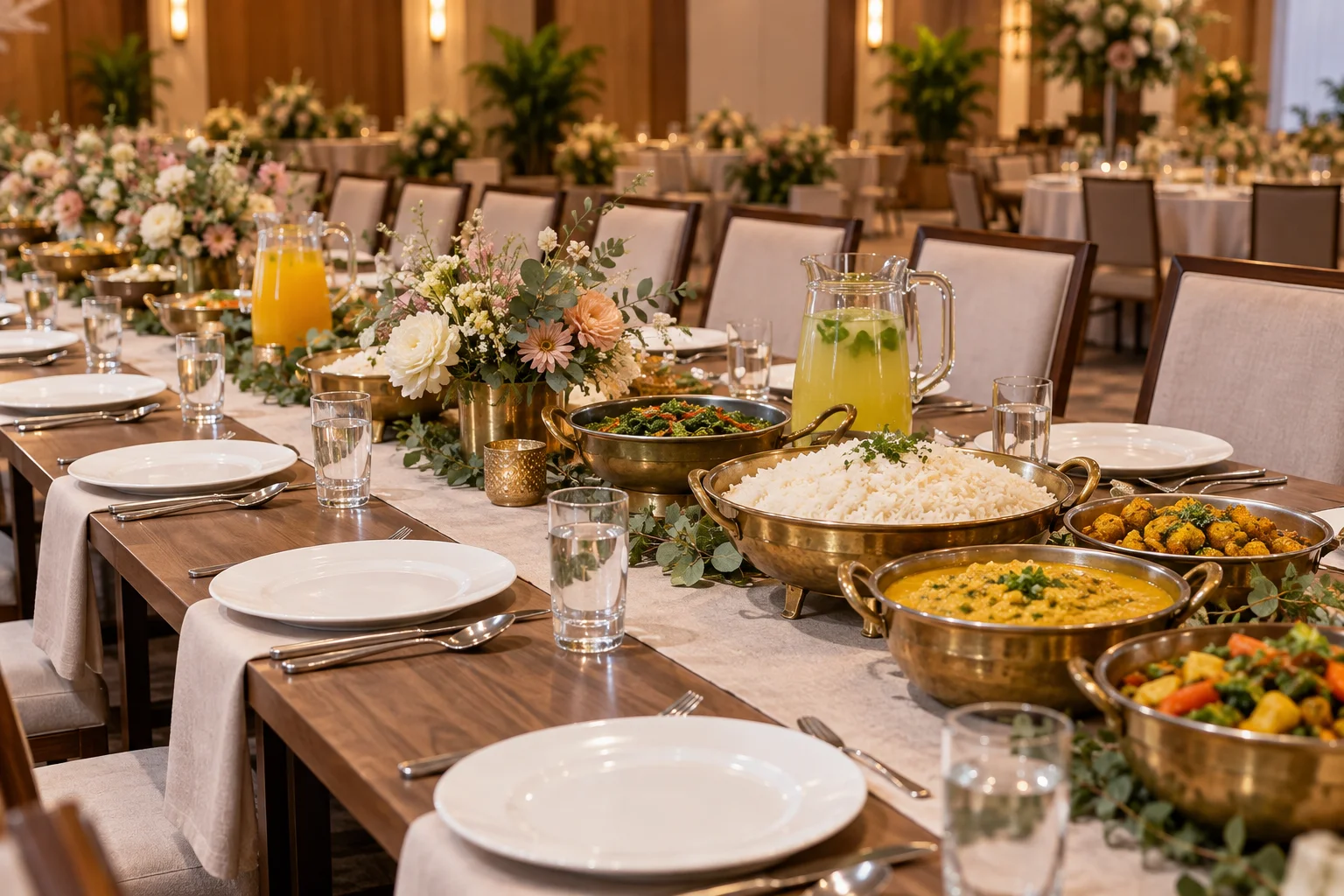
Interfaith dinner in a ballroom
180 guests · four requirements on one line · buffet with crew
A halal section, a sealed plated option, 22 vegetarian covers and 6 Jain covers with no onion or garlic, in one service.
Explore the serving plan ↗
Scope bought: buffet with crew, seating for 180, one live station, and the requirement dishes prepared in our own kitchen and carried in sealed rather than cooked in the venue. Ham and alcohol were kept off the menu entirely. The serving plan named where each dish sat on the line, which utensil belonged to it, and who on the crew answered guest questions.
RAMADAN IFTAR · 240 GUESTS · COMMUNITY HALL, DROP TIMED TO SUNSET
Ramadan iftar at a community hall
240 guests · one sunset window · mini buffet lines with crew
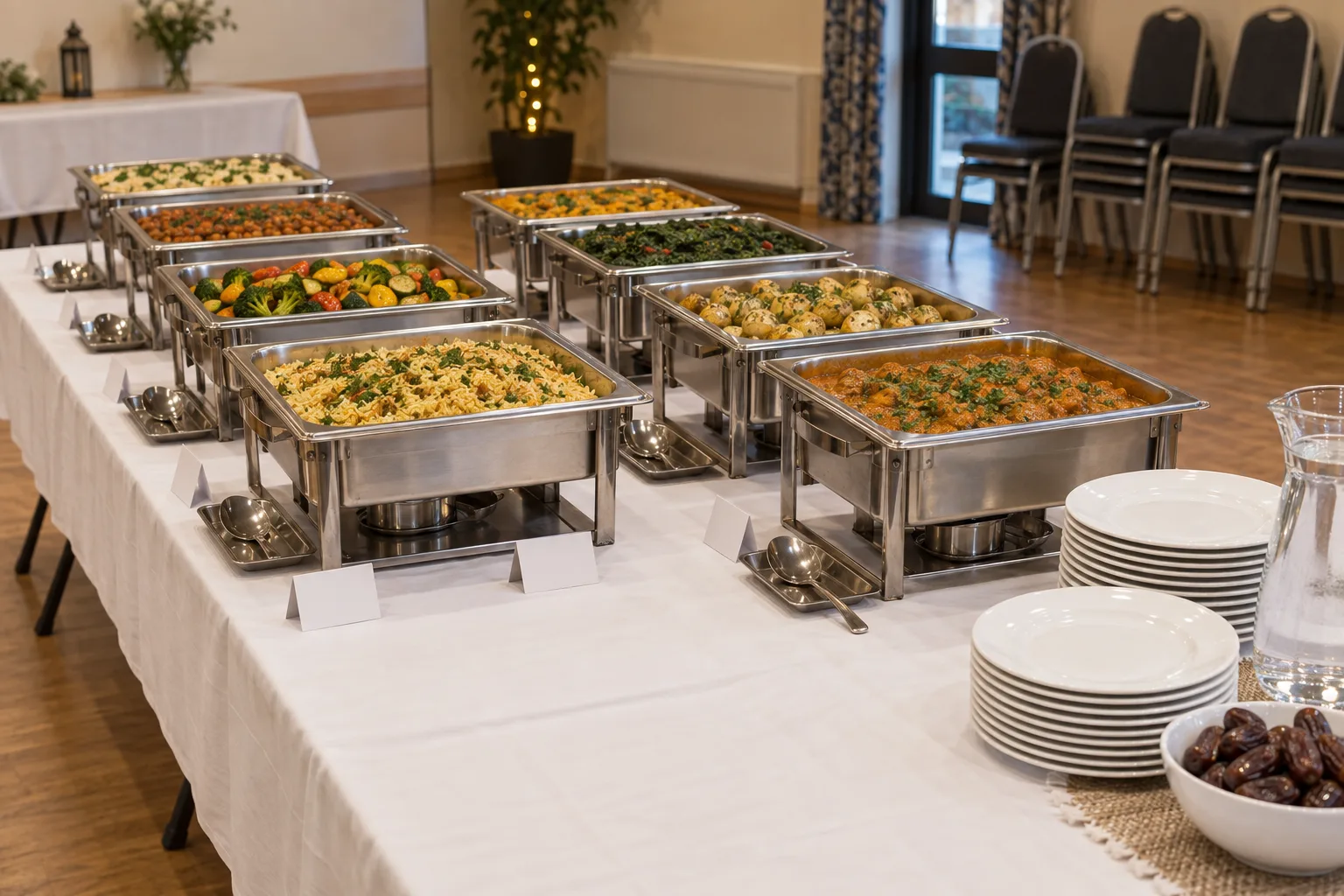
A drop timed to sunset, with dates and water laid out before the call and the savoury line opening immediately after it.
Explore the serving plan ↗
Scope bought: mini buffet lines with crew, no pork or alcohol anywhere in the building, a dedicated utensil per dish, every dish labelled in the same format, and staff briefed not to serve across a boundary. The hall runs a booking permit and an external-caterer approval; the documents its office asked for went in a week ahead, and the loading slot was agreed before the menu.
SEALED BOXES · 500 GUESTS · CONVENTION CENTRE, NO VENUE KITCHEN USED
A sealed box for every requirement
500 boxes · one label format · 62 requirement boxes
Where a line cannot be segregated at all, every guest gets a box instead, and the requirement is read off the lid rather than asked for at the counter.
Explore the serving plan ↗
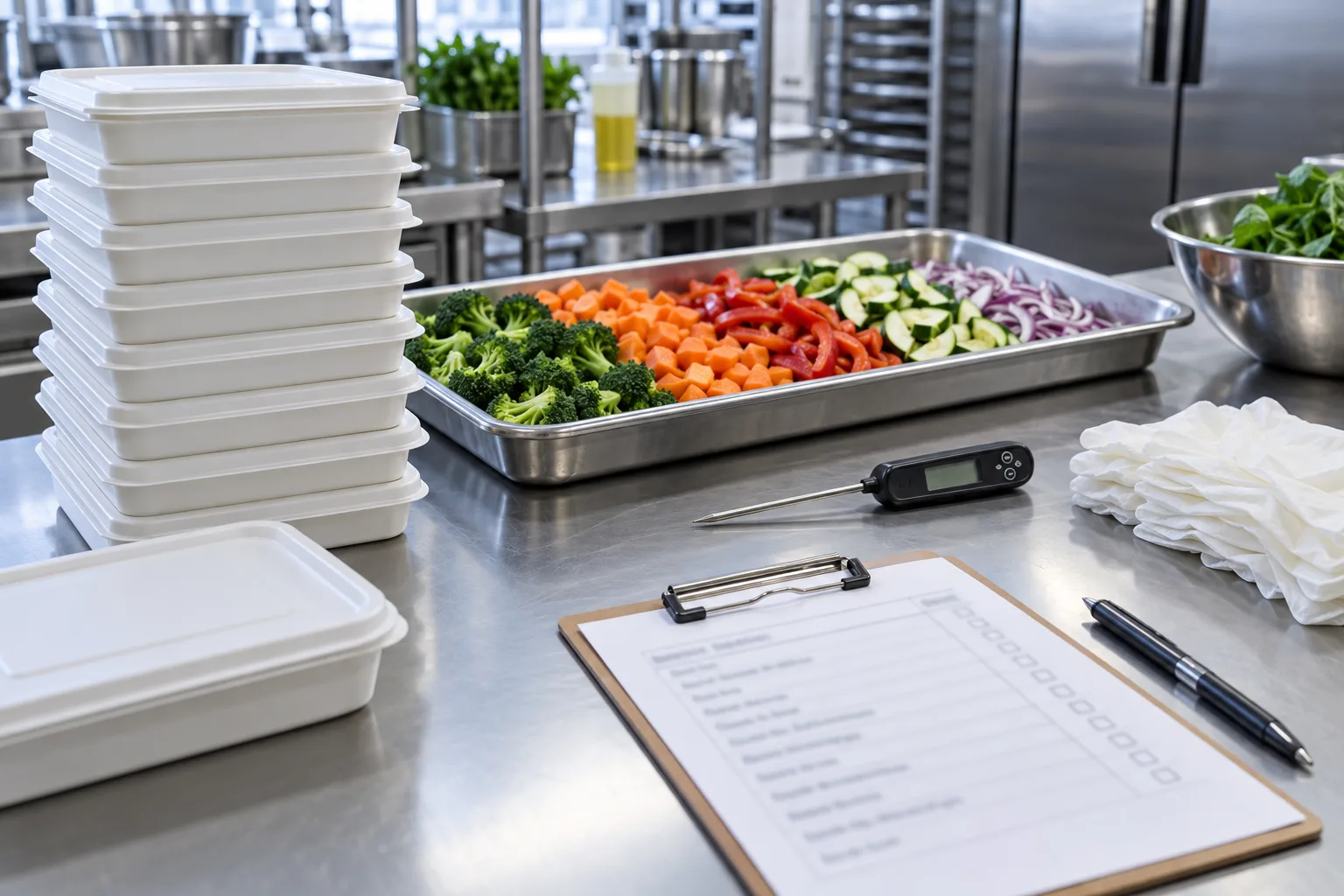
Scope bought: sealed meal boxes prepared in our kitchen with the requirement written in one format on every lid, carried in by our crew, and a holding point agreed with the venue. 62 of the 500 were requirement boxes across four requirements, counted one by one against the final numbers. Nothing was cooked on site, so no shared surface existed to manage, and the crew ran a collection desk rather than a serving line.
The line rules we run on every mixed event: one utensil per dish, never across trays; the requirement dishes placed at the head of the line with their own tongs; no shared fryer, griddle or chopping surface between a requirement dish and the standard menu; no cooking alcohol and no pork-derived gelatin anywhere on a menu that carries a requirement; every dish labelled in one format with its requirement and its allergens; and the crew briefed before service, with one person named as the answer for guests who ask.
They show how a mixed requirement is qualified, staffed and served.
The compliance question, answered early
Requirements first. Then the menu.
The certificate, plainly Body, number, scope and expiry — or a statement that there is none.
The boundary, in writing What each requirement changes, and what we cannot promise.
The line, briefed One utensil per dish, labelled, and no crossing between them.
A certificate is a document with a body, a number, a scope and an expiry. Here is what we ask to see, what you should ask any caterer for, and what we will not claim.
What we tell you, before you book
For the requirement you name: whether the kitchen holds a certificate, and if not, that there is none
The issuing body, the certificate number, the scope it covers and its expiry date, in writing
Whether the scope is the kitchen, one product line or one outlet, because those are different answers
What we do instead where a certificate does not cover your requirement: a segregated line, a sealed plated option, one utensil per dish, no cooking alcohol and no pork gelatin
What we will not claim
We do not print a certificate we cannot show you a number for
We do not describe a dish as halal, zabiha, kosher or Jain unless the requirement is met in full
We do not describe a kitchen as certified for something its scope does not cover
We do not pass off another operator's certification as ours, and we do not use a certifying body's logo as decoration
Requirements are confirmed per event, in writing, before the menu is locked.
Ask any caterer
Why the answer decides the order
Is the certificate current, and what exactly does it cover — the kitchen, one product line, or one outlet?
A scope narrower than your requirement is not a certificate for your dish
Which body issued it, and what is the number?
A number you can check against the issuing body's own register is the difference between a certificate and a logo
When does it expire, and who renews it?
An expired certificate is a document about last year
Is the meat zabiha, or only described as halal-style?
Zabiha is the narrower standard; ask which one the certificate covers
Are the requirement dishes prepared on separate surfaces and in separate fryers?
Shared surfaces, fryers and utensils are where an otherwise compliant menu fails
Does any dish use cooking alcohol or pork-derived gelatin?
Both hide in sauces and desserts rather than in the named meat
Is the whole kitchen certified, or only some dishes?
A mixed kitchen has to run a segregated line; the certificate alone does not serve the guest
Every requirement below is confirmed in writing; what we cannot promise is stated with it.
Requirement
What it changes on our side
What we can and cannot promise
Halal
A separate preparation run, a labelled section at the head of the line and its own utensils
We can promise the dish contains no pork and no cooking alcohol, and is served with a dedicated utensil. We cannot promise a certified kitchen unless the certificate you asked for covers it
Zabiha
Meat bought to the narrower standard and held separately from the standard menu
Only where the supplier states it in writing. Where it does not, we say plainly that it is not zabiha
Kosher
A sealed plated option, carried in and served with its own cover and utensils
We can bring a plated option that arrives sealed and is served separately. We cannot run a kosher kitchen or supervise a kitchen we do not own
Jain: no onion, garlic or root vegetables
A separate preparation with its own pans and a named cook
We can keep onion, garlic and root vegetables out of the dish and label it. We cannot promise a shared kitchen is free of them
Vegetarian
Its own dishes and its own utensils on the line
Available in every format, at the standard per-person band
Vegan
Dairy and egg kept out of the dish, and labelled separately from the vegetarian option
Available in every format. A shared fryer can carry traces, and we say so rather than implying otherwise
Gluten-free or nut-free
A dish with no gluten or nut ingredients, prepared with a separate utensil
A kitchen that handles flour and nuts cannot promise the absence of traces. We state the risk and offer a sealed plated option instead of a reassurance
CUSTOMARY
The authority, named — and what a certificate covers
The body is Majlis Ugama Islam Singapura (MUIS). A certificate is issued by that body with a scope, a premise and an expiry; a kitchen that is “halal-friendly” is not making the same claim.
Ask us for the certificate number and its scope, and check it against MUIS’s published register of certified establishments rather than against a logo on a page. We will send the number before you book, not after.
What certification covers is ingredient sourcing, preparation area and kitchen practice, packaging and delivery — which is why it is a third-party audit and not a menu label.
Where a guest list needs no certification, we say so in writing: a no-pork, no-lard kitchen is a different standard from a certified one, and we will not blur the two to sound more qualified than we are.
Dietary counts at volume
The count per requirement travels with the headcount on the order: how many vegetarian, how many no-beef, how many gluten-free. A note added two days before delivery is a request, not a count.
Mixed tables get separately prepared and separately labelled boxes or trays, so nothing is re-sorted or cross-contacted at the venue. A shared buffet line is offered only where the whole table shares the same rule.
Every dish keeps its own name and its ingredient list on the order; nothing is described to your guests as a substitute for something else.
The calendar and the courtesy: Ramadan iftar is timed to sunset, with dates and water set out before the call and the savoury line opening after it; Eid, Lunar New Year, Deepavali and Christmas menus are listed by their own names on the same order; a dish keeps its own name rather than being described as a substitute for pork; and nobody is marked out by a differently covered plate unless they asked for one.
The venue decides as much as the menu does: whether an outside caterer is allowed in, who approves it, and whether a mixed line can be run there at all.
Venue
What it decides
What we need from you
Community hall or void deck
Usually admits an outside caterer; holding, power and washing-up are arranged case by case
The booking permit, a power point and a holding table
Hotel ballroom
The in-house kitchen often has first right, and an outside caterer is approved one event at a time
The venue's written approval, and the documents its office asks for
Office lobby or pantry
Loading, lift access and the drop point decide what can be carried in
A named contact, a loading slot and a holding space
Industrial or event space
Power, ventilation and clearance decide whether a live station is possible
The floor plan and the power rating
Venue kitchen that can be segregated
A mixed line can be run on site, with the venue's own rules on top of ours
Access times, and the venue's rules in writing before the menu is written
Venue kitchen that cannot
No mixed line is run there. The requirement dishes are prepared in our kitchen and carried in sealed, with a dedicated utensil per dish
Permission for a carried-in service and a holding point
Venue rules belong to the venue. We say what we will ask for and what we need in writing, we never assume a venue has approved us, and when a venue's answer arrives late we tell you what it does to the service plan rather than absorbing it quietly.
Two things move the figure: the format, and how much of the line has to be separated for a requirement. Rates published for 2026.
Illustrative concept pricing, not a quotation. Per-person bands for a Singapore event of sixty to three hundred guests with crew service, chafing dishes, crockery and set-up, excluding any venue charge, furniture hire, delivery outside the stated zones, and any supervision a requirement needs from a body we do not employ. A separate preparation team, a sealed plated option per requirement, more protein choices, a live station and full plated service all move the figure upward, as does a peak-period date. Confirm current rates with the caterer.
Format
What the band includes
From, per person
Buffet, standard menu
Chafing dishes, crockery, one server per 25 guests, one labelled requirement section
S$26
Buffet with a fully separated line
A separate preparation run, its own holding, one utensil per dish, crew briefed on the boundary
S$34
Mini buffet
From ten guests, set out and collected, trays labelled, no crew on site
S$22
Meal boxes
From ten guests, one labelled box per guest, collected after the event
S$18
High tea and canapes
Six pieces per guest, two staff per forty guests
S$32
Live station
Cooking on site at your clearance, a crew of two, our own gas and holding
S$45
Plated service
Three courses, seated, one server per twelve guests, a plated requirement option with its own cover
S$68
Why a separated line costs more: a second set of utensils, a separate holding area and a briefed crew are labour and equipment rather than ingredients. We price them as their own lines, so you can see what the requirement costs instead of finding it inside a lump sum.
The requirement and venue questions are answered before the menu is written, and every stage ends with something you keep.
Requirement brief
Guest counts per requirement, the venue, the date and the service window. Output: a written brief listing every requirement, including the ones we think we cannot meet.
Certification and documents
What you need to verify against the requirement you named. Output: the issuing body, the certificate number, the scope and the expiry in writing — or a plain statement that no certificate covers it.
Venue approval
Which approvals the venue requires and who files them. Output: the venue's written approval and the document set its office asked for.
Menu and boundary
The menu is written with each requirement's dishes named. Output: a menu marking every dish with its requirement and its allergens, and stating what cannot be excluded.
Production and the line
Segregated preparation, sealed transport and a dedicated utensil per dish. Output: the serving plan — which dish sits where, who serves it, and what the crew was briefed on.
Service and handover
Service, clearing and the close-out. Output: a handover note listing what was served where, what was held back and why, and the items to correct before the next event.
The numbers that decide whether a date works, and the two rules we publish about the day itself.
Lead times, in working weeks before the event date. Venue approval, an external supervisor for a requirement, and peak periods all add to the band.
Event scale
Book by
What the lead time buys
10–60 guests
2 weeks
Menu confirmed in one round; boxes or a mini buffet
60–300 guests
3 weeks
Menu customisation, venue coordination and one tasting
300–1,000 guests
5 weeks
The venue’s external-caterer approval and the document pack
1,000 guests and above
7 weeks
Kitchen planning, logistics and a staffed crew roster
Peak periods: Ramadan, Hari Raya, Deepavali, December
Add 2 weeks to the band
The same process, started earlier, and a menu locked sooner
Minimums are per event and are confirmed with the quotation.
Every requirement is answered in writing before the menu is locked.
Item
How it works
Minimum guests
Ten for meal boxes and mini buffet, thirty for a buffet with crew, fifty for plated service. A smaller group is boxed rather than refused: ten boxes is a delivery we run
Requirement minimum
One guest. A single requirement box is prepared, labelled and sealed exactly as it would be for sixty, because the boundary is what makes the box work rather than the volume
Headcount change
Numbers confirmed five working days ahead; a later reduction is charged on the confirmed count, and requirement counts move with them because those boxes are bought in after the count
Requirement added late
Accepted up to 48 hours ahead when the box can be built from stock we already prepare; a requirement at 24 hours is met if the kitchen has the components, and we say no rather than improvise
On-time rule
The serving window is agreed in writing. If we arrive after the window we set, the crew time beyond it is not billed to you
Quantity allowance
We cook five per cent above the confirmed buffet headcount so a late guest still eats; the allowance is not billed
Serving kit
One utensil per dish, a second set for the requirement line and a labelled holding point are in the per-person price
Coverage
Island-wide, with delivery charged by zone; a venue outside the zones is quoted per trip rather than refused
Answer window
A person answers 9am to 7pm daily, and a named coordinator is on site for the whole event. A requirement question on the day goes to the coordinator, not to the line
“They told us which requirement they could not prove, and what they would do instead. That is why we booked them.”
Mixed-requirement corporate dinner · sample story
Sample story. Not a real customer review.
Before you commit
The questions that decide it.
Can one menu cover a mixed guest list?+
Usually, and the boundary is written down rather than assumed. The standard dishes sit on the same line as the labelled ones, so nobody eats a substitute course. Where a requirement cannot be met in a shared kitchen — a gluten-free guest in a kitchen that handles flour, a Jain dish in a line that cooks onion — we say so and offer a sealed plated option instead of a reassurance.
Do you hold halal or kosher certification?+
We answer that plainly for the requirement you name, before you book: whether the kitchen holds a certificate, which body issued it, the number, the scope it covers and its expiry — and if there is none for that requirement, we say there is none and set out what we do instead. Ask the same question of every caterer you shortlist, and check the number against the issuing body's own register rather than a logo on a page.
How do you stop a requirement breaking down on the day?+
One utensil per dish and never across trays, the requirement dishes at the head of the line with their own tongs, no shared fryer or chopping surface, no cooking alcohol and no pork gelatin on the menu, every dish labelled in one format, and a crew briefed before service with one person named as the answer for guests who ask.
What is the minimum, and how late can numbers change?+
Ten guests for meal boxes and mini buffet, thirty for a buffet with crew, fifty for plated service. Numbers are confirmed five working days ahead, and a reduction after that is charged on the confirmed count because the food and the crew are already committed. Additions are accepted while the kitchen can still cover them.
Can you work in our venue?+
Tell us the venue before the menu. Some venues admit an outside caterer freely, some run an approval process, and some ballrooms keep the work in-house. Where a venue kitchen cannot be segregated, nothing is cooked there: the requirement dishes are prepared in our kitchen, carried in sealed and served with their own utensils. We need the venue's written approval and, where it has one, its rules.
What about guests who have no requirement at all?+
They eat from the same menu. The standard dishes are the menu; the requirement dishes sit alongside them and are labelled for the guests who asked. Most of the tables we quote are mixed, and a menu that reads as a restriction for everyone is a failure of the brief rather than a safe answer.
What we will not claim or do: we do not print a certificate we cannot show a number for, and we do not describe a dish as halal, zabiha, kosher or Jain unless the requirement is met in full; we do not run a mixed line in a kitchen that cannot be segregated; we do not promise an allergen-free dish from a kitchen that handles the allergen, we state the risk and offer a sealed plated option; we do not supervise a kitchen we do not own; and we do not accept a booking whose requirement we believe we cannot meet.
Start with the requirement
Tell us the rules. We’ll write the menu.
Send the date, the venue and the guest count per requirement. If we cannot meet one of them, we say so before you plan around it.
Send this list to procurement, or ask us for it; the certificate line is answered for the requirement you name.
Document
What it should show
Certificate for the requirement named
The issuing body, the number, the scope it covers, the expiry — or a written statement that no certificate covers it
Food-business licence
The premises it names, and the number
Public liability insurance
The certificate, and the cover limit on request
Business registration and bank details
For procurement onboarding
Itemised quotation
Food, crew, equipment and any supervision a requirement needs, as separate lines
Service plan
Serving line layout, labels, crew briefing and clearing times