A cleaning contract sold as a document set: the specification you sign, the hours behind the monthly figure, and the audit record you can read at any time.
Contract cleaning is a specification plus a record. Choose the line you are buying, and the frequency, the crew model and the paperwork follow from it.
Attendance: the specification delivered on the scheduled sessions, against the attendance record
Audit score: a planned supervisor inspection each month and an unplanned one each quarter
Response: a logged issue attended within one working day, and any area the record marks short cleaned again at our cost
Consumables: usage reported per item each month, so a change in consumption is visible rather than invoiced
Specification: tasks added or dropped only by a written variation
Who is in your building
Staff are identity-checked where the site requires it, inducted on your premises before the first shift, and issued colour-coded equipment by area so a washroom cloth never reaches a desk. The crew is named to the site and cover staff are named before they attend. No accreditation badge is printed here: ask for the certificates, the issuing body and the register you can check them against, and ask us in writing where our pay sits against the published local floor for cleaners.
Three contracts, in outline
The hours are the quote.
Three illustrative sites. Each one is the specification, the crew model and the record that comes with it — priced as hours multiplied by sessions, not as a rate per square metre.
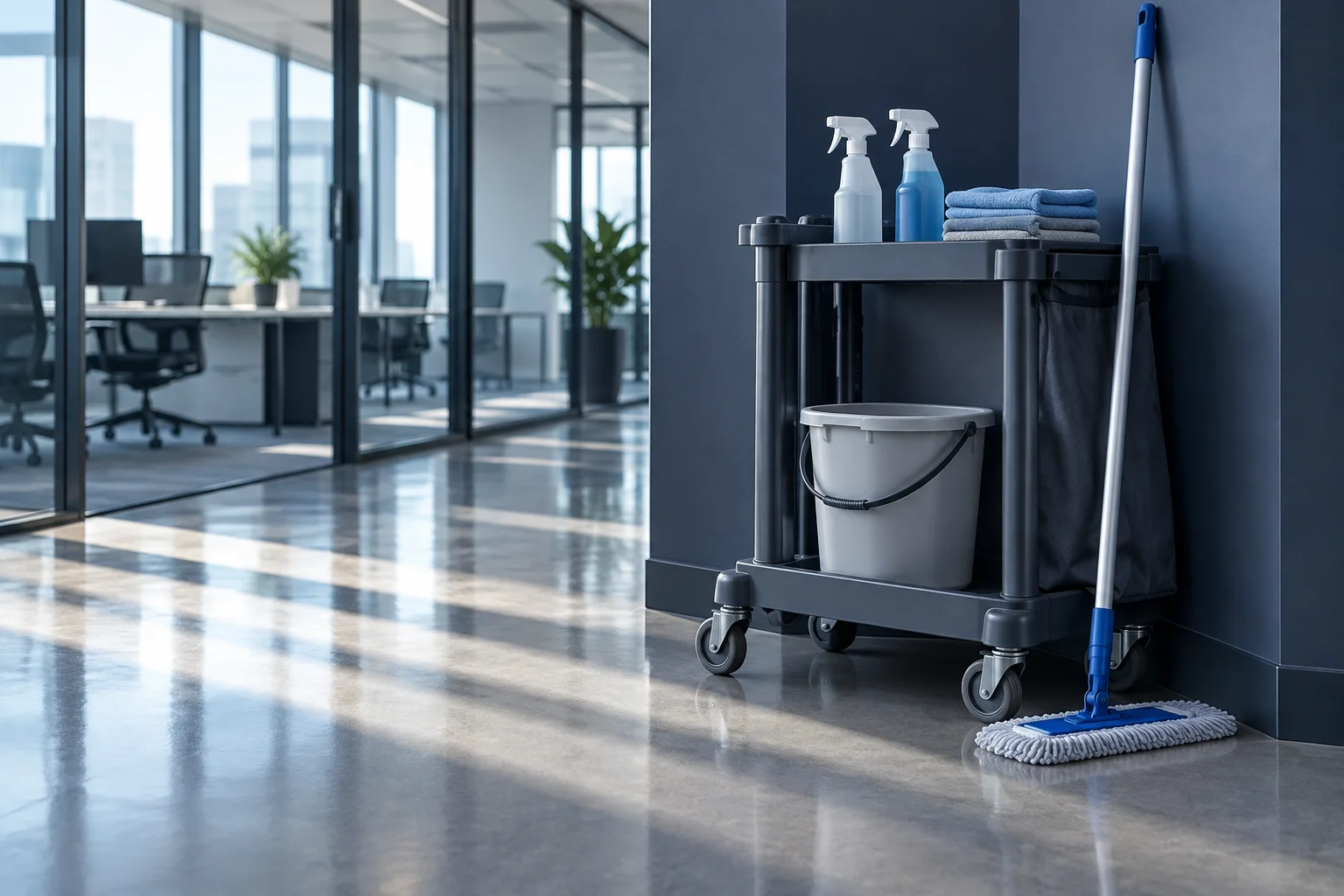
Office · 1,800 m² net, five nights a week
Two cleaners for four hours a night, with the task durations — not a rate per square metre — deciding the crew model.
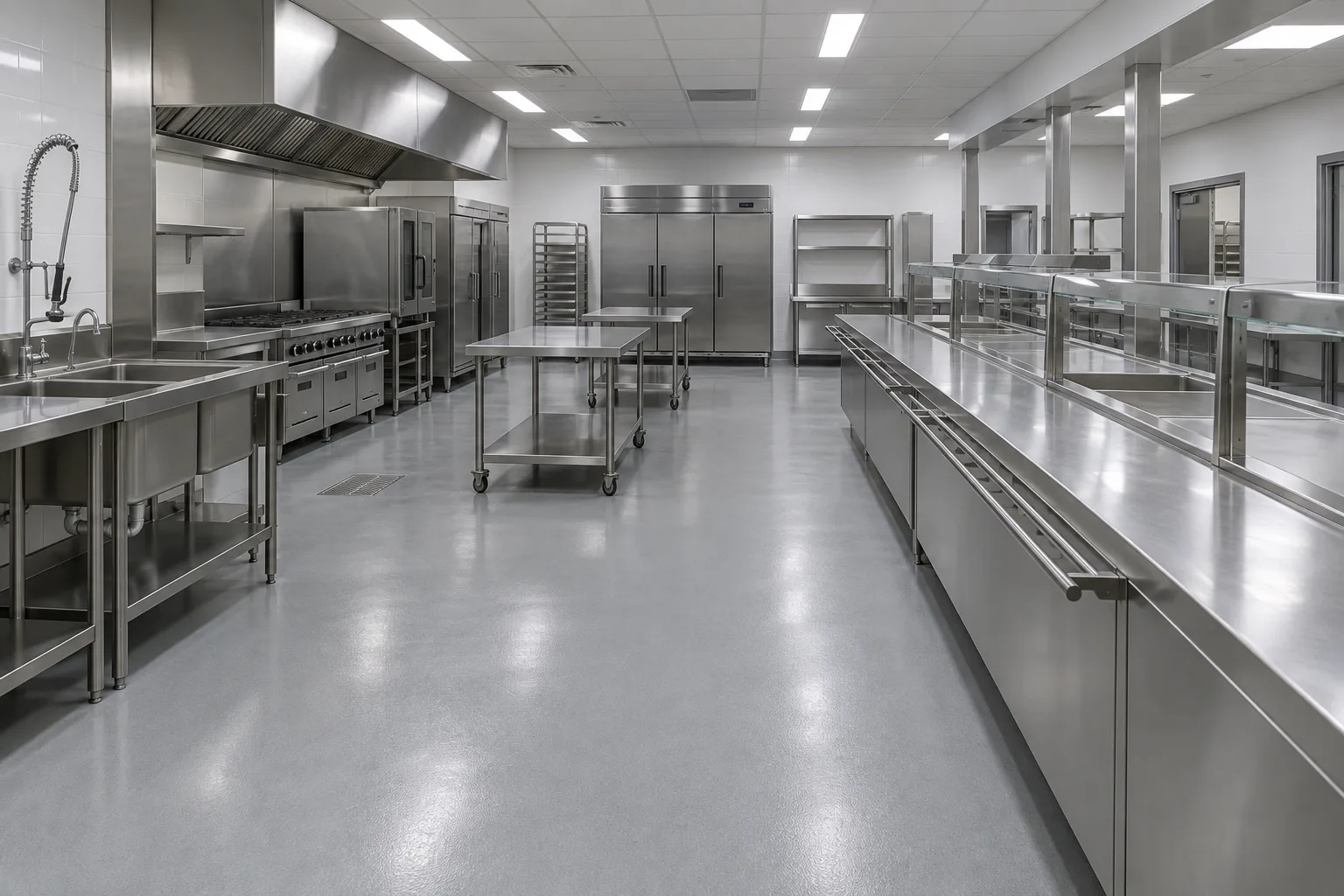
Food premises · trading until 22:00, six nights
The washroom cycle, the waste route and the floor finish each carry their own line in the specification.
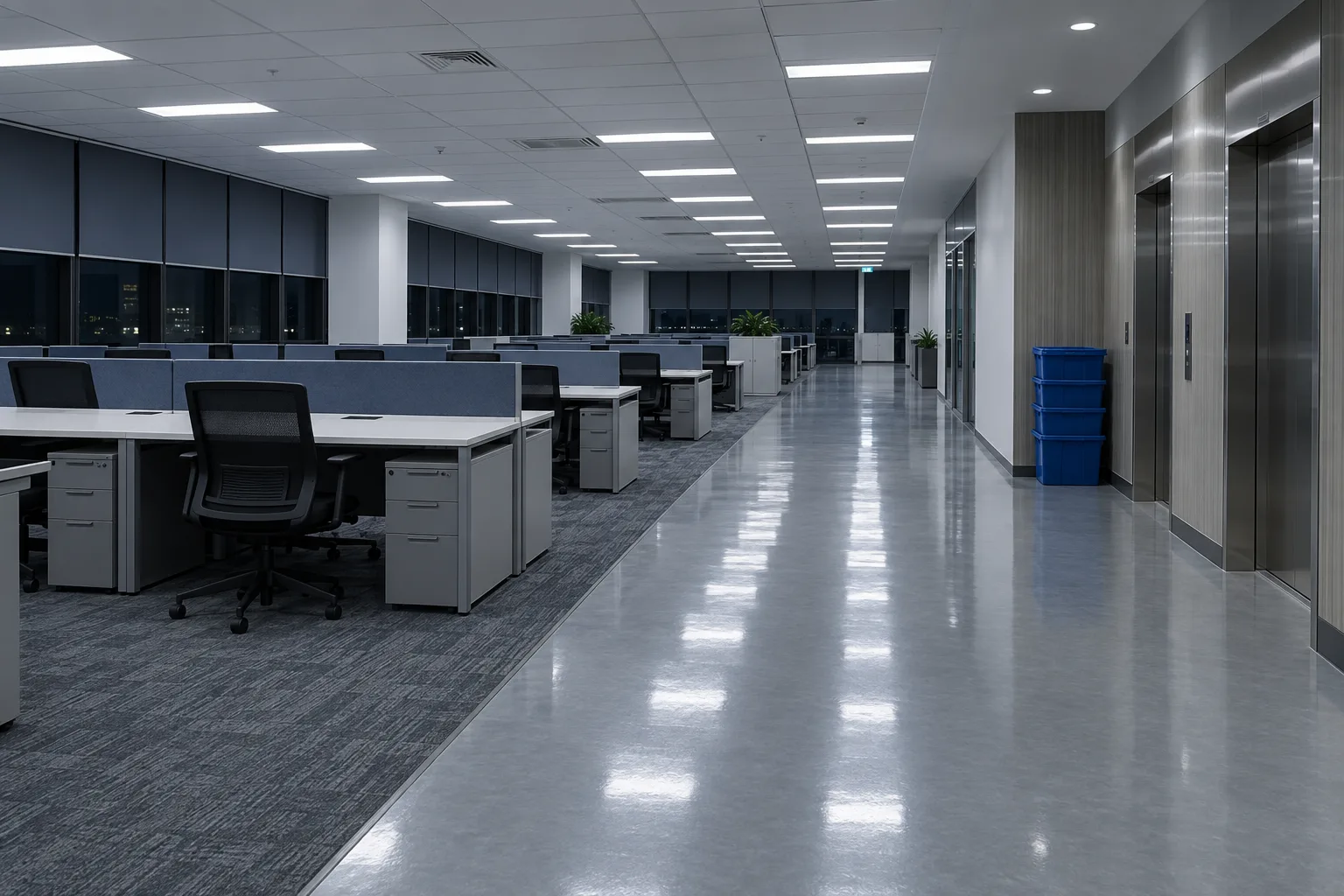
Mixed-use plate · 2,400 m² net, nightly plus a day porter
Periodic scrubbing and carpet extraction sit in their own monthly line rather than being folded into the nightly hours.
They show how a contract is specified, staffed, recorded and priced.
The specification
Area by area, and how often.
This is the section a facilities manager compares against a rival quote. Each area carries its own frequency, its own tasks and its own exclusions — nothing is covered by a general promise.
Workstations & floors — every session +
Empty the agreed number of desk bins and replace the liners
Wipe desk exteriors and shared surfaces at the agreed height
Vacuum or mop circulation routes and spot-clean marks
Excluded: personal items and paperwork, and any surface above the agreed height.
Adjusted when: the floor plate changes, a zone is added, or the occupancy pattern shifts — frequency and hours move together, as a written variation.
Washrooms — every session, high-touch points twice +
Basins, taps, mirrors, cubicle surfaces and sanitary units
Floors with a dedicated colour-coded mop
Consumables restocked to the par level on the site sheet
Excluded: drain clearance, and any plumbing or fixture repair.
Adjusted when: the washroom count or the fixture types change, or the par level for consumables moves — the cycle and the consumable lines are re-priced with it.
Pantry & kitchen — every session +
Worktops, sinks, taps and appliance exteriors
Floor and splashback wiped down
Bins emptied and the area left clear for the morning
Excluded: inside appliances, fridges and cupboards unless the specification lists them.
Adjusted when: a site kitchen is added, or the pantry becomes a serving point — it takes its own line, at its own frequency.
Meeting rooms & glass — every session, glass twice a week +
Tables and chairs, and shared equipment exteriors
Internal glass at the stated height, edge to edge where it is on the route
Waste and recycling removed from each room
Excluded: cabling, equipment interiors and anything needing access above the stated height.
Adjusted when: a meeting room is re-purposed, or glass is added on the cleaning route — the glass frequency is stated rather than assumed.
High-level & periodic — monthly or quarterly +
Vents, ledges and high dusting inside the stated reach
Machine scrubbing of hard floors on the stated cycle
Carpet extraction and window cleaning on the periodic schedule
Priced in the periodic line, never folded into the nightly specification to make a monthly figure look smaller.
Adjusted when: the finish or the carpet changes, or the last extraction is visibly spent — the cycle is re-timed from the record rather than from the calendar.
Frequency follows the site, not the invoice +
Low-traffic office: three sessions a week is usually enough
High-traffic office, clinic or retail: daily, before or after trading
Warehouse: weekly to fortnightly, with high-level work on a longer cycle
A frequency change is a written variation with its own price, agreed before it takes effect.
Adjusted when: trading hours move, a shift pattern changes, or the site goes quiet — the recommended frequency is re-checked at the monthly review.
The record, not the promise. This is the document set the contract produces. Attendance and checklist records are offered as a scan or a login, and a printed copy is supplied where procurement needs one.
Record
What it contains
How often
Attendance record
Who attended, at what time, for how long, checked against the schedule
Every session
Checklist verification
Each specification task marked done or not done against the area list
Every session
Supervisor inspection
The inspection score, the findings and the corrective action
Monthly, plus one unplanned each quarter
Performance report
Audit scores, logged issues with response times, consumable usage, the open action list
Monthly, with a review meeting
If the record says a task was not done, the area is cleaned again at our cost. That is the only quality promise we make, and it is the one the report can prove.
The monthly basis
Built from hours, not from a size.
A monthly figure is labour, supervision, equipment and consumables. Below are the guide bands, the crew model behind them and the line items that make the figure up.
Rates reviewed 18 September 2026.
Illustrative concept pricing, not a quotation. Each band assumes a site in ordinary condition, the sessions shown, the specification at the agreed frequency, equipment and consumables supplied by us, daytime access and no periodic works. Net cleanable area, floor finishes, washroom count, headcount, trading hours, security clearance and periodic work are what move the figure. Multi-building sites and anything above 5,000 m² net are quoted after a productivity check. Confirm current rates before you commit.
Site
Sessions and crew model
Monthly from
Up to 500 m² net Small office, clinic, single floor
Three sessions a week, one cleaner × 2–3 hours
S$650
501–1,500 m² net Typical office floor plate
Five nights a week, one cleaner × 4 hours
S$1,450
1,501–3,000 m² net Multi-floor office or a retail unit
Five nights a week, two cleaners × 4 hours
S$2,350
3,001–5,000 m² net Larger plate or mixed use
Five nights a week plus a day porter on the stated hours
S$3,600
Above 5,000 m² net Multi-building or campus site
Quoted after a productivity check on site
Quoted
The crew model, as arithmetic
Two cleaners for four hours rather than one cleaner for eight, because the task durations decide it: the washroom cycle, the floor areas and the waste route each take a stated time. The model is printed next to the price so you can check the maths against any other quote and against your own knowledge of the site.
The line items in the quote
Cleaning labour at the specified hours
Supervision and contract management
Equipment and colour-coded materials
Consumables, listed per item with a unit cost
Periodic and ad-hoc work at the stated rate
Mobilisation, and any weekend or public-holiday surcharge
The record each visit writes
Every session writes its own line before anything is invoiced: the date, the crew who attended, the hours on site, each specification task marked done or not done against the area list, the issues logged with their times, and the supervisor who signed it. The visit record is issued per session, kept for the term, and offered as a scan or a login.
How the month is invoiced
One statement per site, issued in arrears on the calendar month and built from the attendance record rather than from an estimate. A session not delivered is credited on that same statement instead of being left for you to claim; approved variations appear as their own lines with their approval date; washroom consumables appear per item. Nothing reaches an invoice on the strength of a conversation.
How to compare two quotes that are 30% apart: start by assuming they are 30% apart in scope. Issue every bidder the same table — task area, frequency, specification, expected duration per visit, consumables included — and the difference stops being a mystery. We will fill that table in for your site whether or not you engage us.
Sized before it is priced
A walkthrough, then a monthly figure.
A contract is priced as hours multiplied by sessions, not as a rate per square metre. These are the four things we ask for before a figure is written down — and the ones that re-price it if they change.
1 · The site, measured
Net cleanable area per floor, not the gross lease area on the plan
Floor finishes and coverage, because carpet, vinyl and stone take different times per square metre
Washroom count and fixture types, workstations, meeting rooms and the high-touch points you want on a second pass
2 · Frequency and the hours
Sessions a week and which days; the rate per visit falls as the sessions get closer together
The hours the building is free — an after-hours clean is priced differently from one run around your staff
Weekend and public-holiday sessions, at the surcharge stated in the agreement
3 · Access and after-hours terms
Keys, cards or alarm codes, and who is told that a crew is on site
Any building induction or clearance required before a cleaner may enter
The one person who signs off a session, named on the specification
4 · Waste and consumables
The waste and recycling streams we carry out, and the bins your own contractor takes
Any specialist waste stream, quoted as its own line rather than assumed
Washroom paper and soap: per item against a par level, or excluded from the figure — say which before the quote is written
The walkthrough is free and the figure comes back in writing, with the hours behind it. The first shift is scheduled from that written quote, never from a figure given on the phone.
Labour for every task in the specification, at the agreed frequency
Supervision, site management and the named contract contact
Equipment, colour-coded materials and their replacement
The attendance record, the checklist verification and the monthly report
Cover for absence, briefed on the site before attending
Cleaning again, at our cost, of anything the record marks short
Invoiced separately, or outside it
Washroom consumables and paper, priced per item against the par level
Periodic deep works, high-level access, carpet and upholstery extraction
Post-renovation, post-event or builder's clean — a different specification
Weekend and public-holiday sessions, at the stated surcharge
Waste removal beyond the agreed bins, and any specialist waste stream
Tasks added to the specification mid-term, priced as a written variation
No task is added, dropped or re-priced without a written variation agreed before it takes effect. That single rule is what stops a contract invoice drifting quietly upwards.
Priced outside the contract
The jobs a monthly figure does not cover.
Each of these is a scheduled job with its own duration and its own method. They are priced per item or per occurrence, approved in writing before they are booked, and invoiced on the month they are carried out.
Illustrative concept pricing, not a quotation. Add-ons are quoted per occurrence and appear on the contract invoice for the month they are performed; they are never folded into the monthly figure. Area and condition, access height, drying time, whether the site is trading and whether the work can run after hours are what move the number. Confirm current rates before you commit.
Contract add-on
What it covers
Priced
Periodic deep clean Monthly or quarterly, outside the scheduled specification
Machine scrubbing of hard floors, skirtings, vents and the high-level dusting the scheduled visit leaves out
From S$180 per session
Carpet extraction Per zone, with a drying window agreed first
Hot-water extraction of the named zones and spot treatment, with the area out of use for the stated drying time
From S$0.14 per m²
Strip and seal Hard floors, closed area required
Existing finish stripped, floor dried, sealer applied in two coats, with the area closed for the stated hours
From S$2.40 per m²
Washroom consumables To the par level on the site sheet
Paper, soap and liners stocked on every session, with usage reported by item so a change in consumption is visible
Per item, at the listed rate
Internal glass & partitions On the cleaning route
Both sides where reachable, frames and tracks wiped to the stated height
From S$35 per panel
Post-incident clean Spill, flood or after an event
Attendance at the contract's own ad-hoc rate, the work agreed with your site contact before it starts
From S$260 per call-out
How a contract starts
Six steps to the first shift.
Tell us the site
Address, floors, headcount and the hours the building is in use.
Site survey
Gross and net cleanable area, floor finishes, washroom count and fixture types, workstations and occupancy patterns — written down.
Specification & crew model
The task list per area with its frequency, and the hours that follow from it.
Terms and schedule
Term, notice, billing basis and the trial session, on one page before anyone is mobilised.
Mobilisation & site handover
Staff inducted on site, equipment delivered, keys and alarm procedure agreed, first week supervised.
Audit and review
The record starts on day one; the first monthly review compares it against the specification.
A contract can only be held to what it says. This is the remedy, the window it runs in and the person who decides — written into the agreement rather than promised at the pitch.
Scored every month
Each planned inspection is scored against the specification, area by area, and the score sits in the monthly report beside the attendance record. An area the record marks short is cleaned again at our cost.
Reported inside 24 hours
The window runs from the recorded end of the session. The attendance record or a dated photograph is enough to open a claim; a claim after the window is quoted as a new job rather than a return visit.
Re-cleaned within one working day
One return visit to the named areas, inside the next working day where access allows, at no charge — scheduled whether or not the following contract session falls sooner.
Who signs it off
Your nominated site contact owns the sign-off, the supervisor who inspected owns the finding, and the named contract contact owns the fix and the response time. Three names on the specification, not a call centre.
What voids it
Access refused for a scheduled session, tasks added to the specification without a written variation, or work another contractor carried out in the same area after we left. Damage, staining and wear that cleaning cannot remove sit outside it too.
What is not promised
No finish is restored and no outcome is guaranteed: the promise is the specification delivered, the record shown, and the re-clean as the remedy when the record says otherwise. The vetting we run, the bond carried and the public liability cover — and who to ask for the certificate — are named in your agreement before the first shift, rather than left to a badge on a page.
A facilities manager's view
“The specification went out to three bidders in the same format, so the cheapest quote stopped looking cheap once the hours were filled in.”
1,800 m² office contract · sample story
Sample story. Not a real customer review.
Terms and objections
Before you sign a contract.
Term
Twelve months from mobilisation, at a fixed monthly figure for the specification signed.
Exit
Written notice sixty days before the renewal date. A shorter exit is priced from the notice given, and the trial period can be ended without penalty.
Trial
A short ad-hoc period can be run before the term starts, at the contract rate, so the crew and the specification are tested first.
What breaches it
Unpaid invoices past the stated term, a specification changed without a variation, or continued access refused for the scheduled sessions. Each is written into the agreement rather than applied quietly.
How do we know the work was done?+
Every session produces an attendance record and a checklist verification against the area list. A supervisor inspects monthly, and the performance report carries the score, the logged issues and their response times. You are not asked to take the crew's word for it, and the record is yours to audit rather than ours to summarise.
Why is one quote 30% cheaper than another?+
Usually because it is 30% different in scope: fewer hours, a thinner specification, no supervision, or consumables excluded. Ask every bidder for the same table — task area, frequency, specification, duration per visit, consumables — and compare that instead of the monthly figure. We will fill the table in for your site either way.
Are consumables included?+
Washroom paper and consumables are invoiced separately, per item, against the par level on the site sheet, with monthly usage reported. Labour, equipment and materials are in the monthly figure. Which side of the line each item sits on is written into the specification rather than negotiated at invoice time.
What happens when something is missed?+
Log it and the response stated in the contract applies: attendance within one working day, and any area the record marks short cleaned again at our cost. It goes on the KPI list in the monthly report, and a repeated miss is a staffing or specification problem to fix at the review rather than re-promise.
Can the specification change mid-term?+
Yes, by written variation with its own price, agreed before it takes effect — whether that is a new area, a higher frequency, or a task dropped because it was never needed. Nothing is added to an invoice on the strength of a conversation.
Do you work nights, weekends and holidays?+
Nights are ordinary for contract cleaning and are built into the crew model. Weekend and public-holiday sessions carry the stated surcharge, and a shift pattern that changes regularly is priced as its own model rather than as occasional overtime.
Start with the site
Tell us the premises. We will price the month.
Give us the size, the floors and the hours the building is in use. A survey follows, and so does a written specification with its price basis attached.