Automation & Integration
AI-assisted automation in Singapore
AI-assisted research, classification, drafting and reporting inside a defined workflow, with the review steps kept visible. From S$900.
- Guide price
- From S$900
- Delivery time
- 7–15 working days
What you receive.
AI-assisted research, classification, drafting, review and report generation within an operating workflow.
A working AI-assisted process for the agreed task, tested against your own examples before handover, with written operating and review instructions. The scope names which steps the AI prepares, which outputs a person checks before they are used, which source material the process may use, and what happens to an output that does not meet the agreed standard.
Related project experience.
Browse all work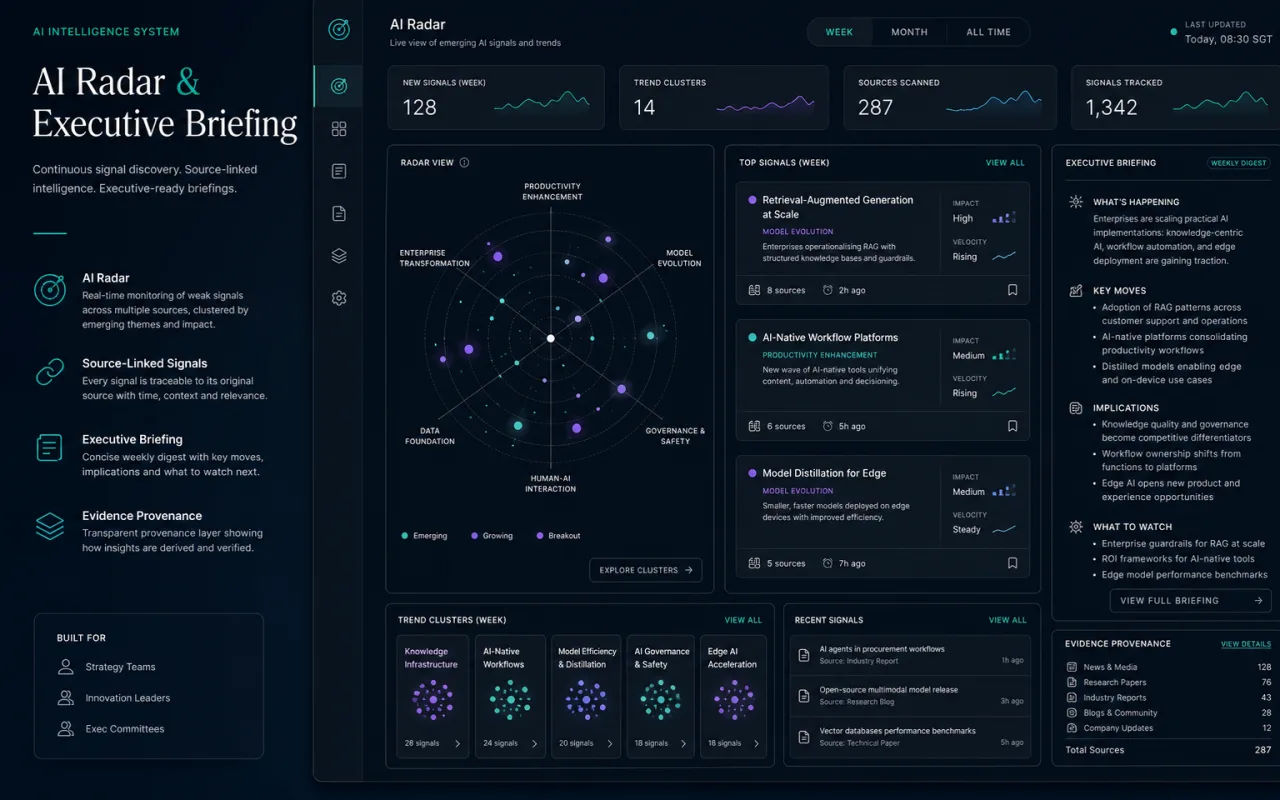
How the work runs
Start from a real task, not a tool
The useful first question is not which AI to use, but which step of your work is slow, repetitive and safe to get wrong occasionally. Send the input your team receives and the output they have to produce, and the boundary of the process becomes visible.
Keep the review steps visible
The design states which outputs a person checks and what counts as not good enough, so the AI prepares work instead of deciding alone. In the content workflow published on this site, research and drafts are produced automatically while publishing stays a human decision.
Test against your own examples
A set of real examples is agreed up front and the process is run against them before handover. Results are delivered with the workflow, so the same examples can be repeated later — including after your material changes.
Hand over with operating and review instructions
Everyone can see what to give the process, which output to check, who owns a doubtful result and what happens when the answer is wrong. Changes to the agreed steps after acceptance are separate work.
Where this has been delivered
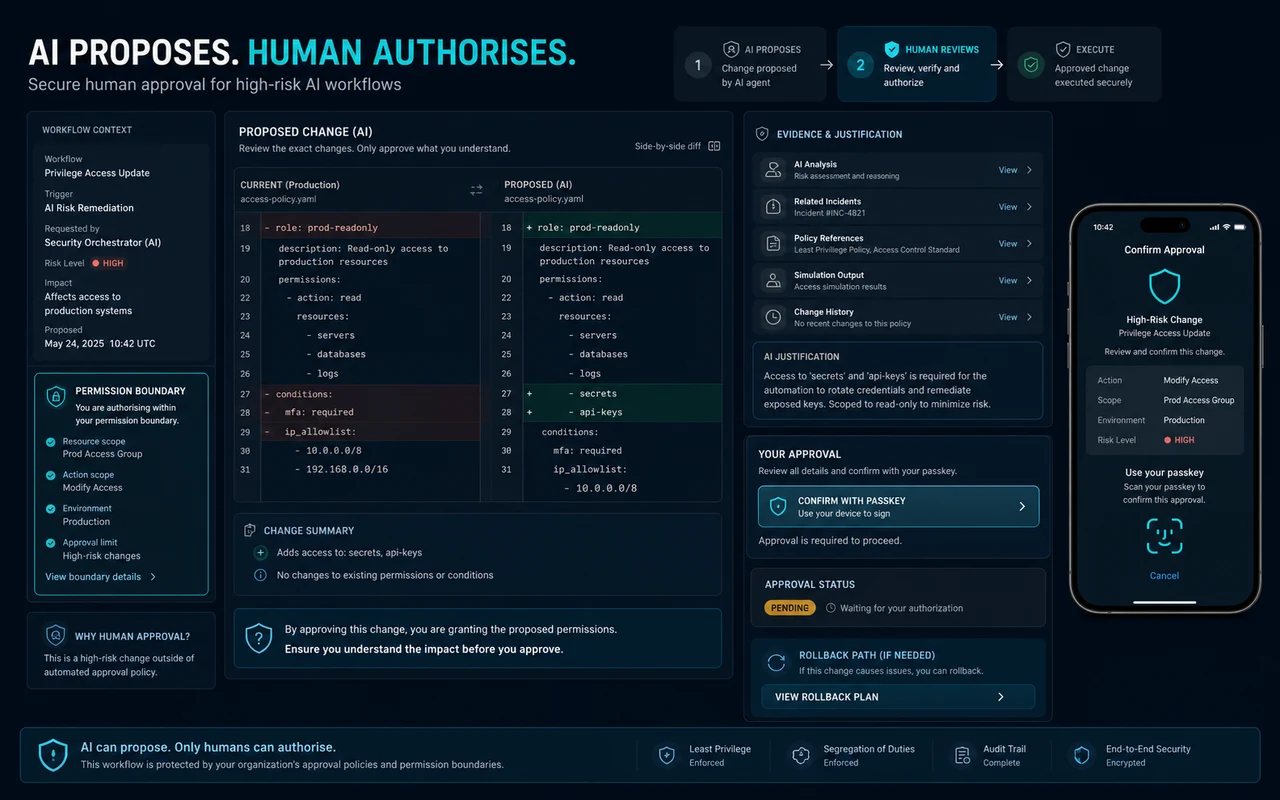
Two published projects show what this looks like in practice. The AI radar and executive briefing runs weekly, monthly and all-time rankings under fixed rules, selects headlines for review and checks which sources failed, so ranking facts stay separate from editorial judgement. The human-approval workflow lets AI prepare an exact change and its evidence, while a signed approval from a real person is required before anything is executed. Both are described in the project stories below.
What the process still will not decide
It prepares research, drafts, classifications and checks; it does not own pricing decisions, commitments to customers, complaints, or anything that needs someone accountable for the outcome. Keeping those with your team is what makes the automation acceptable to use in front of customers, and it is why the design names a reviewer for each output instead of assuming one.
Buyer questions
Put AI inside a specific task
Research, classification, drafting, review and report generation can each form part of an AI-assisted process. Start with real task examples and the output a person needs to use.
Keep the review steps explicit
Define the decision rules and which steps still need a person. The delivered workflow includes operating and review instructions so the team knows how to use and check the output.
Examples guide the scope
Bring typical inputs, expected outputs and examples that require special handling. The selected tasks determine the agreed process; a portfolio example does not make all of its capabilities part of the starting fee.
What does AI-assisted automation cost in Singapore?
It starts at S$900 for one agreed task and ships in 7–15 working days with operating and review instructions. The fee follows the number of task types, the formats the input arrives in, how much review stays with your team, and whether other systems have to be involved. Compare it with rule-based automation from S$480: if the rules can simply be written down, the cheaper service is the better one.
Which tasks suit AI, and which do not?
Reading and summarising material, sorting items into categories, drafting a first version, checking an output against your rules, and assembling a recurring report all suit it. Moving known fields between systems and generating a file on a schedule do not need it. Where a wrong answer is expensive and nobody checks the result, the design should keep a person in the loop.
How do you check the output is good enough?
A set of real examples from your own work is agreed first, and the process is run against them before handover; the results are delivered with the workflow. No process is right every time, so the scope states which outputs a person checks and what happens when one does not meet the agreed standard.
Which documents or data may the process use?
You decide, and the scope records it: which material may be used, which topics are out of bounds, how the material is supplied, and where the process runs. Restricted topics are listed rather than left to the tool to guess.
Do we need our own AI subscription or a developer?
No. The delivery is a working process with operating and review instructions, so your team runs it rather than builds it. Usage fees charged by any service the workflow calls are separate and are named in the scope.
How much of our team time does it need?
Provide examples and confirm the rules at the start, then check outputs during the acceptance stage. After handover, the reviewers named in the operating instructions own that check; that time is part of the process, not overhead added by the tool.
Does the AI decide anything on its own?
Judgement stays with your people. Anything customer-facing or high risk can be designed to stop for a person before it takes effect. In the content workflow published on this site, research and drafts are prepared automatically while publishing stays a human decision.